Back Braces for Posture
Lumbar Support for Posture and Everyday Movement
Maintaining a comfortable position throughout the day can become more difficult during prolonged sitting, standing, driving, or other activities that place sustained demands on the lower back. A back brace for posture can provide additional lumbar support during these activities while helping you remain aware of how you are positioning and moving your back.
BraceLab offers Push back braces designed to provide adjustable support without unnecessarily restricting functional movement. Rather than forcing the body into a fixed position, these braces support the lumbar region while allowing you to remain active throughout the day.
Choosing a Back Brace for Posture
The right type of support depends on what you are trying to address. If discomfort or fatigue is concentrated in the lower back, lumbar support serves a different purpose than a traditional shoulder-based posture corrector.
Understanding that distinction can help you choose the appropriate type of brace.
Lumbar Support vs. a Posture Corrector
Many products marketed as posture correctors use straps around the shoulders and upper back to encourage the shoulders into a different position. A lumbar brace works differently, providing support around the lower back rather than pulling the shoulders backward.
Neither approach should be expected to permanently correct posture on its own. Posture is influenced by many factors, including movement habits, strength, mobility, ergonomics, comfort, and the amount of time spent in a particular position.
If your primary concern is lower-back support during prolonged sitting, standing, or other daily activities, a lumbar brace may be the more relevant type of support.
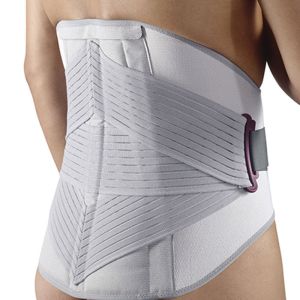
Push med Back Brace
The Push med Back Brace provides adjustable support to the lumbar spine while allowing functional movement.
Anatomically shaped metal stays support the lower back, while adjustable elastic bands allow compression and support to be tailored to individual needs. Its streamlined construction makes it an option for those looking for more substantial lumbar support during everyday activities.
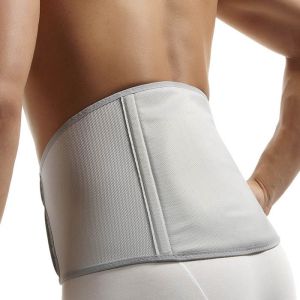
Push care Back Brace
The Push care Back Brace offers comfortable lumbar support in a lightweight design.
An adjustable pressure pad allows support to be positioned where it is needed, while the brace provides compression around the lower back. Its low-profile construction offers an alternative for those looking for lighter lumbar support during everyday activities.
How Can a Back Brace Support Posture?
A lumbar brace provides external support around the lower back. For some people, that support can also increase awareness of how the back is positioned during activities such as prolonged sitting or standing.
The goal is not to hold the body rigidly in one perfect posture. Instead, lumbar support can be one tool for making certain positions and activities more manageable while continuing to move throughout the day.
For longer-term management, bracing may be combined with strategies such as regular movement, strengthening, mobility exercises, and adjustments to your workspace or daily routine.
Why Choose Push Back Braces?
Support Without Unnecessary Restriction
Push braces are designed with close attention to anatomy, biomechanics, and functional movement. Rather than relying on unnecessary bulk or rigid immobilization, support is incorporated strategically into the brace.
For the lower back, that means providing additional lumbar support without forcing the spine into a fixed position.
Adjustable Support
Your need for support may change depending on what you are doing. Adjustable components allow compression and support to be tailored to the individual rather than relying on a single fixed level of stabilization.
Low-Profile Design
Push back braces feature streamlined designs that can be worn discreetly with many types of everyday clothing, making lumbar support easier to incorporate into work, travel, and other daily activities.
Exactly how visible a brace is will depend on the brace, your body shape, and the fit and fabric of the clothing worn over it.
Posture Support Throughout the Day
Sitting and Desk Work
Long periods of sitting can become uncomfortable for some people, particularly when the same position is maintained for extended periods.
A lumbar brace can provide additional support during seated activities, but it should not replace regular movement and appropriate workspace ergonomics. Changing positions and taking movement breaks can also be important parts of managing discomfort associated with prolonged sitting.
Standing and Everyday Activities
Posture is not only a consideration at a desk. Prolonged standing and other daily activities can also place sustained demands on the lower back.
When appropriate, adjustable lumbar support can provide additional stability during these activities while still allowing functional movement.
Getting the Right Fit
Proper sizing is essential to getting the intended support from a lumbar brace. A brace that is too loose may not sit or function as intended, while excessive compression can make it uncomfortable to wear.
Follow the measurement instructions and size chart provided for the individual Push back brace rather than selecting a size based solely on your usual clothing size.
FAQs About Back Braces for Posture
Can a back brace help with posture?
A lumbar brace can provide external support to the lower back and may increase awareness of your positioning during certain activities. It should not be expected to permanently correct posture on its own. Movement, strength, mobility, ergonomics, and daily habits can all influence how you sit, stand, and move.
What is the difference between a back brace and a posture corrector?
A lumbar back brace provides support around the lower back. Many products marketed specifically as posture correctors instead use straps around the shoulders or upper back to encourage a different upper-body position. Which type of support is appropriate depends on what you are trying to address. If pain, an injury, or a diagnosed spinal condition is involved, consult a healthcare professional rather than choosing a brace based on posture alone.
Will wearing a back brace weaken my back muscles?
Concerns about muscle weakness are one reason a back brace should not automatically be worn continuously without a specific reason or guidance. Appropriate use depends on the condition being addressed, the amount of support provided, your activities, and your treatment plan. A brace can be used alongside movement, strengthening, and rehabilitation rather than as a replacement for them.
How long should I wear a back brace for posture?
There is no universal number of minutes or hours that is appropriate for everyone. Wear time depends on why you are using the brace, your symptoms, activities, and any recommendations from your healthcare provider. Some people may use lumbar support during specific activities or periods of the day rather than continuously.
Can I wear a back brace while sitting at a desk?
A lumbar brace may provide additional support during prolonged sitting for some people. It should be used alongside, not instead of, appropriate desk ergonomics, position changes, and regular movement. If sitting consistently causes significant or worsening pain, consider having the underlying cause evaluated rather than relying solely on a brace.
Can I wear a back brace if I have a diagnosed spinal condition?
Possibly, but the appropriate type and level of support depend on the condition. If you have been diagnosed with a spinal condition, are recovering from surgery, or have been given specific activity restrictions, follow the recommendations of your healthcare provider. You can also explore our complete selection of back braces to find information organized around specific lumbar conditions.