
Clinical Pearls
-
Clinical Pearl No. 99 - November 2026
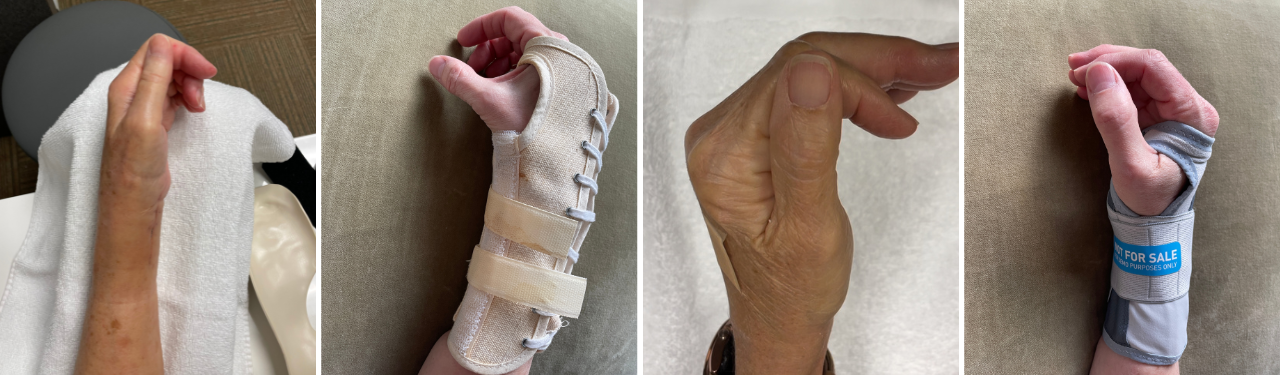 Read more about Can a Poorly Fitted Wrist Orthosis Reinforce Maladaptive Movement Patterns?
Not long ago, a custom-fabricated orthosis was the standard of care to protect the wrist after a distal radius fracture. Hand therapists molded these orthoses to each patient, either following cast immobilization or as the primary means of immobilization to protect the healing fracture. Today, the picture looks very different. With advances in surgical care, particularly >volar plate fixation, prefabricated wrist orthoses are increasingly common. These manufactured orthoses are typically issued in the physician's office, most often fitted by office staff rather than a therapist or physician. Why is checking the fit of these prefabricated orthoses important?
-
Clinical Pearl No. 98 - September 2026
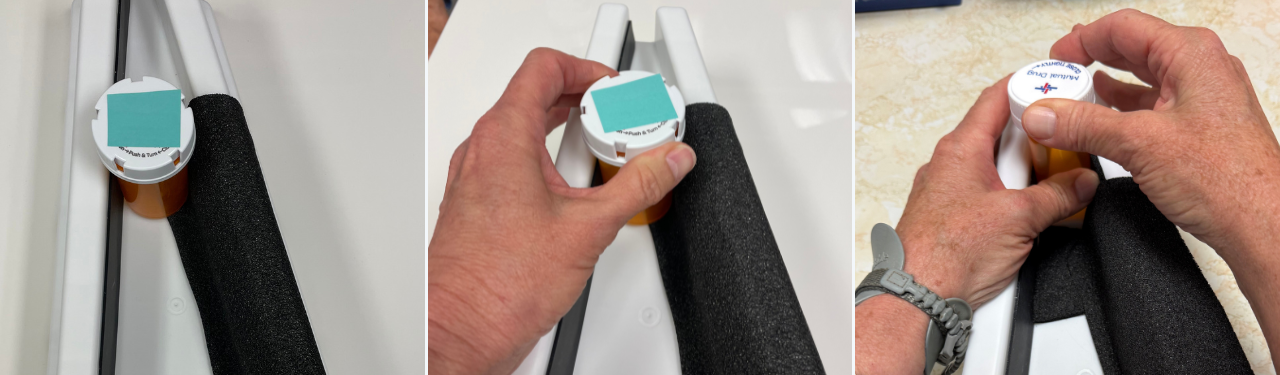 Read more about Simultaneous Treatment of a TFCC and SLL Tear
Hand therapists rarely treat just one condition at a time. Patients often present with multiple conditions that can affect treatment decisions and functional outcomes. For example, an individual who sustained a distal radius fracture may also have a trigger finger, while someone with Dupuytren's contracture may also have osteoarthritis.
-
Clinical Pearl No. 97 - July 2026
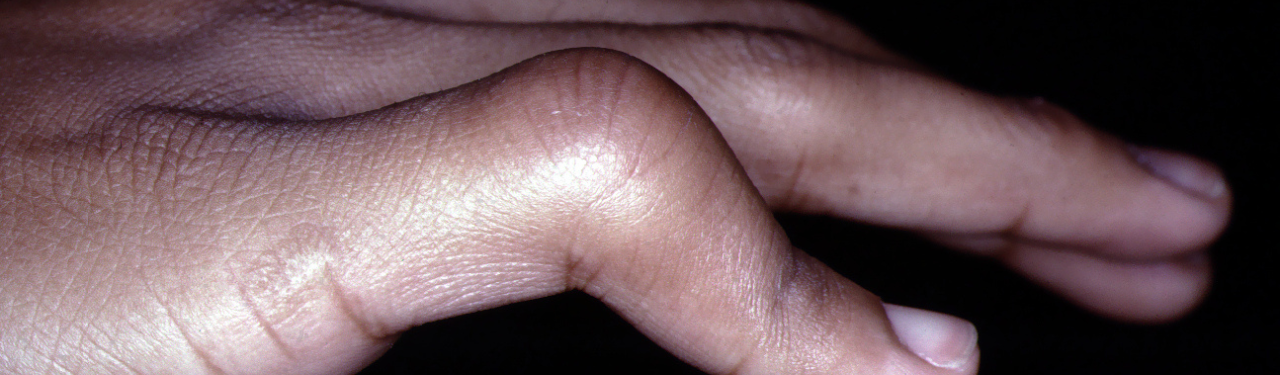 Read more about Boutonniere Basics
When a patient presents with a stiff flexed proximal interphalangeal (PIP) joint and extended distal interphalangeal (DIP) joint, how do you know if it is a boutonniere (injury to the dorsal apparatus) or a joint flexion contracture (often called a pseudo-boutonniere) due to trauma to the PIP joint?
-
Clinical Pearl No. 96 - May 2026
 Read more about Multiple Measurements to Assess the Thumb Web Space
The thumb drives a remarkable amount of hand function, so even a small loss of motion has a major effect on daily life. One structure often overlooked is the first web space—the soft tissue span between the thumb and index finger. This space is essential for grasping and handling everyday objects such as a steering wheel, bottle of juice/milk, or coffee cup. Clinicians have long debated how best to measure the thumb first web space to evaluate the need for and the outcomes of surgery and therapy.
-
Clinical Pearl No. 95 - March 2026
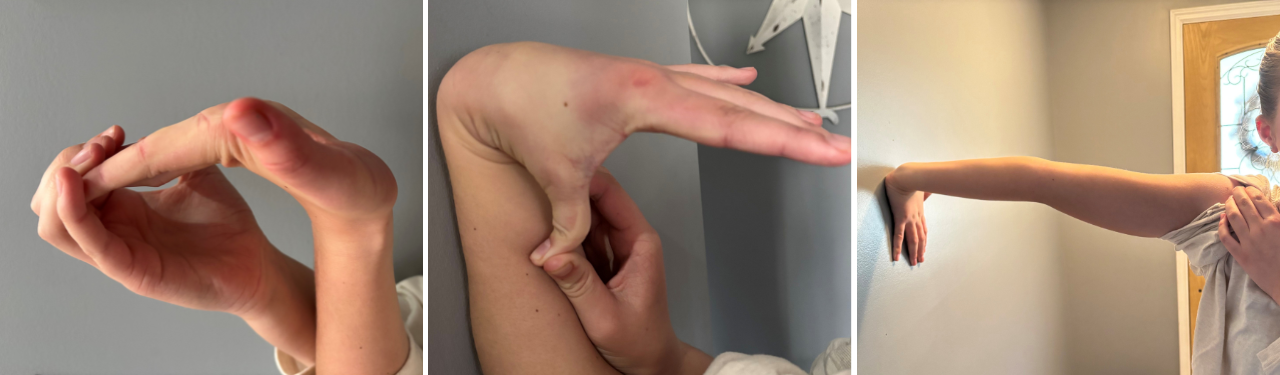 Read more about Hypermobility in my Hairdresser
As hand therapists, our trained eyes naturally notice the details others might miss—a custom orthosis on someone at the grocery store, a mechanic with a missing fingertip, or a talk show host hiding a hand injury. So, when Tiffany, my hairdresser, mentioned unexplained pain in the metacarpophalangeal (MCP) joint of her left middle finger, my professional instincts kicked in. Watching her grip scissors and maneuver a blow dryer, I recognized obvious signs of hypermobility and offered to help.
-
Clinical Pearl No. 94 - January 2026
 Read more about Reflections on Conservative Management of Carpal Tunnel Syndrome
In the 1990s, while completing the required hours to sit for the Certified Hand Therapist exam, I had the opportunity to work alongside several hand surgeons in a busy hand clinic in a teaching hospital. At that time, patients diagnosed with carpal tunnel syndrome (CTS) were routinely fitted with a custom thermoplastic orthosis and scheduled for a nerve conduction study (NCS). The line of patients waiting for this standard care often stretched down the hallway.
-
Clinical Pearl No. 93 - November 2025
 Read more about Using CMMS to Reactivate the Brain
Did you know that handwriting offers a complete workout for your brain? The simple strokes produced while writing engage neural pathways linked to fine motor skills, visual recognition, spatial awareness, and language encoding. This activation stimulates the intricate visual and sensory motor centers of the brain.
-
Clinical Pearl No. 92 - September 2025
 Read more about Treatment After Dupuytren's Fasciectomy...Not Always Simple
Dupuytren’s disease is the most common genetic connective tissue disorder, and therefore commonly seen in our hand therapy patient population. Following fasciectomy, we care for post operative wounds, work to regain/maintain joint range of motion, and manage the large scar resulting from the extensive dissection required of a palmar fasciectomy.
-
Clinical Pearl No. 91 - July 2025
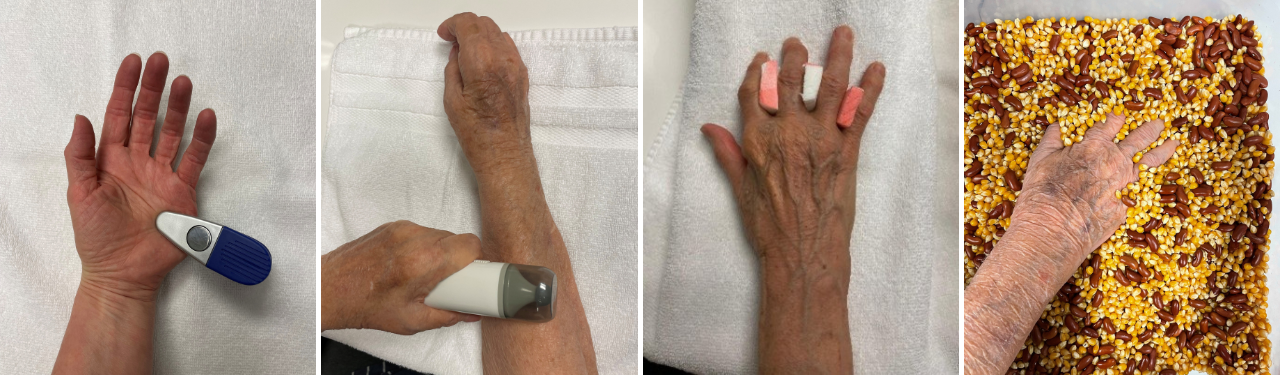 Read more about The Role of Skin When Addressing Pain
As therapists, we often treat issues related to the skin. Realizing the difference between the volar and dorsal skin on the hand, we modify strapping and application of pressure accordingly when fitting an orthosis or providing resistive exercises.
-
Clinical Pearl No. 90 - May 2025
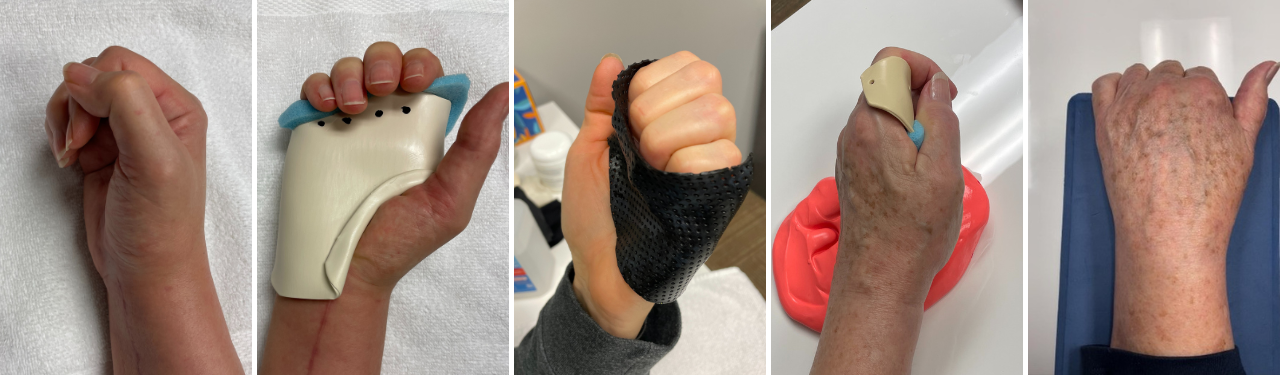 Read more about Why Can I Not Make A Fist?
Distal radius fractures are one of the most common diagnoses we see in hand therapy; we recently had four referrals for this diagnosis in one day! One patient had been treated with cast immobilization, while the other three others underwent open reduction and internal fixation (ORIF) of the fracture.