
Impact of Running Cadence on Anterior Knee Pain

October 2026 No. 50
Impact of Running Cadence on Anterior Knee Pain
by Jerry Ditz, DPT, Dip. Osteopractic, Cert. SMT, Cert. DN
Anterior knee pain is a common complaint among runners. Clinicians address strength, flexibility, training volume, footwear, and running mechanics when treating these patients. One simple running modification also worth considering is changing cadence.
Cadence (step rate) is the number of steps a runner takes per minute. Research has demonstrated that modest increases in a runner’s preferred cadence can alter the forces at the knee while running. Lenhart et al. found that a 10% increase in the step rate reduced peak patellofemoral joint force by approximately 14%.
More recent evidence also supports cadence-based gait retraining as a useful option for runners with patellofemoral pain. A 2026 umbrella review showed that cadence increases of approximately 5-10% produced the most consistent findings, especially for short-term improvements in pain and function and reductions in selected load-related variables. The authors also emphasized that protocols vary and longer-term evidence remains less certain.
Measure Preferred Cadence
First, have the patient run at their normal comfortable pace and record their cadence, running speed, and knee pain.
The Baliston AI Mov-Scan (see Figure 1) is useful to measure cadence and speed during an overground run rather than requiring the patient to run on a treadmill. The Baliston instrumented insole technology has been studied against 3-D motion capture for measuring spatiotemporal parameters during overground and treadmill running.
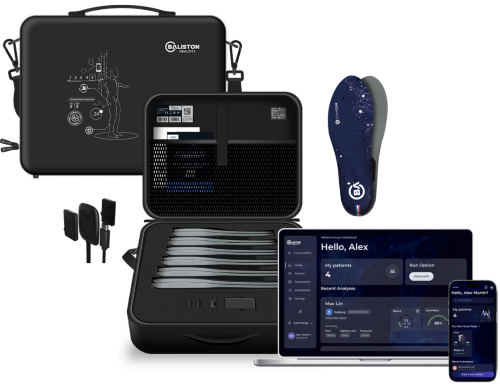
Figure 1: Baliston Health's AI Mov-Scan kit
The goal is to establish the individual’s preferred cadence as the baseline rather than compare their preferred cadence to a predetermined “normal” cadence.
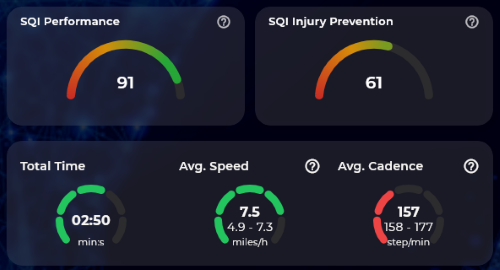
Baliston Run assessment demonstrating average cadence and running speed.
Increase Cadence 10% for a Quick Clinical Test:
For a simple clinical symptom modification test, a 10% cadence increase is easy to calculate and closely mirrors several published protocols.
EXAMPLE
Preferred cadence: 157 steps/minute
Target cadence: 157 × 1.10 = 172.7; rounded to 173 steps/minute
1. Set a metronome to 173 beats per minute and instruct the patient to match each foot strike to the metronome beat. The runner should attempt to maintain this same cadence during all runs. It should be noted that slowing down can change the load at the knee, potentially improving symptoms independent of the cadence modification.
2. Allow the runner a short warm-up run to match their
steps to the metronome before repeating the assessment.
Did the Knee Pain Change?
Having the runner repeat the same course as when initially testing while attempting to maintain the increased cadence and approximately the same speed gives you clinically relevant information.
Research involving 68 runners with patellofemoral pain found that 35% had an immediate pain reduction of at least 1/10 when cadence was increased by 10%. The same study also showed that not every runner responded, reinforcing the value of testing the modified cadence rather than assuming it will help.
In a more recent randomized controlled trial of 30 runners with patellofemoral pain, the cadence group was instructed to increase cadence by 7.5-10% using a metronome. The cadence group demonstrated greater improvement in running pain than the control group at six months.
A current systematic review and meta-analysis of 20 studies involving 483 participants also found that step-rate gait retraining effectively increases running cadence during both acute and multisession interventions. The findings support flexibility in how cadence retraining is delivered rather than requiring one specific feedback method or exact magnitude for every runner.
If increasing cadence does not change the patient’s symptoms, there may be little reason to spend several weeks attempting to change a runner’s cadence. If the pain improves, however, a useful running modification has been identified that can be incorporated into the rehabilitation program.
Confirm Cadence Change
Since maintaining the same running speed can be more difficult during an overground assessment than on a treadmill, repeating the Baliston assessment after the cadence modification allows cadence and speed to be reviewed throughout the run.
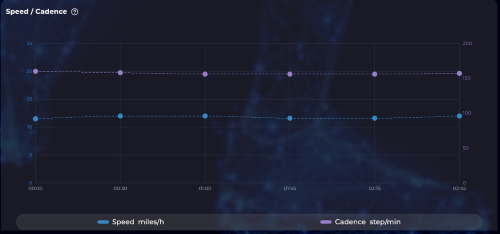
Baliston Run assessment demonstrating cadence and speed throughout an overground running test.
The Baliston data can confirm that the change in symptoms is from the runner’s increased cadence rather than a reduction in running speed.
For example, if a runner increases cadence from 157 to 173 steps per minute and knee pain decreases from 4/10 to 1/10 while maintaining a similar running speed, cadence modification is likely worth pursuing. Conversely, if pain decreases but running speed also substantially decreases, the improvement cannot be attributed to the change of cadence.
Clinical Application
There is no reason to assume every runner with anterior knee pain should increase cadence, nor is there one ideal cadence every runner should achieve. Current evidence supports modest cadence increases in the 5-10% range, as a potentially useful component of gait retraining rather than a stand-alone treatment for every runner.
Cadence should be treated as another variable that can be quickly manipulated and then retested. One should:
• Establish runner’s preferred cadence.
• Increase cadence by 10% for a quick test.
• Maintain a running speed similar to the increased cadence.
• Immediately reassess symptoms.
The entire assessment can be performed quickly, providing patient-specific information to determine whether cadence retraining should be part of the rehabilitation program.
References
• Lenhart et al. (2014) - Increasing Running Step Rate Reduces Patellofemoral Joint Forces
• Bramah et al. (2019) - A 10% Increase in Step Rate Improves Running Kinematics and Clinical Outcomes
• Esculier et al. (2023) - Immediate Pain Response to Running Gait Modifications
• Randomized Controlled Trial (2024) - Cadence and Impact Gait Retraining in Runners With Patellofemoral Pain
• Sensors (2024) - Validation of Instrumented Insoles During Running
• Goss, Xu & Hertel (2025/2026) - Step Rate Gait Training Systematic Review and Meta-analysis
• Petri et al. (2026) - Umbrella Review of Gait Retraining for Patellofemoral Pain in Runners