
Choosing an AFO: Let Function Decide

June 2026 No. 48
Choosing an AFO: Let Function Decide
by Jerry Ditz, DPT, Dip. Osteopractic, Cert. SMT, Cert. DN
The Problem
Recently, a 60-year-old patient with chronic foot drop on the right leg and a history of using an ankle foot orthosis (AFO) was referred to physical therapy for balance deficits due to recent falls. The patient’s history indicated the falls were not occurring when he wore his prescribed AFO; they were happening at home when he chose not to wear it.
The reason he was not wearing it was practical. He did not like wearing his AFO in the house because it required him to wear tennis shoes instead of his preferred favorite pair of slippers. He was not opposed to wearing an AFO, but he was opposed to changing his daily routine to wear one.
Because of this, the clinical question is not simply, “Does this patient need an AFO?” The better question is, “Which AFO helps him function better and is he willing to wear it?”
Observing Function
Before choosing another AFO brace, the patient was evaluated performing the tasks he needed to improve.
Without an AFO, during walking, the main problem was inconsistent toe clearance that worsened with fatigue. During sit-to-stand, he was able to rise from the chair, but his involved foot did not always stay well positioned under his body. During stairs, he slowed down, used the railing, and hesitated when descending. During longer walking, his compensation became more obvious.
The AFO needed to match the functional problems observed, not just the diagnosis or the fact that he had used an AFO in the past.
Trialing AFO Options
To compare options, the clinician needed to trial several AFOs using the same functional tasks: Sit-to-Stand, a short walking test, a longer hallway walk, and stairs.
First the patient was evaluated without wearing an AFO. During Sit-to-Stand and Timed Up and Go testing, the therapist observed how easily the patient positioned his foot, rose from the chair, turned, and sat back down. During a 10-meter walk, the therapist compared toe clearance, foot slap, gait speed, and compensatory movement. During a longer walking trial, the therapist watched what happened as the patient was fatigued. On stairs, the clinician observed foot placement, control, confidence, and hesitation.
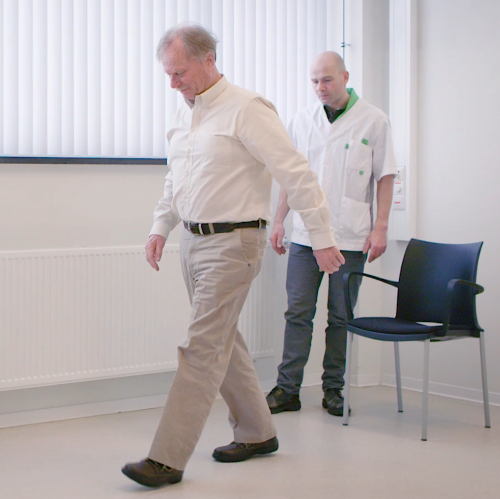
Example of functional testing
These functional tests/observations would help make any brace decision more practical. The goal was not only better ankle position, but also better walking, transfers, stairs, endurance, confidence, and carryover.
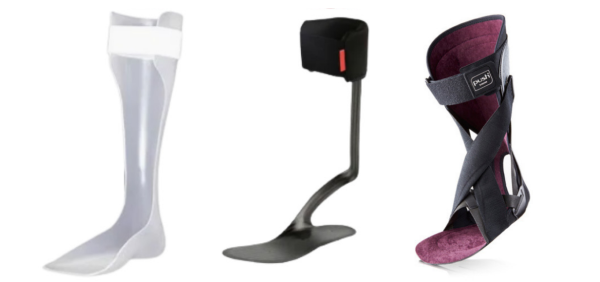
Trialing the Traditional AFO vs. the Carbon Fiber AFO vs. the Push AFO
Traditional AFO Trial
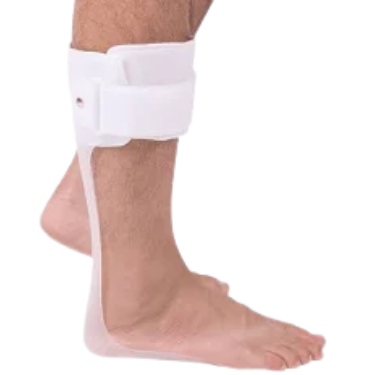
Wearing the traditional pre-molded AFO improved toe clearance and gave the patient a strong sense of stability.
He reported it felt supportive but stiff. On stairs, he felt secure but less natural. During the longer walking trial, his foot cleared better, but his stride appeared restricted.
For this patient, the traditional AFO provided control but appeared to add more restriction than he was willing to tolerate.
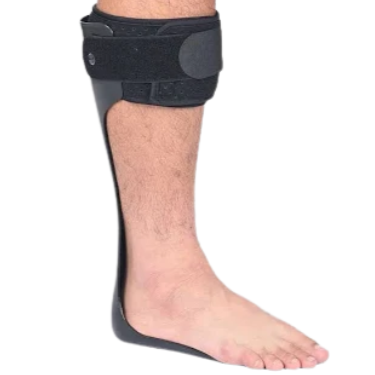
Carbon Fiber AFO Trial
The carbon fiber AFO felt lighter and more responsive. The patient walked with improved forward progression, and his gait appeared less restricted than with the traditional AFO.
His functional testing carbon fiber AFO showed improved toe clearance, walking confidence, and stair performance compared with walking without support.
Push® AFO Trial
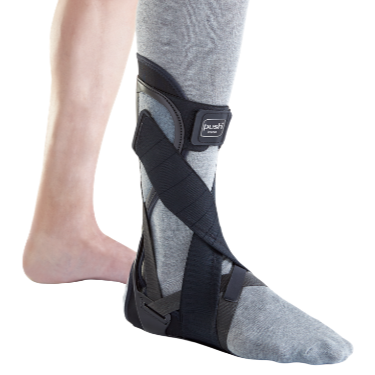
The Push AFO assisted dorsiflexion while allowing more natural ankle motion. His performance in the functional testing was similar to the carbon fiber AFO.
The clinical difference was not the test score. It was the patient’s willingness to use it. Because the Push AFO could be worn with his preferred slippers, the patient said it was the option he would actually wear at home. His falls were not happening because his AFO brace did not help him. They were happening because he was not wearing the brace he already had.
Patient Buy-In
Once the patient explained he would wear the Push AFO at home with his slippers, the therapist used gait analysis software to show him the benefit of wearing the AFO in that setting.
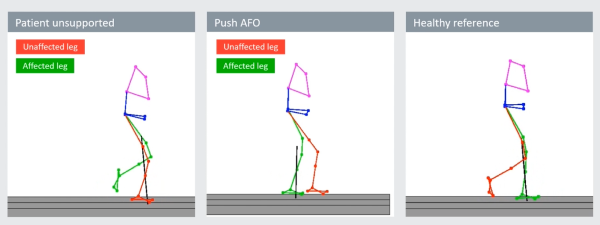
Push AFO comparative study using a Vicon gait analysis system. Click to watch full video.
The side-by-side comparison of the three AFOs referenced above helped the patient see how the Push AFO improved toe clearance, reduced foot slap, and supported a more confident walking pattern while still allowing him to stay in the footwear he preferred.
This case reinforces an important clinical point: AFO selection should not be based only on brace design or diagnosis. It should be based on function, patient preference, and whether the patient will actually use the device in the environment/s where they need it most.