
Can a Poorly Fitted Wrist Orthosis Reinforce Maladaptive Movement Patterns?

November 2026 No. 99
Can a Poorly Fitted Wrist Orthosis Reinforce Maladaptive Movement Patterns?
by Karol S. Young, OTD, OTR/L, CHT
Not long ago, a custom-fabricated orthosis was the standard of care to protect the wrist after a distal radius fracture. Hand therapists molded these orthoses to each patient, either following cast immobilization or as the primary means of immobilization to protect the healing fracture. Today, the picture looks very different. With advances in surgical care, particularly >volar plate fixation, prefabricated wrist orthoses are increasingly common. These manufactured orthoses are typically issued in the physician's office, most often fitted by office staff rather than a therapist or physician. Why is checking the fit of these prefabricated orthoses important?
Fit of a Prefabricated Orthosis
Recently when a patient arrived at our hand therapy clinic following a distal radius fracture, her prefabricated orthosis issued in the physician’s office was too large and allowed her wrist to rest in flexion within the orthosis. See Figure 1. With wrist flexed in the orthosis, she was unable to initiate finger flexion with her extrinsic flexor muscles. Thus, the use of the orthosis promoted and reinforced a maladaptive motor pattern devoid of tenodesis.
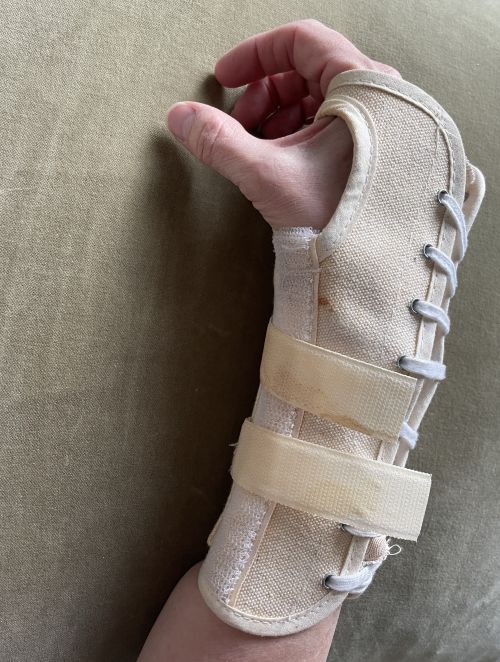
Figure 1: Poorly fitting prefabricated wrist orthosis.
Examining the Tenodesis Grasp in the Orthopedic Patient
The tenodesis grasp is a biomechanical movement that illustrates how wrist position influences hand movement. When the wrist is extended, it increases the tension in the extrinsic flexors—the flexor digitorum profundus (FDP) and flexor digitorum superficialis (FDS)muscles—causing the fingers to automatically curl. See Figure 2. Conversely, flexing the wrist slackens this tension, allowing the tension of extensor digitorum communis (EDC) muscles to extend the fingers. This interplay of muscles is particularly important in rehabilitation after injury. See Video 1.
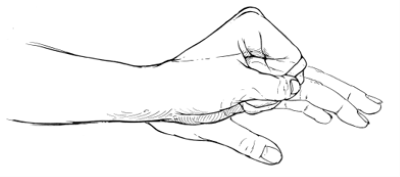
Figure 2. Normal tenodesis grasp.
To achieve normal active finger flexion, several key actions need to be sequentially executed as seen in the video below:
1. The wrist must be stable and extended so that the FDP muscles can exert power on the fingers.
2. The EDC muscles must maintain extension of the metacarpophalangeal (MP) joints, while the interosseous muscles prevent hyperextension.
3. The FDP muscles initiate finger flexion, curling the distal and proximal interphalangeal (IP) joints into a hook.
4. With the interphalangeal joints in flexion, the EDC muscle relaxes and the interosseous muscles become the prime flexors of the MP joint. (The PDF muscle can flex the MP joint only after full flexion of the IP joints.)
5. Lastly, the interosseous muscles contract strongly to flex the MP joints along with the FDS muscle create strength in grip at the end range of finger flexion.
Video 1. Normal tenodesis grasp pattern.
Tenodesis Grasp After Distal Radius Fracture
An initial evaluation should assess wrist joint range of motion and the ability to demonstrate tenodesis pattern during active finger flexion and extension. Joint stiffness of the wrist hinders the biomechanics of movement between the long flexors and the wrist. Additionally, it is important to examine the elasticity of the extrinsic finger flexors (FDP and FDS). Tightness in these muscles can restrict both wrist extension and finger motion. See Figure 3.
If the patient is unable to recruit the long flexors to initiate finger flexion, they bring the fingertips to the thumb for prehension during functional tasks, primarily using active MP joint flexion. This is a dominant interossei flexion movement pattern. See Figure 4. This pattern of movement is frequently observed in patients recovering from distal radius fractures as they attempt hand use.
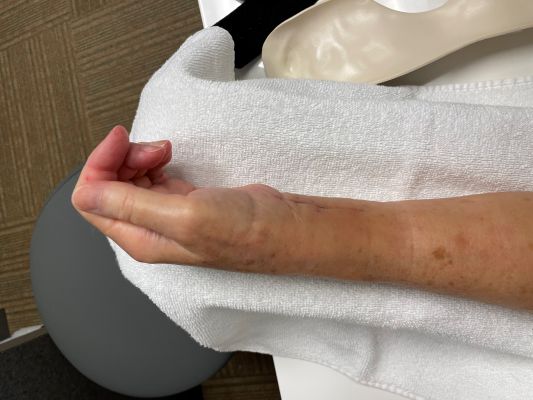
Figure 3. Wrist stiffness and extrinsic flexor tightness after a distal radius fracture.
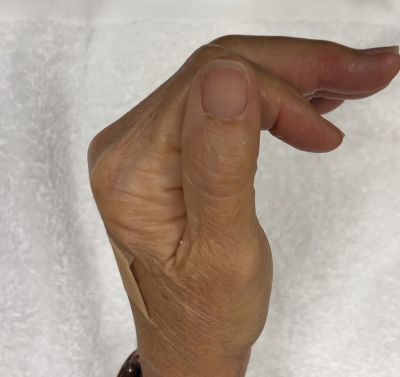
Figure 4. Image of a patient unable to recruit long finger flexors when gripping.
Why Orthotic Intervention Matters
For our patient, the orthosis meant to protect her wrist during recovery was creating and reinforcing the exact movement pattern we were working to correct! The wrist held in flexion limited performance of the normal tenodesis grasp. The position of the wrist within the orthosis became the obvious limitation as we examined the wrist at rest and with use.
Wrist Position at Rest: An orthosis that is too large allows the wrist to rest in the position of comfort: wrist flexion. This position creates tightness in the extrinsic finger flexors and reinforces stiffness within the wrist joint. With wrist in flexion excursion of the long finger flexors when initiating finger motion is inhibited.
Wrist Position with Use: As the patient performed functional activities in the orthosis with the wrist flexed, the dominant interossei flexion movement pattern was reinforced within the central nervous system. As this maladaptive movement is used to complete everyday activities, it becomes difficult to correct in the clinic.
Placing the wrist in a proper fitting, and more supportive orthosis will promote a tenodesis grasp. We prefer the Push® med Wrist Brace as it has support on both the volar and dorsal ®patterns in the wrist and hand after injury. See Figure 5.
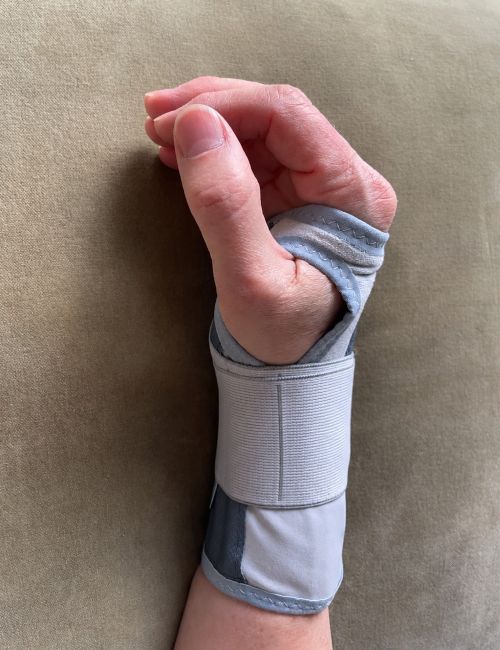
Figure 5. Positioning the wrist in the Push med Wrist Brace.
Functional Task Training
Many patients develop maladaptive strategies outside the clinic. During activity simulations, clinicians should identify and correct maladaptive movements while integrating real-world tasks to ensure proper carryover of tenodesis patterns. Early on this may require support with a proper fitting prefabricated orthosis to promote tenodesis and finger flexion sequences. As the patient is weaned from the orthosis, it is essential to continue to incorporate functional task training. Additionally, lightweight wrist supports or sports tape, can provide proprioceptive feedback to remind patients of the correct movement pattern of the tenodesis grasp. See Figure 6.
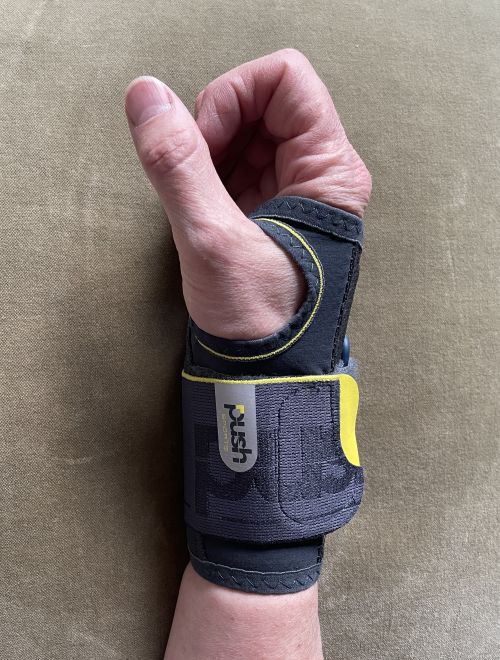
Figure 6. The lightweight Push® Sports Wrist Brace.
Conclusion
A prefabricated brace can be a convenient alternative to a custom orthosis, but convenience comes with a caution: an ill-fitting wrist orthosis can do more harm than good. A poorly fitting orthosis may position the wrist in flexion, interfering with the tenodesis grasp and reinforcing movement patterns that complicate rehabilitation. Assess wrist and hand motion within the orthosis, both at rest and during functional tasks. Ask yourself, does the orthosis facilitate function, or does it reinforce a maladaptive movement pattern?
© BraceLab; 2026 all rights reserved
Disclaimer: BraceLab Clinical Pearls are intended to be an informal sharing of practical clinical ideas; not formal evidence-based conclusions of fact.