
Gait Speed: A Simple Measure That Tells a Bigger Story

February 2026 No. 46
Gait Speed: A Simple Measure That Tells a Bigger Story
by Jerry Ditz, DPT, Dip. Osteopractic, Cert. SMT, Cert. DN
Evaluating gait speed is one of the most efficient ways to assess functional movement. It reflects the combined output of multiple systems—musculoskeletal, neurological, cardiovascular, and sensory—working together during walking. Because of this integration, gait speed has been consistently associated with broader health outcomes, functional status, and survival across adult populations.
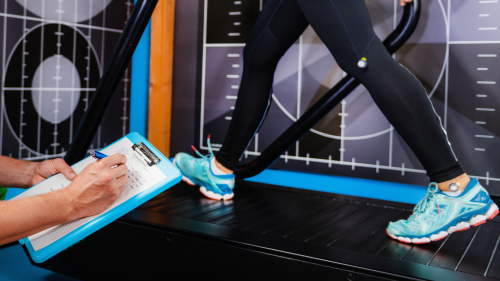
From a clinical standpoint, gait speed is appealing because it is simple, repeatable, and meaningful. Rather than indicating measurement variability, even small clinically meaningful changes in gait speed can reflect true changes in functional performance. Prior work has demonstrated that relatively small increases or decreases in gait speed correspond to meaningful improvements or declines in mobility and overall function.
While gait speed provides a global measure of function, it rarely tells the full story on its own. Changes in speed often coexist with underlying asymmetries or compensatory strategies that explain why speed is changing and how movement is being directed, particularly in the presence of musculoskeletal or neurologic pathology.
Why Gait Speed Matters
Gait speed is more than how fast someone moves down a hallway. It reflects confidence, efficiency, and the ability to tolerate load. Clinically, reductions in gait speed are associated with declining function, increased effort required to walk, and reduced participation in daily activities. Research has shown that slower walking is often accompanied by a higher energy cost, meaning slower individuals expend more energy to accomplish the same task.
Importantly, changes in gait speed over time are often more meaningful than a single measurement. Tracking trends—whether improvement, plateau, or decline—provides insight into recovery trajectory, readiness for progression, and long-term functional status. This is particularly relevant in rehabilitation settings, where improvement is rarely linear and subtle changes may signal meaningful adaptation.
When gait speed changes, asymmetries are often present beneath the surface. For example, plantar fasciitis can alter stance time and push-off mechanics due to pain, resulting in compensatory movement patterns and a measurable reduction in walking speed.
Visual Gait Assessment and Timed Testing
Visual gait assessment remains the most common way clinicians evaluate walking. Patients are frequently described as walking “slowly,” “guarded,” or “with hesitation.” These observations are valuable, but gait speed itself is not objectively quantified through such observation.
To add structure and objectivity, clinicians often pair visual assessment with standardized timed functional tests (6 Minute Walk Test or Timed – Up and Go). While these tests provide reproducible outcomes, they measure overall task performance rather than isolated steady state gait speed or biomechanics. Performance may be influenced by balance, endurance, turning ability, transfers, motivation, or familiarity with the task, limiting the test’s ability to explain why gait speed is reduced.
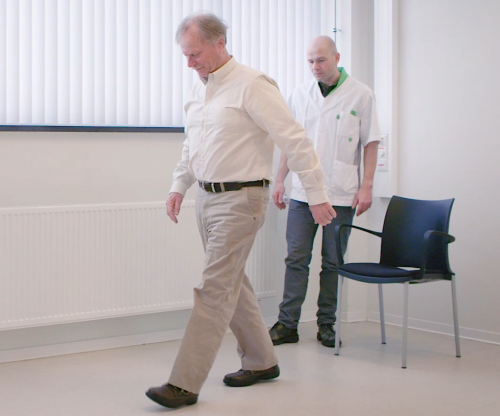
Estimating speed visually remains subjective. Differences in clinician experience, environment, and observation conditions contribute to variability in interpretation, even when timed test results are available.
While gait speed is being estimated, clinicians often also note obvious right-left differences in step length, stance time, or confidence. These asymmetries frequently help explain why overall walking speed appears reduced, even when timed test results fall within expected ranges.
Video and Pressure-Based Gait Analysis
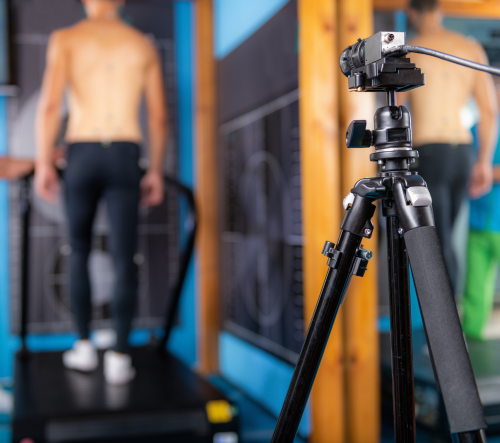
Video gait analysis allows clinicians to slow the captured movement and review gait in greater detail. By examining cadence, step timing, and stride characteristics, clinicians can infer changes that influence gait speed and identify asymmetries that may not be obvious in real time.
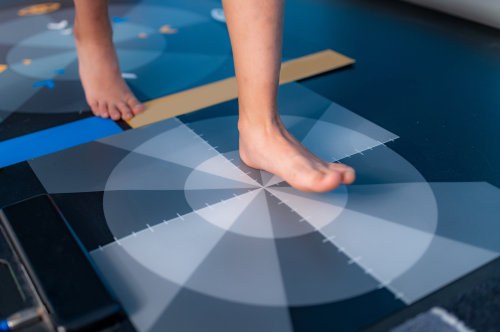
Pressure-based systems provide complementary insight by quantifying how force is applied during walking. Although they do not directly measure gait speed, slower walking is commonly associated with longer contact times, reduced peak forces, and altered push-off timing.
In neurologic populations, plantar pressure data can be particularly informative. After events such as stroke, pressure patterns often reveal asymmetrical limb loading and propulsion deficits, helping distinguish whether gait speed changes are driven by unilateral neuromotor impairment or broader compensatory strategies.
Wearable Motion Sensors
Wearable motion sensors offer a practical way to measure gait speed objectively in clinical settings. By capturing step-to-step timing, these systems allow clinicians to quantify gait speed alongside cadence and stance asymmetry outside of laboratory environments.
Because wearable sensors measure continuous walking rather than isolated test performances, they often help explain why gait speed improves, plateaus, or declines over time.

Using Gait Speed Data in Clinical Practice
Gait speed does not need to meet a specific benchmark to be useful. Instead, interpretation should focus on the direction of change over time—whether walking is becoming more efficient, confident, and sustainable as recovery or adaptation progresses.
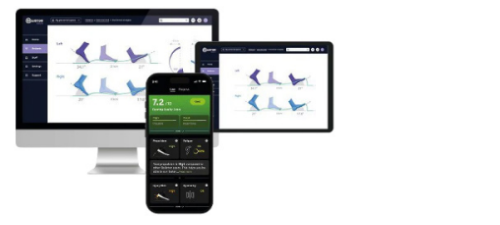
When gait speed is considered alongside simple observations of symmetry, clinicians gain a clearer picture of not just how fast a patient is walking, but how that speed is being achieved.
Clinical Thoughts
As gait assessment technology continues to advance, clinicians are faced with more options — but not always more clarity. The value of any tool lies not in its complexity, but in how well it fits the clinical setting and how clearly it informs decision-making.
When used thoughtfully, gait speed monitoring becomes more than a number. It becomes a shared reference point—supporting clinical reasoning, strengthening patient engagement, and reinforcing the connection between daily movement and long-term function.