
Avoiding Chronic Ankle Instability

February 2018 No. 3
Avoiding Chronic Ankle Instability
Jerry Ditz, DPT, Dip. Osteopractic, Cert. SMT, Cert. DN
Happy 2018 from BraceLab, everyone! I love winter, because the holidays are over and most clinics are slowing down for a while. With the extra time, I find it productive to reflect on my clinical practice habits. The goal of my self-reflection is to review my continuing education from the previous year to assure I have implemented what I have learned into my clinical decision-making. Each year I try to attend a weekend course and a national conference, and complete one online learning class each month. So, once January comes, I have a lot of information on which to reflect.
During my reflection this year, I found myself reviewing information from the 7th Annual International Ankle Symposium last September at the University of North Carolina in Chapel Hill. The main symposium topic was chronic ankle instability. My big takeaway from this conference was that, as providers, we are not doing an effective job of preventing an acute ankle sprain from becoming chronic ankle instability. Like most injuries, once it becomes chronic, the statistics are not favorable. I found a systematic review of ankle treatments, so I could review the treatment recommendations based on the latest evidence. The review with the biggest impact for me was from the British Journal of Sports Medicine.(1)
According to this review there is strong evidence in support of the following treatments:
• Bracing: To prevent recurrence of an ankle sprain.
• NSAIDS: For controlling, pain, swelling, and return to function after an acute sprain.
• Early mobilization: For controlling pain and swelling and returning to function after an acute sprain.
The review concluded there was moderate evidence for exercise and manual therapy to control pain, swelling, and improve function. The only evidenced treatments for prevention of chronic ankle instability were exercise and bracing.
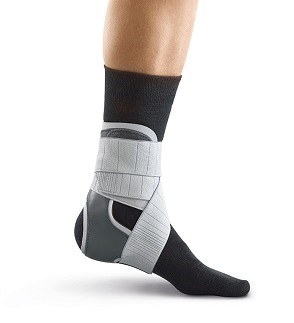
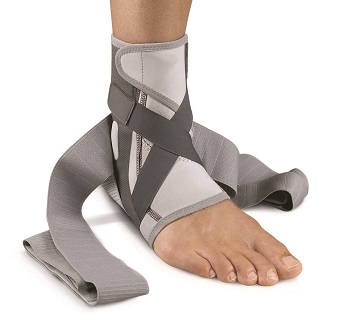
Ankle braces can serve a variety of functions: controlling inversion / eversion, compression, and even as a replacement for functional taping.
Through this reflection, I learned I was not utilizing ankle braces in line with the current research. As a college and high school athlete I wore ankle braces but, now as a physical therapist, I never utilize them. I am quick to needle, mobilize, release, and exercise the ankle, but, slow to brace it. Why is this? Why do occupational therapists brace more than physical therapists? I finally realized my pride was preventing me from using a brace. I feared my exercise and manual techniques would be viewed as second-rate if the patient used a brace! This year I will have better balance with choosing treatments and not let pride prevent me from providing a full range of treatment options to my patients.
I urge you to reflect on your own clinical habits. Your future patients will thank you!
References
1. Doherty C, Bleakley C, Delahunt E, et al Treatment and prevention of acute and recurrent ankle sprain: an overview of systematic reviews with meta-analysis Br J Sports Med 2017;51:113-125.
Download Clinical Clues No. 3, Avoiding Chronic Ankle Instability; February 2018
© BraceLab 2018 all rights reserved
Disclaimer: BraceLab Clinical Clues are intended to be an informal sharing of practical clinical ideas; not formal evidence-based conclusions of fact.