
Sleep Position Modifications to Alleviate Joint Pain

May 2019 No. 10
Sleep Position Modifications to Alleviate Joint Pain
Jerry Ditz, DPT, Dip. Osteopractic, Cert. SMT, Cert. DN
Do you have a strategy for modifying the sleep position of a patient who is unable to get a full night’s sleep due to a painful joint? The correct position can improve sleep quality and decrease resting pain levels.
Have the patient lie in their preferred sleep position for two minutes to identify whether the position is causing pain in the cervical region, shoulder, low back, or hips. Once the area of pain is identified, use one of the suggested modifications below and position the patient for a two-minute trial.
If the trial does not alleviate the pain, use a different material or object to recreate the modified position and reassess after another a two-minute trial. For example, if a pillow was used initially, try the same position using a towel or piece of foam.
Here are some tips for modified positions, with the goal of placing the patient in a spinal neutral position and unloading any painful/uncomfortable joint/s.
Modifications for a Side Lying Sleeper
Cervical Symptoms – Use only one pillow under the head unless the patient has cardiorespiratory problems. Make height adjustments to achieve a spinal neutral position using foam or towels.
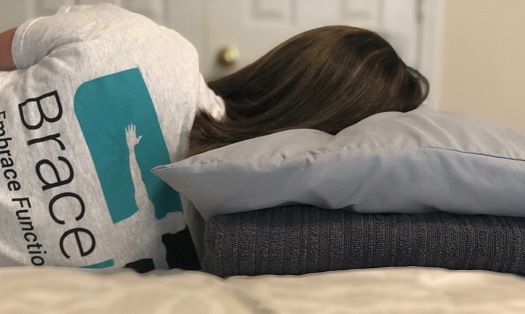
Shoulder Symptoms on the Mattress Side – Unload the weight bearing shoulder by placing a pillow or towel under the thorax, allowing the body weight to be shifted to the thorax instead of the shoulder. Placing the pillow/towel between the fitted sheet and the mattress helps the pillow stay in place during the night.
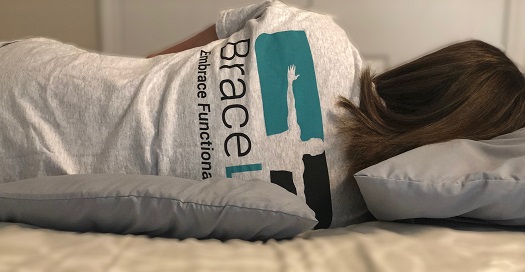
Shoulder Symptoms on the Top Side – Unload the top shoulder by placing one pillow under the elbow, allowing most of the pillow to drop over the back of the patient, which helps the pillow stay in place. An additional pillow folded in half and placed under the wrist limits shoulder rotation.

Low Back/Hip Symptoms on the Mattress Side – Place a small pillow or towel between the floating ribs and iliac crest to prevent a lateral shift of the lumbar spine.
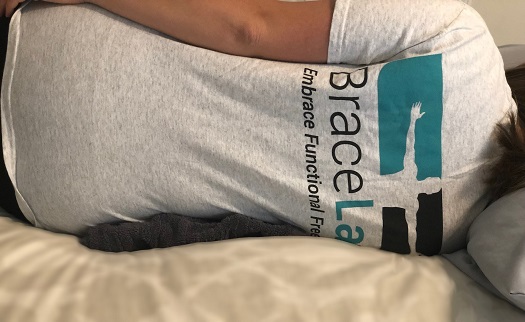
Low Back/Hip Symptoms on the Top Side – Place one pillow between the knees and another between the ankles. The pillow between the ankles is important to limit hip rotation. Alternatively, a long body pillow may be used to support both joints.

Modifications for a Back Sleeper
Cervical/Shoulder Symptoms – Three pillows are needed in this position. Place two intersecting angled pillows on the bottom on which to rest the shoulder and elbows. The point of intersection should be around the cervical-thoracic junction. On top of the angled pillows, place the final pillow for the head transversely across the angled pillows.

Low Back/Hip Symptoms – Place a pillow transversely under the femurs, as close as possible to the ischial tuberosities, instead of placing a pillow directly under the knees.

Modifications for a Prone Sleeper
Cervical/Shoulder Symptoms – NOTE: Patients with shoulder or cervical symptoms should not sleep in the prone position unless using a pillow with a face cut-out. To transition patients away from the prone position, suggest sleeping on the back with a heavy pillow across the abdomen. The heavy pillow provides sensory input to the abdomen, similar to what is experienced in the prone position.
Low Back/Hip Symptoms – One or two pillows placed under the pelvis avoids excessive lumbar extension. Also, a pillow under the ankles helps unload the hamstring muscles and the sciatic nerves.

Finding the ideal position and material usually takes multiple attempts. Once the ideal position is determined, photograph the patient in the position with the patient’s phone to help them replicate the position at home. Have the patient sleep in the new position for a minimum of three consecutive nights.
Download Clinical Clues No. 10, Sleep Position Modifications to Alleviate Joint Pain; May 2019
© BraceLab 2019 all rights reserved
Disclaimer: BraceLab Clinical Clues are intended to be an informal sharing of practical clinical ideas; not formal evidence-based conclusions of fact.