Tennis Elbow is No Match for Our Experts…
June 2018 No. 5
Tennis Elbow is No Match for Our Experts…
Jerry Ditz, DPT, Dip. Osteopractic, Cert. SMT, Cert. DN and Karol Young, OTD, OTR/L, CHT
This month’s blog is an inter-professional dialogue between our clinical experts Jerry Ditz, DPT, Dip. Osteopractic, Cert. SMT, Cert. DN and Karol Young, OTD, OTR/L, CHT in response to questions from BraceLab.
BraceLab: What is your first treatment approach when you have determined the patient has tennis elbow?
Karol: Education, education, education! I feel that when the patient has knowledge and understanding of their condition, they are better equipped to manage what can often turn into a chronic condition. I educate the patient on the forearm extensor anatomy, discuss task modification, and demonstrate how to properly position the arm to avoid positions of stress to the extensors. The patient’s home program consists of resting the arm and icing to the lateral elbow for pain relief.
Jerry: My first treatment approach is to load the proximal extensor tendons without increasing the patient's symptoms1. There are four possible levels of loading exercise: 1) neutral wrist isometrics, 2) multi angle isometrics, 3) concentric strengthening, and 4) eccentric strengthening. To determine the level of initial loading exercise, I simulate each exercise manually until pain is apparent. The patient progresses through the remaining levels of loading exercises as pain allows; the end goal is to tolerate eccentric strengthening. Typically, I ask my patients to hold the isometric exercise for one minute and prescribe four sets of fifty repetitions for the concentric and eccentric strengthening exercises.
BraceLab: If your patient is not progressing with their home program, what is your “go-to” treatment modality?
Jerry: My “go-to” treatment is dry needling(2). A typical needling treatment starts with periosteal pecking of the radial head through the extensor tendon origin (See Figure 1), pistoning the needle into the supinator muscle belly (See Figure 2) and a five-needle protocol from the American Academy of Manipulative Therapy2 (left in the arm for 10 minutes) (See Figure 3). I have noticed better results when I reproduce the patient’s pain during the periosteal pecking of the radial head and pistoning into the supinator muscle.
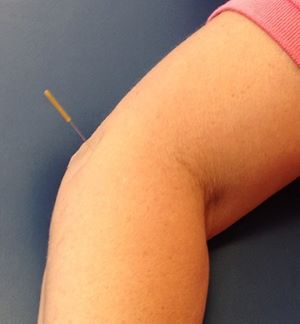
Figure 1: Needle in the extensor tendon origin to achieve periosteal pecking
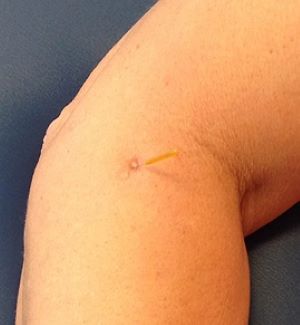
Figure 2: Pistoning the needle into the supinator muscle belly(2)
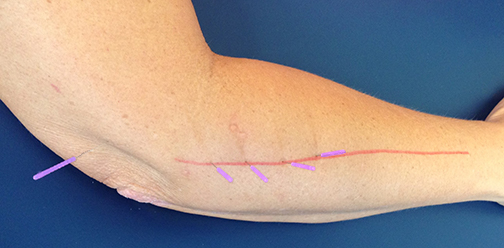
Figure 3: Five-needle protocol from the American Academy of Manipulative Therapy
Karol: When my patient is not improving I emphasize resting by wearing a pre-fabricated wrist orthosis with the wrist in 45 extension. The wrist orthosis is removed for bathing and gentle passive range of motion exercises. If this does not resolve the continuing symptoms, I refer them to a physical therapist for dry needling.
BraceLab: You have very different initial treatments, but you both use dry needling for final symptom resolution, if needed. What estimated percentage of your patients improves with your initial treatment only? Can you explain why?
Karol: I estimate 60% of my patients improve with the initial treatment, depending on whether the pain is acute or chronic. The patients who attend therapy at the onset of pain and can rest and correctly position the arm seem to improve more quickly than those who have waited to seek treatment.
Jerry: I would say between 5%-10% of my patients improve with tendon loading. I start tendon loading at the initial visit and inform the patient if they are not 50% better at their first follow-up visit, we will move to dry needling. I have developed this practice pattern because the positive needling response results in faster functional return for my patients.
BraceLab: Neither of you uses a tennis elbow strap—why?
Karol: I do not use a tennis elbow strap as it may be difficult to position properly, causing pressure on the proximal radial nerve. Once the elbow pain has subsided, I recommend a tennis elbow strap for support with return to work or sport.
Jerry: I recommend a tennis elbow strap if the patient does heavy manual labor and they are unable to work without pain. This type of patient is uncommon in my current clinical practice.
References
(1) Stasinopoulos D, Stasinopoulos I. Comparison of effects of eccentric training, eccentric-concentric training, and eccentric-concentric training combined with isometric contraction in the treatment of lateral tendinopathy. J Hand Ther. 2017; 30:13-19.
(2) Dunning, J. (Manual from Certification in Dry Needling) DN-1: Dry Needling for Craniofacial, Cervicothoracic &Upper Extremity Conditions: An Evidence-Based Approach. American Academy of Manipulative Therapy. Montgomery, AL: 2013.
Download Clinical Clues No. 5, Tennis Elbow is No Match for Our Experts; May 2018
© BraceLab 2018 all rights reserved
Disclaimer: BraceLab Clinical Clues are intended to be an informal sharing of practical clinical ideas; not formal evidence-based conclusions of fact.