
Addressing Balance for Return-to-Play After a Distal Radius Fracture

Aug. 2024 No. 39
Addressing Balance for Return-to-Play After a Distal Radius Fracture
by Karol Young, OTD, OTR/L, CHT and Jerry Ditz, DPT, Dip. Osteopractic, Cert. SMT, Cert. DN
One common question after injury is “When can I play tennis (or any sport) again?” While it can take up to one year to regain wrist and hand strength, individuals who undergo open reduction and internal fixation (ORIF) of a distal radius fracture are often released by their physician to return-to-sport between eight and twelve weeks. Forde et al. found that older adults have impaired lower limb muscle strength and balance following a distal radius fracture, confirming our clinical observation that older patients are especially apprehensive about returning to their sport.
In addition to therapy to remediate limitations caused by the distal radius injury, inclusion of a balance program as part of rehabilitation can enhance the functional outcome and establish the confidence required for safe return-to-sport. In our example below we review the therapy approach for H.J., a 68-year-old avid tennis player, who fell on the tennis court sustaining a distal radius fracture of his left non-dominant wrist.
Focus on Remediating Stiffness Caused by the Distal Radius Fracture
As would be expected, at his first visit two weeks following the ORIF surgery, H.J.’s left hand was mildly edematous, the surgical scar was sensitive, finger stiffness limited end range flexion, and the wrist had limited active and passive extension. A custom thermoplastic orthosis supported his wrist as he began gentle active motion of the hand, and he periodically removed the orthosis to begin gentle active wrist motion. He also began gentle passive interosseous muscle stretching of the fingers, and focused on active finger flexion in the hook position because the active hook reinforces the normal pattern of initiating finger flexion with the flexor digitorum profundus.
Between his weekly therapy visits, H.J. focused on active motion for 1) wrist flexion and extension, 2) the dart thrower’s motion, and 3) pronation and supination. Initially, ulnar sided wrist pain limited supination to 60 degrees, but as this pain decreased, supination improved. The volar forearm scar hypersensitivity and adherence improved with the use of sports tape and scar massage, and edema slowly resolved with increased active motion.
To isolate the left wrist muscles to promote the tenodesis pattern and eliminate compensatory finger movements, H.J. held a tennis ball during wrist exercises. He also rolled the tennis ball over his scar to desensitize it. Wrist proprioception was enhanced by gentle weightbearing while holding the tennis ball, progressing to tossing the ball first with his forearm in neutral and then in supination, since supination is his usual position for serving. See Figures 1, 2 & 3.

Figure 1: Use of tennis ball for scar massage.

Figure 2: Ball toss with forearm in neutral.

Figure 3: Ball toss with forearm in supination.
Four to six weeks after surgery, H.J. weaned from the custom orthosis and found the Push® Sports Wrist Support provided adequate support while allowing the wrist motion he needed to toss the ball. Wearing the wrist support, his fear of excessive wrist movement and possible re-injury was eliminated. See Figures 4 & 5; Videos 1 & 2.

Figure 4: Post Operative custom wrist support.

Figure 5: Use of the Push® Sports Wrist Support.
Videos 1 & 2: Use of the Push® Sports Wrist Support during ball toss with forearm in neutral and supination. Click to watch.
Return-to-Play Preparation and Lower Extremity Balance Program
While he focused on his left wrist injury rehabilitation, H.J. was encouraged to walk each day to maintain some lower extremity conditioning. Eight weeks following ORIF, when he was released by his physician to return to tennis, H.J. was eager to integrate his improved combined upper extremity movements with the balance required to play tennis. He began this sequence of combined motions:
1. Active motion
a. Forearm rotation from pronation to supination.
b. Forearm rotation from pronation to supination combined with wrist motion.
c. Above motions combined with active shoulder forward flexion to simulate tossing the ball when serving.
2. Resistance training
a. Isolated resisted wrist motion while seated and holding a ball
b. Resisted elbow and shoulder flexion while standing with forearm in supination to simulate a serve. See Figures 6 & 7; Video 3.
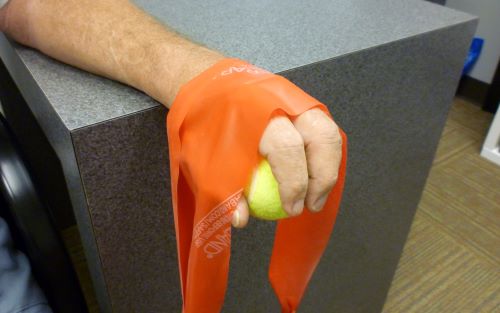
Figure 6: Use of resistance bands while simulating motions required in tennis.

Figure 7 & Video 3: Use of resistance bands while simulating motions required in tennis. Click to watch video.
NOTE: Before adding an additional joint to the combination, each exercise had to be performed painlessly and without compensatory motion.
Because H.J. expressed fear of falling when alternating upper and lower extremity movements, he began a lower extremity balance program, Sensorimotor Training (SMT), to ensure development of automatic reflexive stabilization and dynamic control.
Of important note:
• Before engaging in Sensorimotor Training, it is essential to ensure proper posture. Proprioceptive exercises should be performed barefoot to maximize afferent input while stabilizing the key joints of the foot, sacroiliac joint, and the cervical spine in a neutral position.
• Balance exercises should be performed to fatigue rather than to a set number of repetitions and should focus on the quality of movement. Exercise should be stopped at the first sign of fatigue to avoid compensatory movements.
The SMT components H.J. incorporated into his therapy were:
1. Sensorimotor System:
a. Base of Support (BOS)
i. Started by reducing the size of the BOS by progressing from two-leg to one-leg standing.
ii. Introduced unstable surfaces like foam pads and balance boards to increase muscle activation.
b. Center of Gravity (COG)
i. Challenged his COG with weight shifts, perturbations, and extremity movements.
ii. Added resistance training.
2. Visual System
a. Added the challenge of postural stability by closing his eyes during exercises.
3. Vestibular System
a. Incorporated head movements during the exercises to increase complexity and challenge balance.
While working with H.J., we found it helpful to review the three stages of Sensorimotor Training, each of which have specific goals and challenges:
1. Static Phase: (two to eight weeks) Focus on stabilizing the pelvis and core. Progress from firm surfaces to unstable ones, gradually increasing postural sway. Introduce weight shifts and perturbations to elicit automatic postural reactions. Some examples of these activities are:
a. Sit on a stability ball with feet apart, then with feet together, and then with feet together on foam. See Figure 8.
b. Stand on the ground with feet together, stand on one foot on the ground, stand on foam or a pillow with both feet together, and then stand on one foot on foam. See Figure 9.
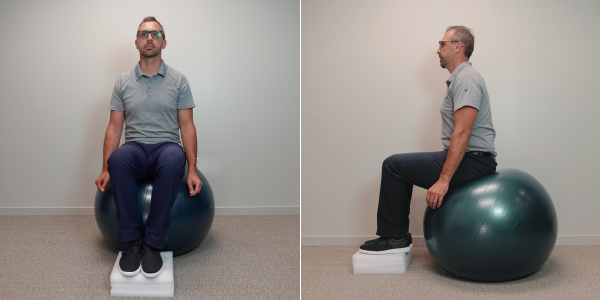
Figure 8: Example of Static Phase Exercise.
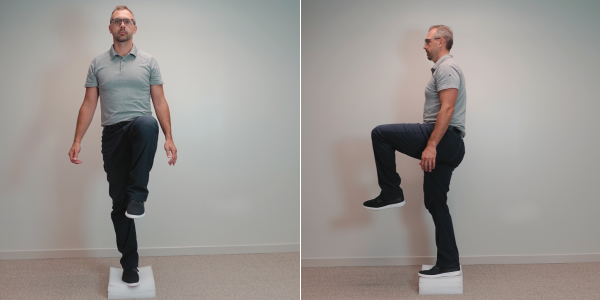
Figure 9: Example of Static Phase exercise.
2. Dynamic Phase: (eight to ten weeks) Build on the stable pelvis by incorporating movements of the upper and lower extremities, gradually adding resistance. Shoulder flexion was chosen for H.J. because it is a common movement in tennis and reaching one’s arm overhead changes the center of gravity. Some examples of these activities are:
a. Sit on a stability ball with feet together while performing resisted shoulder flexion. See Figure 10.
b. Stand on foam with feet together while performing resisted shoulder flexion.
3. Functional Phase: (ten weeks and beyond) Combine various movements and postures such as walking, squats, lunges, and jumps to prepare for specific sport demands. Advance activities while challenging balance and unstable surfaces. Some examples of these activities are:
a. Stand with one foot on foam and practice tossing the tennis ball up and then stand on the other foot and toss the ball up. This simulates the toss used while serving the tennis ball.
b. Stand on one foot on foam while bouncing a tennis ball on a racket and then stand on the other foot while bouncing the ball. See Figure 11.

Figure 10: Example of Dynamic Phase exercise.

Figure 11: Example of Functional Phase exercise.
Return to Sports?
The treatment described above provided H.J. with the confidence and skill he needed for safe return to the tennis court. This program may also be helpful for individuals who play similar racket sports such as pickleball or racquetball. We recognize each sport has its own demands, and therefore recommend patients returning to a specific sport work closely with their therapist to ensure they are both ready and able to return to safe play.
Download Clinical Clue No. 39, Addressing Balance for Return-to-Play After a Distal Radius Fracture, August 2024
© BraceLab; 2024 all rights reserved
Disclaimer: BraceLab Clinical Pearls are intended to be an informal sharing of practical clinical ideas; not formal evidence-based conclusions of fact.