
An Algorithm For Treating PIP Joint Flexion Contractures

September 2022 No. 75
An Algorithm for Treating PIP Joint Flexion Contractures
by Judy Colditz OT/L, CHT, FAOTA & Karol S. Young OTD, OTR/L, CHT
Recently, we compared our approaches for treating an isolated proximal interphalangeal (PIP) joint flexion contracture and discovered we evolved our thinking in the same direction!
What We Avoid
We avoid passive range of motion (PROM) because it produces a short-term elastic response, and thus is unable to apply the desired level of force over time that soft tissue requires for permanent change.
Although many orthoses apply a low-load, prolonged force, such force is still passive range of motion. We no longer use extension or static progressive orthoses to regain PIP joint extension.
We also avoid PIP joint mobilization because the PIP joint is tightly constructed with very little normal joint play available. This contrasts with larger joints which may benefit from joint mobilization.
We reserve Casting Motion to Mobilize Stiffness (CMMS) for multiple digit involvement where chronic stiffness is pervasive and accompanies hand edema and/or a maladapted pattern of motion.
What We Think
To improve active extension of a stiff PIP joint it is not necessary to first regain passive joint extension. Because the multi-layered fibers of the dorsal apparatus easily become adhered and PROM does not create differential or proximal movement of these fibers, active proximal glide of the dorsal apparatus is the single requirement to improve PIP joint active extension.
It is proven in patients with ulnar palsy (video courtesy of Kantessa Stewart, OTR/L CHT) who have a claw deformity with PIP joint contractures that they regain full PIP joint extension if an anti-claw (MP block) orthosis is consistently worn.
The Starting Point
Our preferred treatment for a PIP joint flexion contracture is illustrated in our algorithm (See Figure 1) with the initial decision based upon the degree of PIP joint contracture.

Figure 1: Treatment Algorithm (Click to download PDF)
For more severe contractures, the serial cast is used to bring the PIP joint to the position where the lateral bands can effectively participate in PIP joint extension; they must be able to synchronically move dorsally as the extensor digitorum communis (EDC) drives the proximal glide of the dorsal apparatus. The constancy of the cast is far more effective than the intermittent use of a removable orthosis (See Figure 2).
Another clinical finding that prompts the initial use of a serial cast is a PIP joint that presents with inflammation (red, reactive, edematous) (See Figure 3), regardless of the degree of joint contracture. A period of serial casting is, in our opinion, the best way to reduce the joint inflammation, creating room for full joint extension.
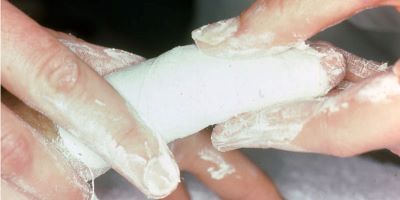
Figure 2: PIP joint serial cast for extension

Figure 3: Inflamed and edematous PIP joint
Blocking the MP Joint
The most productive technique to regain active and passive PIP joint extension is to block the MP joint from full extension so the more powerful extrinsic EDC adds to the proximal pull on the dorsal apparatus. We call this active redirection.
If the PIP joint flexion contracture is less than 40 degrees, we apply an orthosis to block MP joint extension during the day and use a static extension orthosis at night (See Figures 4 & 5). Forty degrees or less is an approximate suggestion; it is the clinical judgment of the therapist to decide the appropriate treatment.

Figure 4: Relative Motion Orthosis blocking MP joint extension

Figure 5: Static PIP extension orthosis worn at night
Because a relative motion orthosis (RMO) blocks extension of the MP joint of the involved digit-- thereby demanding active differential glide of the dorsal apparatus-- this is our overwhelming treatment choice. This design also allows relatively normal use of the hand and thus is well tolerated for full day wear.
Other orthotic designs can be equally effective in blocking the MP joint as the RMO (See Figure 6). Sometimes it may be preferable to apply an orthosis that only affects one digit. One author’s (JC) favored design is made of leather and string (See Figure 7).

Figure 6: An alternative design to block MP joint flexion

Figure 7: An alternative design to block MP joint extension
The fact that the RMO, or other design, can be worn during all waking hours is key to the success of this treatment approach. Every time the finger is extended, the block drives the power into the dorsal apparatus.
Maintaining Gains at Night
The greater tone of the finger flexors causes our fingers to rest in a flexion while we sleep. Holding the PIP joint in its maximum extension with a night static extension orthosis (See Figure 6) simply favors this weaker motion, making the starting point each morning the maximum available extension.
Weaning from Orthotic Wear
No wear timeline fits everyone because the injury severity and the tissue maturity are different for each patient. The more severe the PIP joint injury and the longer before treatment begins will guide the therapist as to how long the orthosis should be worn beyond the attainment of full active PIP extension within the orthosis.
When full PIP extension has been gained, start with short periods out of the orthosis, increasing the number of times out of the orthosis before increasing the length of each time. Periodically manually blocking MP joint extension, while actively extending the finger, may allow weaning to proceed more rapidly. The goal is to never allow the PIP extension lag to recur as weaning progresses.
Approaching Small Stiff Joints
It is discouraging to receive a physician’s referral that requests “aggressive motion” or “aggressive passive motion” because we believe the best path to improving small joint motion in the hand is active redirection where the tissue change is driven by the patient’s own active motion—slowly, and over time. This can be equally effective in regaining PIP joint flexion where the MP joint is blocked from full flexion and the extrinsic flexor glide is directed more distally to the stiff interphalangeal joints. In our opinion, not only will avoiding passive motion to the small finger joints provide a better outcome for your patient, but it will also limit the stress you place on your own joints.
Download a PDF of the algorithm here.
Download Clinical Pearl No. 75, An Algorithm For Treating PIP Joint Flexion Contractures, September 2022
© BraceLab; 2022 all rights reserved
Disclaimer: BraceLab Clinical Pearls are intended to be an informal sharing of practical clinical ideas; not formal evidence-based conclusions of fact.