Ankle Brace for Sprains: Soft Brace vs Hinged Brace — Which Gives Better Stability?
|
Ankle Brace for Sprains: Soft Brace vs Hinged Brace — Which Gives Better Stability? |
Ankle sprains are one of the most common musculoskeletal injuries around, yet choosing the right sprain brace is something most people get wrong. Not because the options are complicated, but because not all ankle braces are built to do the same job.
A soft ankle brace and a hinged ankle brace both offer support, but they work differently, suit different injury stages, and serve different activity demands. Knowing which one actually gives you the stability you need can make a real difference to how quickly you recover, how confidently you move, and whether that ankle keeps rolling on you.
This guide breaks it all down clearly. No jargon, no guesswork.
What Actually Happens When You Sprain Your Ankle
|
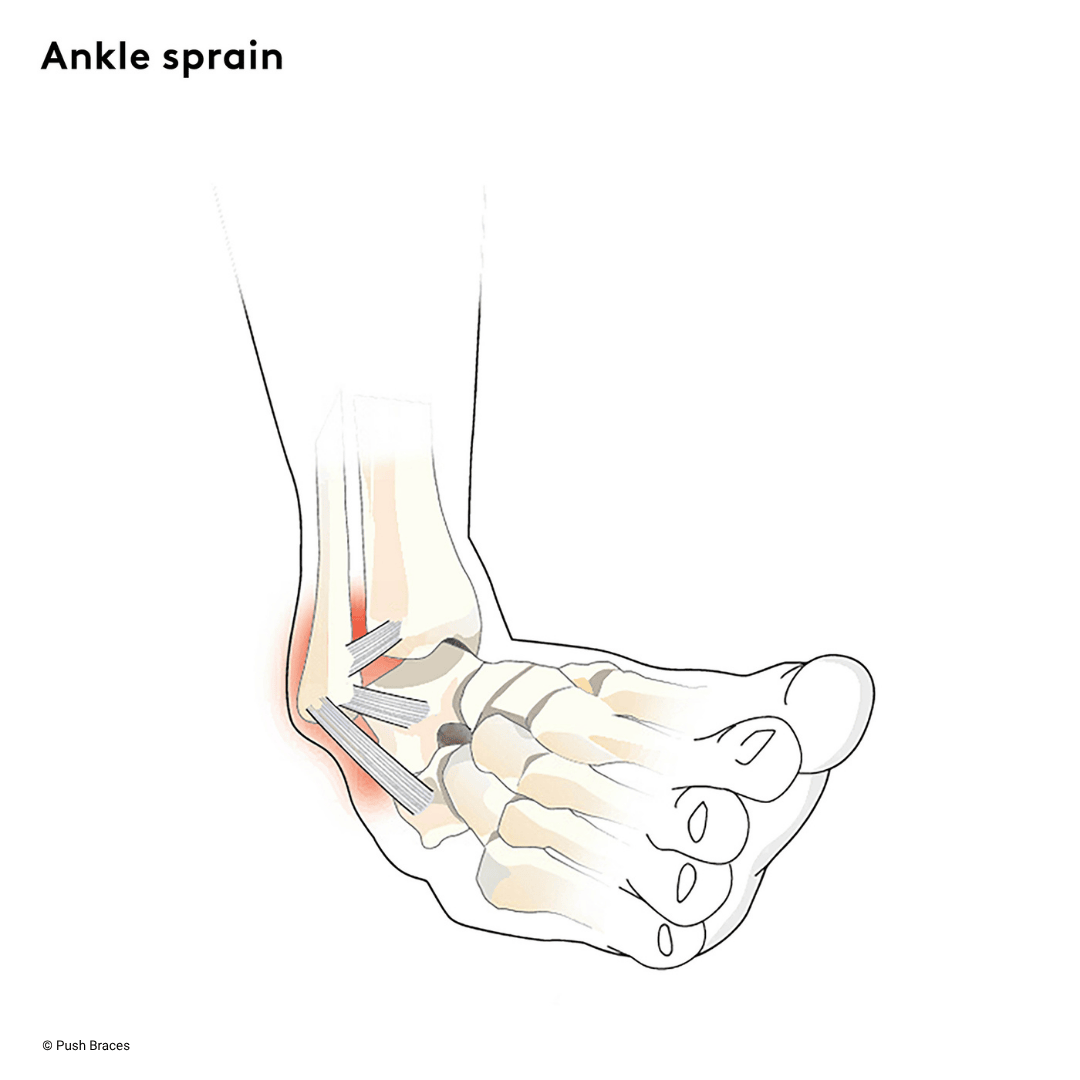
A sprain occurs when the ligaments around the ankle are stretched or torn, usually from rolling inward (inversion). The outer ligaments, particularly the anterior talofibular ligament, take the brunt of most ankle sprains. The damage leaves the joint unstable. Even after the initial swelling settles, many people find the ankle still feels wobbly, hesitates on uneven ground, or rolls again under normal activity. That instability is what a sprain brace is designed to address. |
|
Sprains are commonly graded:
- Grade 1: Minor stretching, mild swelling, tenderness. The ankle still feels functional.
- Grade 2: Partial ligament tear. Noticeable swelling, bruising, some loss of stability.
- Grade 3: Complete ligament rupture. Significant instability often requires medical management.
The grade matters when choosing your brace. So does your activity level and where you are in the recovery timeline.
Soft Ankle Brace vs Hinged Ankle Brace: What Is the Difference?
This is the core question, and it comes down to how each type controls movement.
How a Soft Ankle Brace Works
|
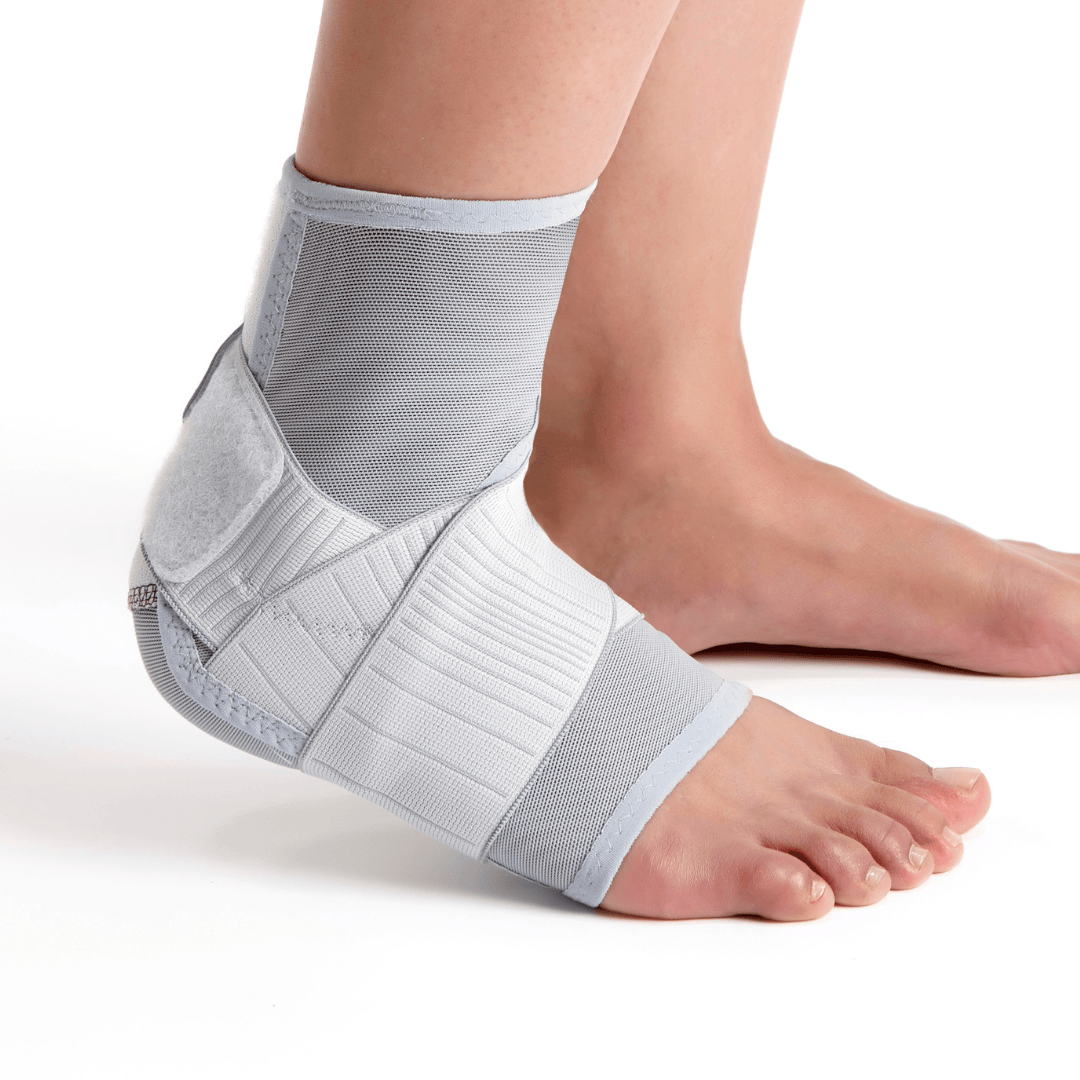
A soft ankle brace is made from flexible, fabric-based materials. It wraps around the ankle and provides compression, warmth, and light positional support. The primary job is to reduce swelling, improve proprioception (your body's awareness of where the joint is), and offer gentle protection during low-stress activity. Soft braces are typically thin, low-profile, and easy to wear inside shoes. They do not restrict movement significantly, which is both a benefit and a limitation depending on your situation.
|
|
How a Hinged or Semi-Rigid Ankle Brace Works
|
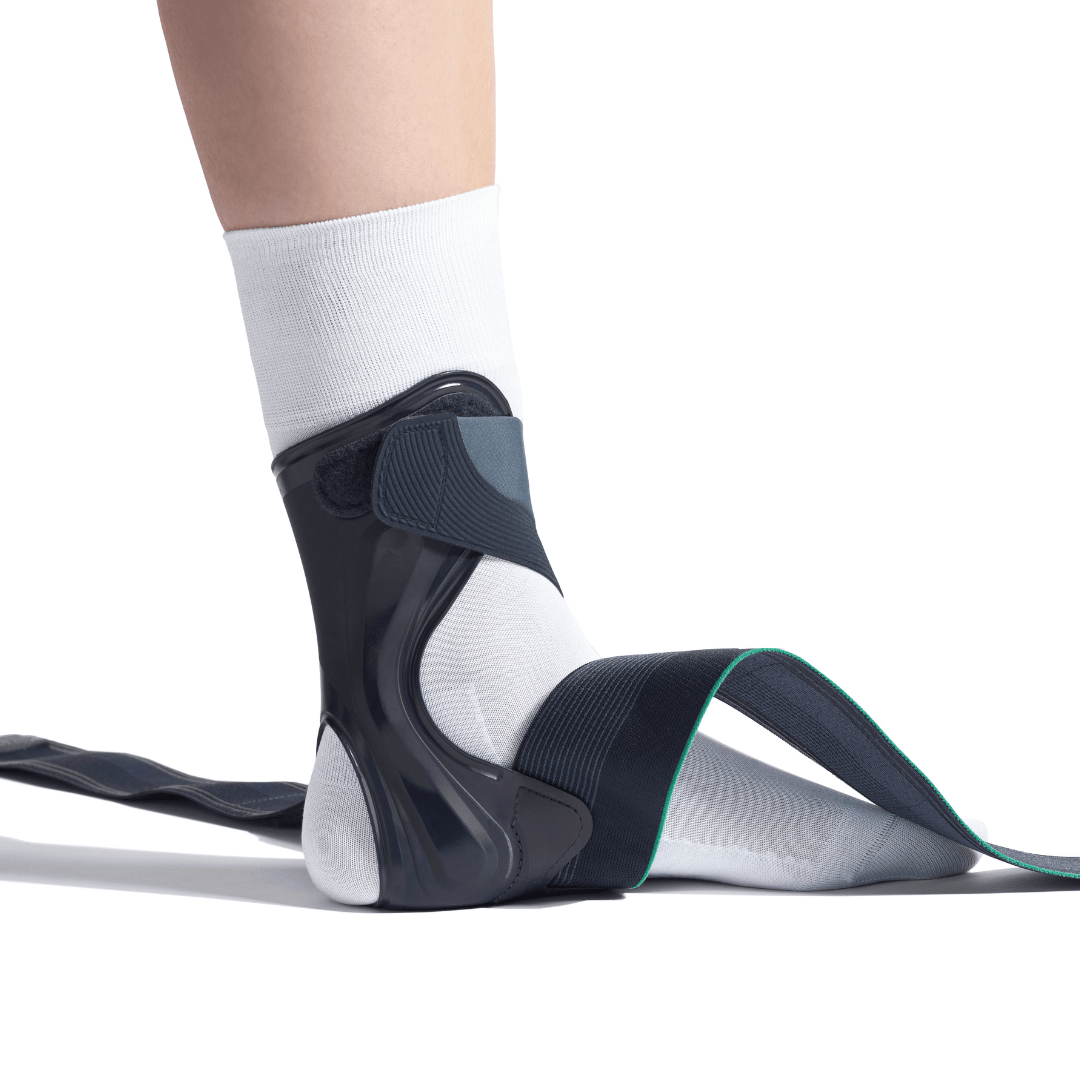
A hinged or semi-rigid ankle brace incorporates a firmer shell, structured strapping systems, or both. The goal shifts from compression to actual mechanical stabilisation. These braces are designed to limit inversion and eversion, the side-to-side movements that cause rolling and re-injury. Some use rigid or semi-rigid shells on either side of the ankle. Others use non-elastic strapping systems that mimic the hold of professional athletic taping. The best designs do both, while still allowing normal forward movement so your gait is not disrupted.
|
|
Which Brace Gives Better Stability After a Sprain?
The honest answer is: it depends on what you mean by stability.
If your ankle is mildly sore, a little swollen, and you want support for walking or everyday movement, a soft ankle brace may provide exactly the stability you need. The compression helps manage swelling, and the proprioceptive feedback helps the joint feel more secure during low-demand activity.
If your ankle is genuinely unstable, if it rolls on uneven ground, if you feel nervous about cutting, pivoting, or playing sport, a soft brace will not be enough. That kind of instability needs mechanical support. It needs something that physically limits how far the joint can move in the wrong direction.
For actual structural stability after a sprain, a semi-rigid or hinged ankle brace consistently outperforms a soft brace. Multiple clinical studies confirm that functional ankle bracing significantly reduces re-sprain rates compared to no support, and structured braces provide greater inversion control than compression-only designs.
That said, the softer option has a real place. Using an overly rigid brace when you only need compression can limit mobility unnecessarily and slow functional recovery. Match the brace to the injury, not the other way around.
When a Soft Ankle Brace Is Enough
A soft sprain brace is genuinely the right choice in several situations. You do not always need maximum support.
Mild Grade 1 sprain with swelling and soreness: When your ankle is tender but still functional, and you can walk, although with slight pain. In these cases, controlled compression and light support are what the ankle actually needs.
Recovery phase after a more serious sprain: Once the swelling has reduced and your ankle has regained reasonable stability, stepping down to a softer brace can support the final stages of recovery without over-protecting the joint.
Low-risk daily activities: Walking to work, light exercise, gardening, or standing for long periods. These activities do not place high inversion stress on the ankle, so a lighter brace is proportionate.
Arthritis-related discomfort: If the main problem is joint soreness rather than ligament instability, a soft brace with good padding and compression may offer meaningful relief.
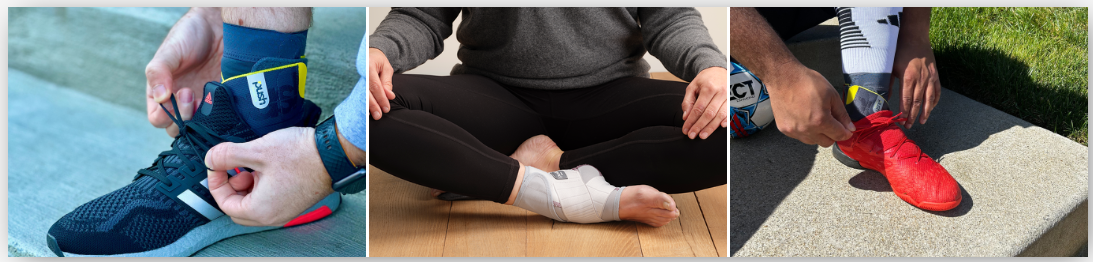
For this level of support, the Push care Ankle Brace is a practical option. It provides adjustable compression via a simple dot-system application, padded comfort zones around bony prominences, and an ultra-thin profile that fits easily inside everyday footwear. It is designed for Grade 1 sprains, mild instability, and arthritis-related ankle discomfort. Lightweight, machine washable, and comfortable enough for all-day wear.
If you want the next level up without moving to a rigid shell, the Push Sports Ankle Brace 8 offers a figure-8 strap configuration with TPU anti-slip strips that keep the brace in place during activity. It suits mild ankle sprains where compression and light edema control are the priority, and its minimal profile fits inside athletic shoes without bulk. A good middle-ground option for someone easing back into movement after a minor sprain.
When a Hinged or Semi-Rigid Brace Is the Better Choice
If any of the following sound familiar, a structured ankle brace is likely the better option:
- Your ankle still feels wobbly or unpredictable after a sprain
- You have had multiple sprains on the same ankle
- You are returning to basketball, tennis, volleyball, football, trail running, or any sport that involves rapid direction changes
- Your injury was graded as moderate or severe
- You are in post-fracture or post-surgical rehabilitation
- You are hiking, skiing, or working in environments where ground surfaces are unpredictable
For these situations, you need a brace that does more than sit around the ankle. You need one that actively controls inversion and gives you genuine mechanical protection.
The Push med Ankle Brace: Taping-Level Stability in Brace Form
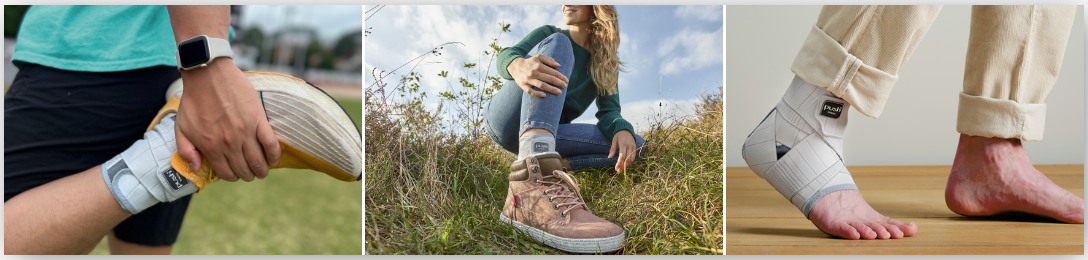
The Push med Ankle Brace is one of the most thoughtfully designed ankle braces for sprain recovery and prevention. It replicates the effect of professional athletic taping through a combination of internal silicone strips that adhere to the skin, non-elastic diagonal straps that limit inversion and eversion, and an integrated heel lock system.
This is not just clever engineering. The taping equivalent design means you get the hold of a proper tape job without the skin irritation, the cost of repeated re-taping, or the need for a sports trainer. It features padded comfort zones around bony areas, a zipper and hook-and-loop closure for easy on and off, and Sympress microfiber construction.
It can even be worn without a shoe, which makes it suitable for gymnasts, dancers, and activities where footwear is minimal or absent.
Suitable for: acute lateral ligament injuries, post-surgical or post-fracture treatment, arthritis with instability, and prevention of repeat sprains. Activities span ball sports, running, cycling, racquet sports, skiing, weightlifting, and everyday use.
The Push med Ankle Brace Aequi Flex: Clinical-Grade Stabilisation
If you want the most clinically robust ankle brace in the BraceLab range, the Push med Ankle Brace Aequi Flex is it.
This is the next-generation update to the original Aequi Flex, a brace that has been trusted by medical professionals worldwide since 1998. The new Flex-protect system features a shell that is rigid in the centre and increasingly flexible toward the edges, with a malleolus recess that conforms to individual ankle anatomy. A front diagonal strap system provides inversion control, while two figure-8 elastic compression straps manage edema and joint compression simultaneously. Silicone lining prevents migration throughout the day.
Its stability has been independently validated against leading alternatives by the Fraunhofer Institute. It is the kind of clinical evidence that gives physiotherapists and orthopaedic specialists confidence when recommending a brace to patients.
The Aequi Flex is suitable from immediately post-injury through chronic instability and osteoarthritis, and is often recommended to be worn for up to one year post-injury to help prevent recurrence. If your ankle has been giving you trouble for a long time, this is worth considering seriously.
Note: this brace contains latex and is contraindicated for those with decreased sensation in the foot or ankle.
The Push ortho Ankle Brace Aequi: Structured Support That Moves With You
For those who want strong medial support without sacrificing gait quality, the Push ortho Ankle Brace Aequi deserves attention. The patented design uses a semi-rigid foam shell that compresses to conform to the individual ankle, combined with a medial support system that targets inversion and eversion control.
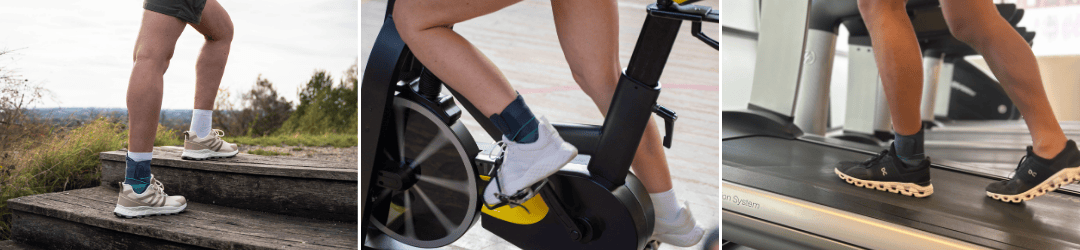
Critically, it does not inhibit normal walking or running gait. Many firmer braces restrict forward ankle movement in ways that make natural movement awkward. The Aequi is designed to avoid that. Worn over a sock inside a lace-up shoe, it suits a wide range of activities including running, court sports, cycling, skiing, skateboarding, and daily use.
A trusted choice for ankle sprains, chronic instability, non-surgical fracture treatment, and injury prevention across all activity levels.
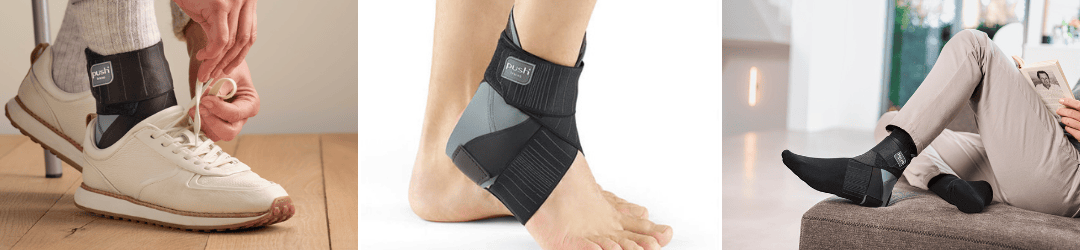
Choosing the Right Brace for Your Situation: A Practical Guide
Here is a straightforward way to match your situation to the right ankle brace:
Mild sprain, some swelling, walking and daily activities only: Start with the Push care Ankle Brace for compression and comfort, or the Push Sports Ankle Brace 8 if you want a slightly more structured strap system.
Moderate sprain, ankle still feels unstable: The Push med Ankle Brace provides taping-level inversion control without the bulk. A strong choice for those who need real stability but want something easy to put on and take off.
Returning to sport, court or field activity, trail running, or hiking: The Push med Ankle Brace Aequi Flex offers the most clinically validated lateral stability in the range. For athletic use specifically where the brace needs to fit inside cleats or performance footwear, the Push Sports Ankle Brace Kicx uses a Prophy-X strap system inspired by professional taping techniques, with an ultra-thin profile designed to fit even the smallest athletic shoes.
Chronic instability or repeated sprains on the same ankle: Consider the Push ortho Ankle Brace Aequi or the Aequi Flex. Both provide durable, structured support designed for long-term use. The Aequi Flex is the more clinically advanced option.
Support for a child or adolescent: The Push ortho Ankle Brace Aequi Junior applies the same patented medial support technology as the adult Aequi, sized for children aged 6 to 12 (US shoe sizes 12 to 5.5). One size fits ankle circumferences of 23 to 27 cm and can be worn with or without a shoe.
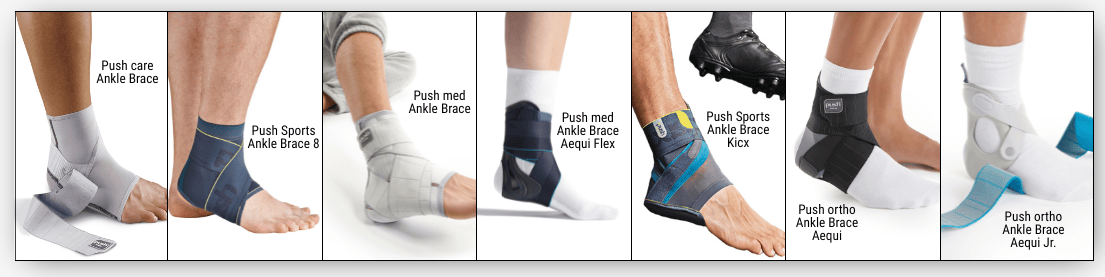
[INSERT IMAGE: image1.png — Alt: Lineup of all Push ankle brace models with labels]
A Final Note on Fit and Professional Guidance
Even the best ankle brace for sprains will underperform if it does not fit correctly. Take the time to check sizing guides carefully, particularly for structured braces where fit directly affects the level of support delivered.
For moderate or severe sprains, post-surgical recovery, or any situation involving significant instability, we always recommend working with a physiotherapist, orthopaedic specialist, or sports medicine professional alongside using a brace. A brace supports recovery. It is not a replacement for proper clinical assessment.
If you have questions about which option suits your situation, our team is happy to help. Get in touch with us and we will point you in the right direction.
The Bottom Line
A soft ankle brace and a semi-rigid sprain brace both have a genuine place in ankle sprain recovery. The softer option suits mild injuries, compression needs, and low-demand activity. The structured option is the right call when the ankle is genuinely unstable, when you are returning to sport, or when repeat sprains have become a pattern.
Matching the brace to the injury stage, the activity, and the level of support actually needed is how you get the best result. Browse our full range of ankle braces and find the right fit for where you are in your recovery.
Frequently Asked Questions
How long should I wear an ankle brace after a sprain?
It depends on the severity. A mild Grade 1 sprain may only need a brace for one to two weeks during activity. A moderate Grade 2 sprain typically warrants bracing for four to six weeks, or longer if instability persists. For severe Grade 3 sprains or post-surgical recovery, bracing for up to twelve months is sometimes recommended to prevent re-injury. Always follow guidance from your treating clinician.
Can I sleep with an ankle brace on?
Generally, ankle braces are designed for use during activity and waking hours. Wearing a brace during sleep is not typically necessary and may interfere with circulation or comfort. If your clinician has specifically recommended overnight use, follow that advice. Otherwise, removing the brace at rest is usually fine.
Will wearing an ankle brace weaken my ankle over time?
This is a common concern. Current evidence suggests that wearing a brace during higher-risk activities does not meaningfully weaken the ankle, provided you are also doing appropriate rehabilitation exercises to rebuild strength and proprioception. A brace is most effective as a protective tool alongside rehab, not as a substitute for it.
Can I wear an ankle brace inside any shoe?
Most ankle braces are designed to fit inside a lace-up shoe, but the fit varies by brace type and shoe style. Slim-profile soft braces tend to fit most footwear. Semi-rigid and hinged braces may require a shoe with a wider toe box or removable insole. Check the product specifications for footwear compatibility before purchasing.
Is an ankle brace suitable for a child who has sprained their ankle?
Yes, with the right sizing. Adult braces should not be used on children, as fit directly affects the level of support provided. The Push ortho Ankle Brace Aequi Junior is specifically designed for children aged 6 to 12 and applies the same medial support technology as the adult version in a correctly proportioned fit.
What is the difference between an ankle brace and ankle taping?
Professional athletic taping can provide excellent inversion control but loses up to 50 percent of its effectiveness within the first 20 minutes of activity. It also requires a trained practitioner to apply correctly and can cause skin irritation with repeated use. A well-designed ankle brace maintains consistent support throughout activity, can be applied independently, and is reusable. For most people, a quality brace is more practical for ongoing use.
Should I use an ankle brace for prevention even if I have not sprained my ankle?
If you play court or field sports, hike on uneven terrain, or have naturally hypermobile joints, wearing a brace during high-risk activity is a reasonable preventive measure. Research supports the use of functional ankle bracing to reduce first-time sprain risk in athletes with no prior injury history, particularly in sports like basketball and volleyball.