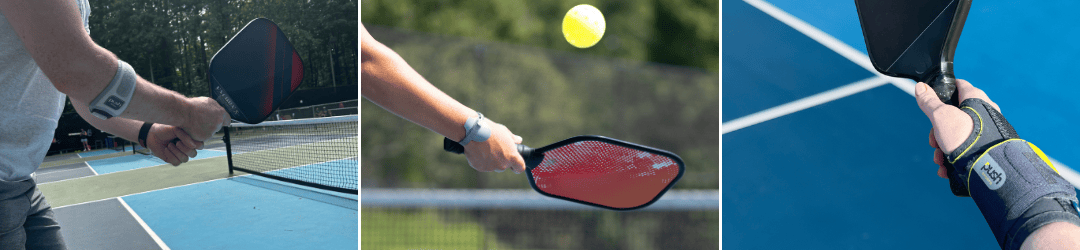
The Best Braces for Pickleball: Elbow, Wrist, Knee, and Ankle Support for Court Players
|
The Best Braces for Pickleball: Elbow, Wrist, Knee, and Ankle Support for Court Players |
Pickleball is now the fastest-growing sport in the United States, with participation reportedly surpassing 36 million players in recent years. But with that growth comes a surge in overuse injuries, particularly to the elbow, wrist, knee, and ankle, the four joints that take the most punishment on the court.
The sport's combination of quick lateral movements, repetitive paddle swings, and hard court surfaces creates a surprisingly demanding load on the body. Whether you play recreationally twice a week or compete in weekend tournaments, understanding which braces work best for your specific vulnerabilities can mean the difference between staying active and sitting out with a preventable injury.
This guide breaks down the most effective brace options for each major area of concern in pickleball, and explains exactly when and why you would use each one.
Why Pickleball Players Need Joint Support
The mechanics of pickleball put unique stress on the body. Unlike tennis, rallies happen closer to the net, which means faster reflexes, tighter wrist angles, and more frequent direction changes. The paddle is lighter, but that actually encourages more wrist-led strokes, which loads the forearm tendons more than most players realise.
Common pickleball injuries include:
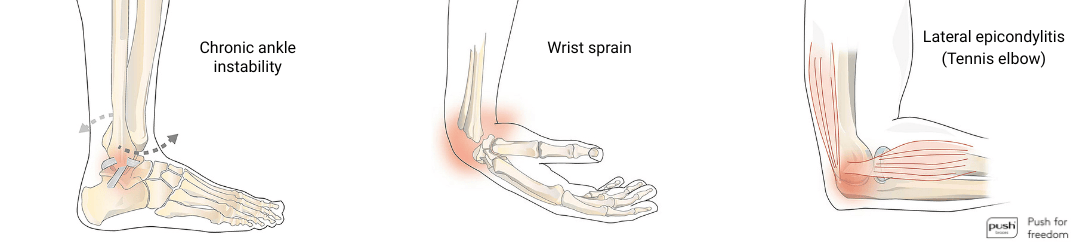
- Lateral epicondylitis (tennis elbow), caused by repetitive backhand strokes and off-centre hits
- Wrist sprains and tendonitis, especially from excessive snap or flick shots
- Ankle sprains, from sudden lateral shuffles and split-step landings on hard surfaces
According to sports medicine research published by the American Academy of Orthopaedic Surgeons, overuse injuries account for a large proportion of recreational sport injuries in adults over 50. Pickleball's demographic skews older, which means the joints involved are often already dealing with some degree of wear or stiffness before the game even starts.
The right brace does not just protect an existing injury. It can reduce fatigue, improve proprioception (your joint's sense of its own position), and allow you to play with better mechanics for longer.
Elbow Support: Addressing the Most Common Pickleball Complaint
Ask any experienced pickleball player about injuries and the elbow comes up almost immediately. Tennis elbow, or lateral epicondylitis, is a repetitive strain injury affecting the tendons that connect the forearm muscles to the outside of the elbow. In pickleball, the low-to-high motion of dink shots and the impact from off-centre drives both contribute heavily.
What to Look for in an Elbow Brace
A good elbow brace for pickleball should do three things:
- Apply targeted compression to the extensor tendon insertion point
- Allow full arm extension and rotation without restriction
- Stay in place during dynamic court movement
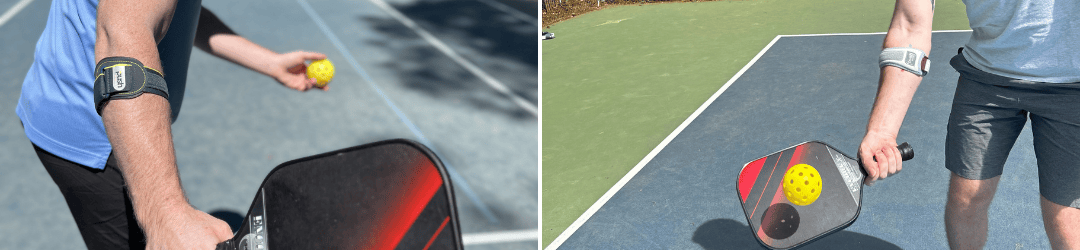
The Push med Elbow Brace Epi is a strong choice here. It is specifically designed for epicondylitis and uses an anatomically shaped pad to apply precise pressure to the irritated tendon site. Unlike generic counterforce straps that shift during play, this brace is engineered to maintain its position through repeated swinging motions, which is exactly what you need during a long game or tournament.
It also fits neatly under clothing and does not interfere with grip or paddle control, which matters when you are trying to stay focused on the game rather than adjusting your gear mid-rally.
Knee Support: Managing Lateral Stress and Court-Surface Load
The combination of quick lateral pushes, sudden direction changes, and repeated squatting at the kitchen line puts steady stress through the knee, often more than recreational players realize. Patellar tendonitis (jumper's knee), patellofemoral pain, and post-tweak instability are all common complaints in players who pick up the sport in mid-life or step up to several sessions a week.
The right knee brace depends on what is actually driving the pain.
Matching the Brace to the Problem
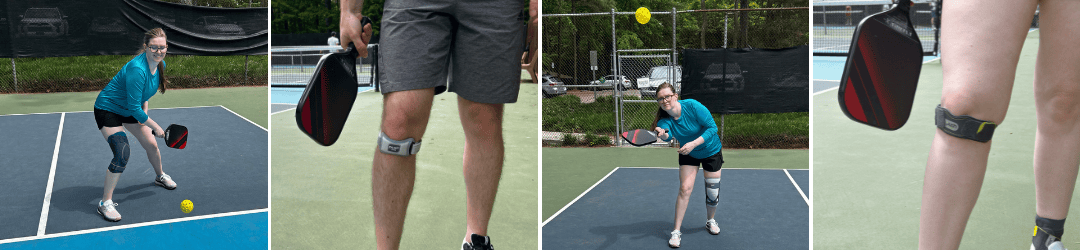
For pain located right under the kneecap that flares during jumping, lunging, or quick direction changes, the Push med Patella Brace targets patellar tendonitis directly. Its soft gel pad and semi-rigid strap deliver precise, evenly distributed pressure across the patellar tendon, offloading the area that produces the pain in jumper's knee.
For patellofemoral pain or mild instability where the kneecap feels like it tracks or shifts during play, the Push Sports Knee Brace provides streamlined stabilization and compression. Its non-axial leaf-spring hinges sit close to the joint and support both sides of the knee while still allowing full bending, and internal silicone strips keep it from slipping mid-rally.
For more meaningful medial or lateral instability after a knee injury, the Push med Knee Brace provides substantial medio-lateral support with the same non-axial hinge design that follows the natural rotational axis of the knee. It is slim enough to wear under athletic pants for players coming back from a knee tweak who need more than mild compression.
For players carrying a chronic knee condition or coming back from a significant injury, matching the brace level to the actual diagnosis with a physiotherapist or sports physician is worth doing before committing to a long-term option.
Wrist Support: Protecting Against Snap Shots and Overuse
The wrist takes a beating in pickleball in ways that are easy to underestimate. Every dink, drive, and overhead involves some degree of wrist involvement, and players who rely heavily on wrist snap for power are particularly vulnerable to tendonitis and ligament strain over time.
Wrist injuries in pickleball tend to develop gradually. You might notice a dull ache after a session, then soreness that lingers into the next day, then pain mid-rally. By the time most players seek support, the tendon is already inflamed.
Choosing Between Support Levels
There is no single correct wrist brace for pickleball. The right level of support depends on whether you are protecting a healthy joint, managing a recent strain, or playing through a more specific issue like end-range wrist pain. Three options cover most players.
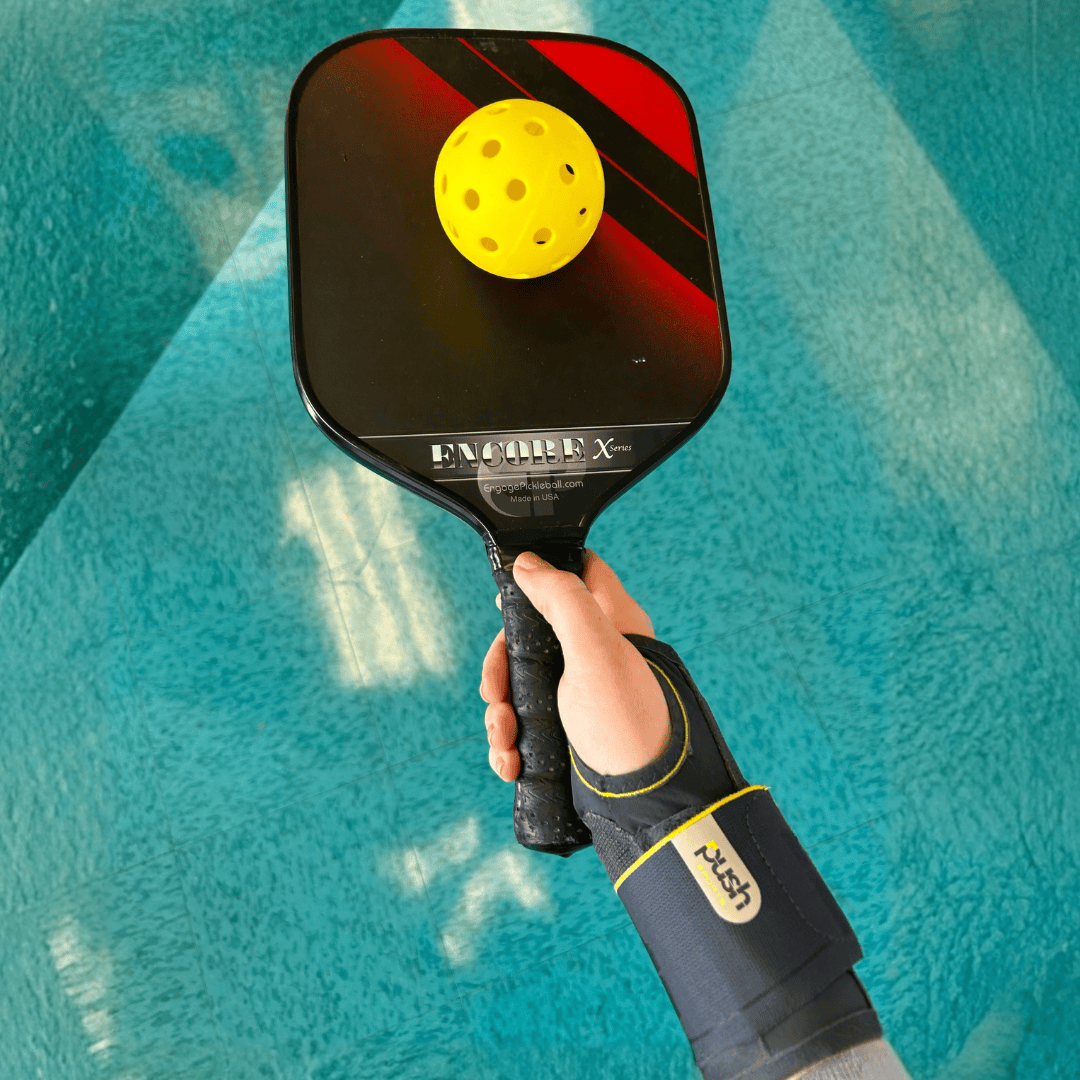
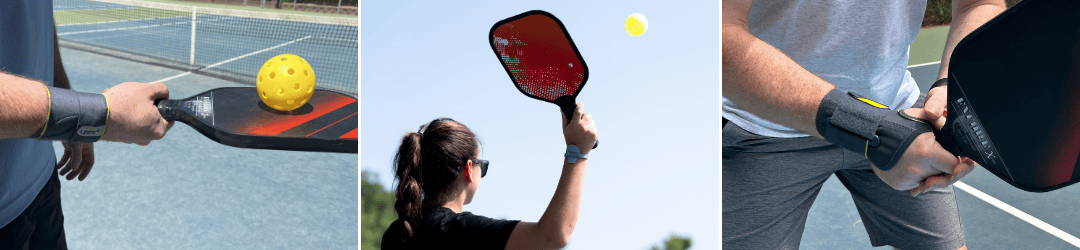
For mild compression or simple preventive support during play, the Push Sports Wrist Support is the lightest option. Its bi-directional adjustable straps deliver even compression around the wrist with a thumb loop for easy one-handed application, and the slim profile lets you wear it under a glove or grip tape without bulk. It is a sensible pick for players who want gentle support during play, are managing a mild strain, or have a loose-jointed wrist that occasionally aches after a session.
For players with a previous wrist injury, chronic tendonitis, or those who play several times a week, the Push Sports Wrist Brace offers more structured protection. It provides lateral and dorsal support without immobilizing the joint, so you can still rotate your forearm and control your paddle while the brace absorbs some of the repetitive load. The slim profile means it fits inside most athletic gloves or under grip tape without creating bulk.
For players whose pain shows up specifically at the end of their wrist's range of motion, often during powerful overhead shots, paddle snaps, or push-off positions, the WriStable Wrist Bracetargets that exact pattern. Its adjustable design supports the carpal bones during weight-bearing while still allowing functional range of motion, with an adjustable strap that controls how much restriction the wrist feels at end range. It is the option to consider if your wrist hurts only when you push it into deep extension, or if you are managing scapholunate instability or pain during weight-bearing activities.
One practical tip: if you are coming back from a wrist sprain, wear the brace for all practice sessions, not just matches. Repetitive light training is often when reinjury happens, because pain levels are low but tissue fatigue is accumulating.
Ankle Support: The Underrated Injury Risk on the Pickleball Court
Ankle sprains are less talked about in pickleball circles than elbow issues, but they are arguably more disruptive. A lateral ankle sprain from a sudden direction change can sideline a player for weeks, and the risk of recurrence after a first sprain is significantly higher without proper rehabilitation and support.
Hard court surfaces provide less natural cushioning than grass or clay, and the stop-start nature of pickleball puts constant lateral stress on the ankle ligaments. Older players, who make up a large segment of the pickleball community, also tend to have reduced proprioception in the ankle, which increases sprain risk during quick reactive movements.
Wearing Ankle Support Without Sacrificing Movement
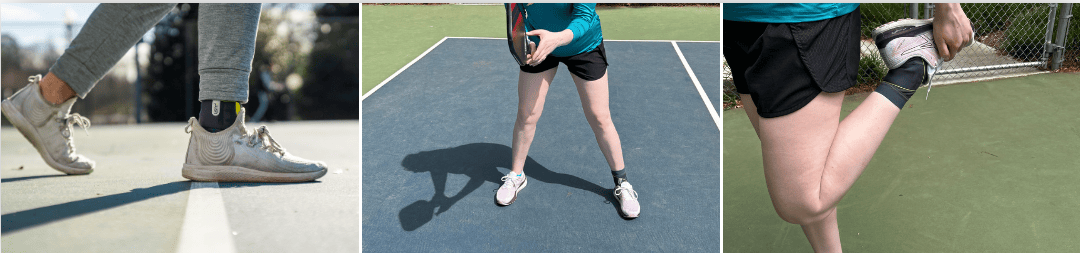
The challenge with ankle braces during sport is balancing stability with agility. A rigid brace may prevent sprains but will slow your footwork and affect your split-step timing. A performance-focused brace addresses this by restricting only the vulnerable inversion/eversion planes while leaving forward and backward motion unrestricted.
The Push Sports Ankle Brace 8 is built with that exact balance in mind. Its ultra-thin, lightweight fabric delivers pleasant compression around the joint without adding the bulk that traditional lace-up braces create, and internal anti-slip strips keep it secure mid-rally while adjustable straps let you fine-tune both compression and stability. For players coming back from a minor ankle sprain, or anyone wanting to prevent a repeat injury, it is a practical choice that supports the joint without limiting performance on the court.
It is worth noting that proprioceptive benefit is one of the less obvious advantages of wearing an ankle brace. Research in sports rehabilitation consistently finds that braces improve the joint's sensory feedback loop, meaning your ankle responds faster and more accurately to imbalance signals, even when ligament strength is intact.
How to Choose the Right Brace for Your Situation
Not every player needs every type of brace. A useful starting point is to identify your actual risk profile:
- Do you have a current injury or chronic condition? Prioritise support and compression over freedom of movement.
- Are you returning from a recent sprain or strain? Choose a brace that restricts the specific injury plane while maintaining general mobility.
- Are you injury-free but playing frequently? A lighter prophylactic brace can reduce cumulative load without interfering with performance.
- Have you changed your playing style or increased your playing frequency recently? Overuse injuries often follow a sudden jump in training volume, making this a high-risk period for new strain.
For players who want to explore the full range of options across all joint types, BraceLab offers a well-organised catalogue that covers elbow, wrist, ankle, knee, and back support, with product descriptions that include clinical detail to help you match the brace to your specific condition.
Key Takeaways
- Elbow, wrist, and ankle injuries are the most common concerns for pickleball players, and each requires a different type of support strategy.
- Braces do more than protect injured joints. They improve proprioception, reduce fatigue, and help players maintain better mechanics during long sessions.
- The Push med Elbow Brace Epi addresses epicondylitis with targeted anatomical compression, making it well suited to the repetitive swing mechanics of pickleball.
- The Push Sports Wrist Brace provides structured support for active play without restricting the forearm rotation needed for paddle control.
- The Push Sports Ankle Brace 8 delivers lateral stability in a slim profile that fits standard court shoes and supports agility-based movement.
Frequently Asked Questions
Should I wear a brace as a precaution if I have no current injury?
Yes, particularly if you play multiple times per week or have a history of joint issues. Prophylactic bracing can reduce cumulative tendon load and improve joint proprioception, which helps prevent the gradual overuse injuries that sneak up on regular players. A lighter, performance-focused brace is usually sufficient for preventive use.
Can wearing a brace affect my paddle technique?
A poorly fitting or overly rigid brace can, but sport-specific braces are designed to avoid this. The Push Sports Wrist Brace, for example, is built to preserve the forearm rotation and grip function needed for paddle control. If a brace changes your technique noticeably, it is likely the wrong fit or the wrong type for your needs.
How do I know if my elbow pain is tennis elbow or something else?
Tennis elbow typically presents as pain on the outside of the elbow that worsens when gripping or lifting with a straightened arm. Golfer's elbow, by contrast, affects the inside of the elbow. If pain is severe, persistent, or accompanied by swelling or numbness, it is worth consulting a physiotherapist or sports medicine specialist before relying solely on a brace.
Will an ankle brace make my ankle weaker over time?
This is a common concern, but the evidence does not strongly support it when braces are used appropriately. Braces are not a substitute for strengthening exercises, but wearing one during sport does not inhibit the muscles needed for ankle stability in everyday movement. Using a brace during activity while doing strengthening work in training is a sensible combined approach.
How do I size a brace correctly for pickleball use?
Sizing varies by product and is typically based on circumference measurements rather than general sizes like S, M, or L. Most quality brace manufacturers provide detailed sizing guides. Measure the relevant joint at rest, not during contraction, and when in doubt, consult the product's guidance or speak with a healthcare professional for clinical braces.
Conclusion
Pickleball is a sport that rewards consistency, and consistency requires staying healthy. Joint injuries, especially the gradual overuse kind, have a way of escalating when they go unaddressed. Wearing the right brace at the right time is not a sign of weakness or over-caution. It is simply smart sport management.
The best approach is to match the brace to the specific joint, the specific condition, and the specific demands of your game. Start with where your vulnerabilities are, choose support that fits your activity level, and treat bracing as part of your overall court routine rather than a last resort.