
Can You Still Use Your Hand While Wearing a Thumb Brace? Here's What to Expect

|
Can You Still Use Your Hand While Wearing a Thumb Brace? Here's What to ExpectMedically reviewed by Jerry Ditz, DPT, Dip. Osteopractic, Cert. SMT, Cert. DN |
Yes, you can often keep using your hand while wearing a thumb brace. How much movement you retain depends on the type of brace and why you are wearing it. Some braces restrict motion, while others stabilize a specific joint while preserving everyday hand function.
The good news is that the answer depends almost entirely on the type of brace you choose. Some thumb braces are designed specifically to immobilize and limit hand function. Others are designed to stabilize the joint and reduce pain without immobilizing the entire hand.
This article walks through what actually happens to your hand when you wear a thumb brace, why different brace designs produce very different results, and how the Push MetaGrip Thumb CMC Brace stabilizes the joint that's causing your pain while letting you keep using your hand for the everyday activities that matter to you: cooking, gardening, driving, working, and more.
You Can Keep Using Your Hand With the Right Thumb Brace
Yes, you can still use your hand while wearing a thumb brace, as long as you choose the right kind. Thumb braces are built to do different things, and the design differences are large enough to completely change what daily life feels like.
A traditional immobilization splint, the kind that wraps the thumb and wrist in rigid material to prevent motion, is designed to hold everything still. Wearing one of those all day will limit what you can do with your hand. That is not a design flaw. It is the point of that particular brace, and it exists for post-surgical recovery, acute injuries, and situations where the joint truly needs to rest.
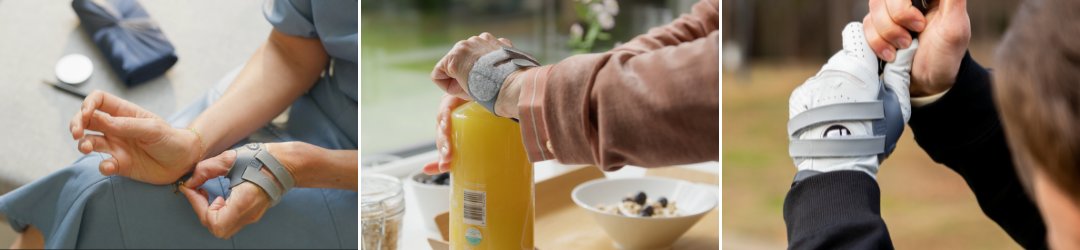
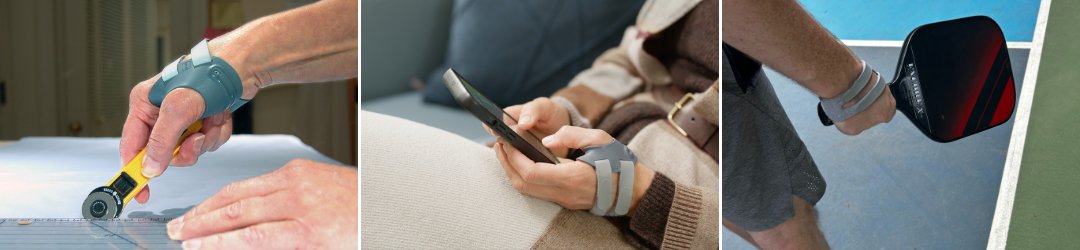
A purpose-built brace like the Push MetaGrip is engineered for a different outcome. It stabilizes one specific joint, the CMC/basal joint at the base of the thumb, while leaving the rest of your hand completely free to work. You can pinch, grip, type, hold objects, and move your fingers exactly as you normally would.
Why the Design of the Brace Matters So Much
Thumb braces are usually built for one of two purposes. Some are designed to immobilize the joint so it can rest and heal. Others are designed to stabilize the joint so it can be used without pain. These are fundamentally different goals, and they produce very different braces.
Immobilization braces are typically bulky, cover a large area of the thumb and hand, and use rigid materials to lock the joint in place. They serve a real purpose after hand surgery or acute injury, when the joint needs to rest entirely. But because they immobilize the hand almost completely, they are usually only worn for short periods rather than through daily life.
Stabilization braces work differently. They target only the specific joint that needs support, leave every other joint free to move, and use the body's own muscles to create stability. The Push MetaGrip was the first brace built specifically around this approach for CMC (basal joint) arthritis and instability, and it remains the standard for people managing chronic thumb pain who want to keep their hand fully functional for daily life.

How the Push MetaGrip Keeps Your Hand Working
|
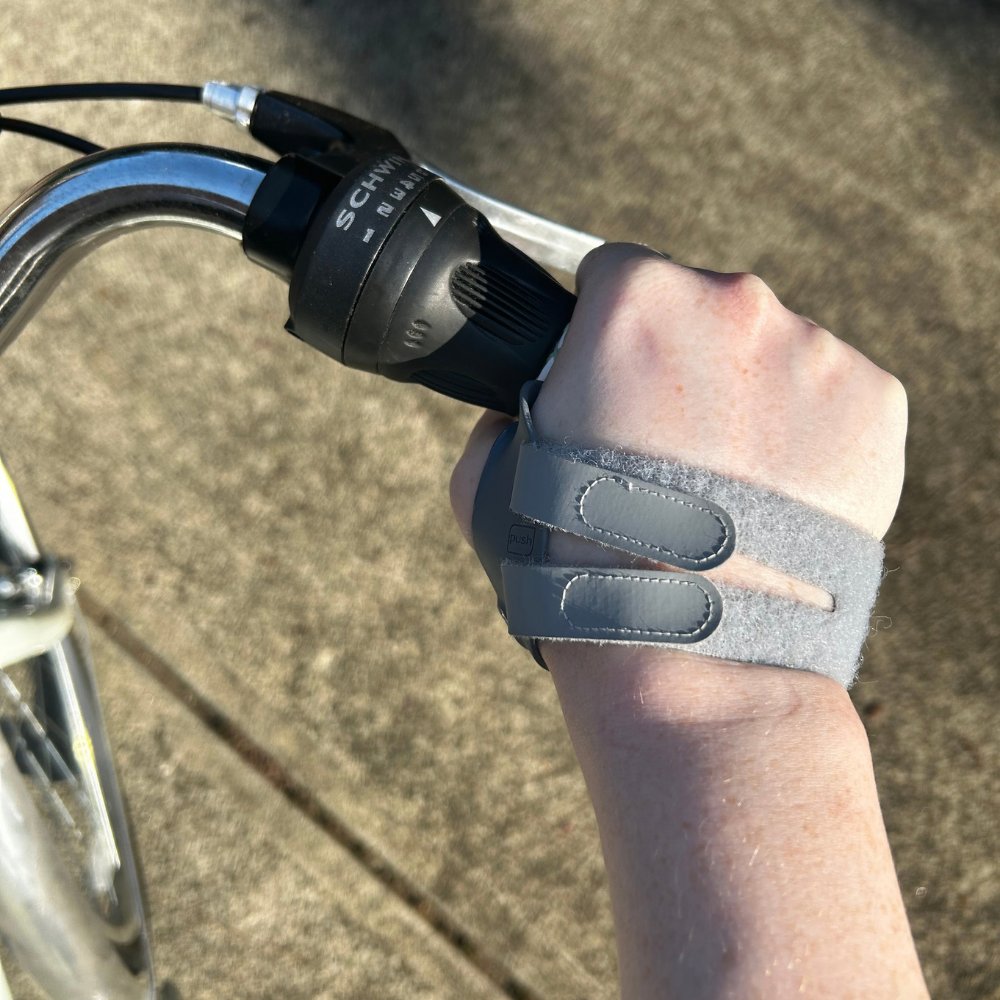
The Push MetaGrip's design is built around one central idea: support the CMC joint precisely where it needs support, and leave every other part of the hand alone. In practice, that means the brace sits snugly around the thenar muscles at the base of your thumb (the muscles that fire every time you pinch or grip) without touching the tip of your thumb, the middle joint of your thumb, or any of your fingers. |
|
When you pinch or grip, those thenar muscles contract and enlarge. The MetaGrip's snug shape encircles them, so as they enlarge they fill the brace and create internal pressure that stabilizes the CMC joint from within. In effect, the same muscle contraction that would normally cause the joint's painful shift under load now creates the stability the joint needs. Your muscles keep working, your fingers stay free, and the joint stays protected.
Because the brace occupies such a small area of the hand, and because it works with your muscles rather than immobilizing them, you can wear it through nearly any daily activity without fighting against it. This is a genuinely different experience from wearing an immobilization splint, and it is the reason people who switch to the MetaGrip often say it feels closer to wearing nothing at all than to wearing a traditional thumb brace.
Everyday Activities You Can Do With the MetaGrip On
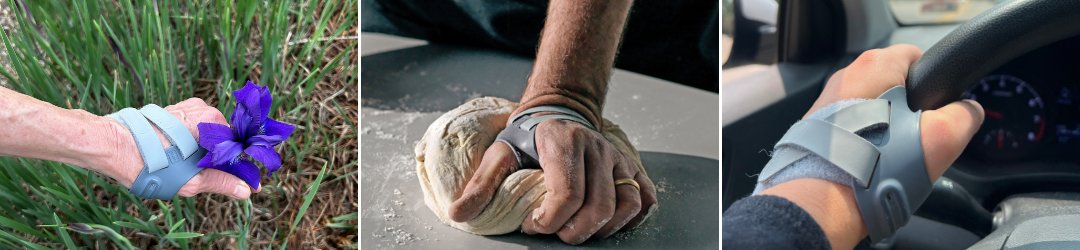
The best way to understand how much hand function the MetaGrip preserves is to see what actual users do while wearing it. According to the manufacturer and clinical use documentation, people wear the MetaGrip during:
- Cooking and food preparation, including chopping, stirring, and lifting pans
- Gardening, pruning, and yard work
- Golf, tennis, and other racket or club sports
- Driving, including gripping the steering wheel and shifting gears
- Knitting, sewing, quilting, and other detailed handcrafts
- Swimming and other water activities
- Cleaning teeth (used by dental hygienists), performing hand surgery (for surgeons managing their own CMC arthritis), cutting with scissors, hairstyling, and other professional detail work
- Typing, writing, and general office work
- Playing musical instruments, including guitar and piano
The through-line across all of these is that they involve pinching, gripping, or fine motor control, which are exactly the activities that would trigger CMC pain without a brace. The MetaGrip lets you do them comfortably.
When to Take the Brace Off
The one time we recommend taking the MetaGrip off is at night. You can sleep in it, but your CMC joint does not typically need support at rest, so unless a clinician has directed otherwise, bedtime is a good chance to give your hand a break.
Outside of sleep, the MetaGrip is intended for all-day, comfortable wear. It can go in the shower, works during most sports and physical activity, and stays comfortable through the daily tasks that involve pinching or gripping. Consistent daytime use is what produces the best results, because that is when the CMC joint takes most of its load.
Getting the Right Fit Is Key
|
Because the MetaGrip works through a snug fit around your thenar muscles, the sizing and shape matter more than they would for a general splint. A brace that is too loose will not create the internal pressure that stabilizes the joint, and a brace that is too tight will feel uncomfortable throughout the day. The good news is that the MetaGrip includes a malleable metal insert that can be fine-tuned to your specific hand shape, either by you at home or by a hand therapist. A hand therapist can also confirm the brace is the right match for your diagnosis and show you the ideal application technique, but neither is required to get the brace working for you. |
|
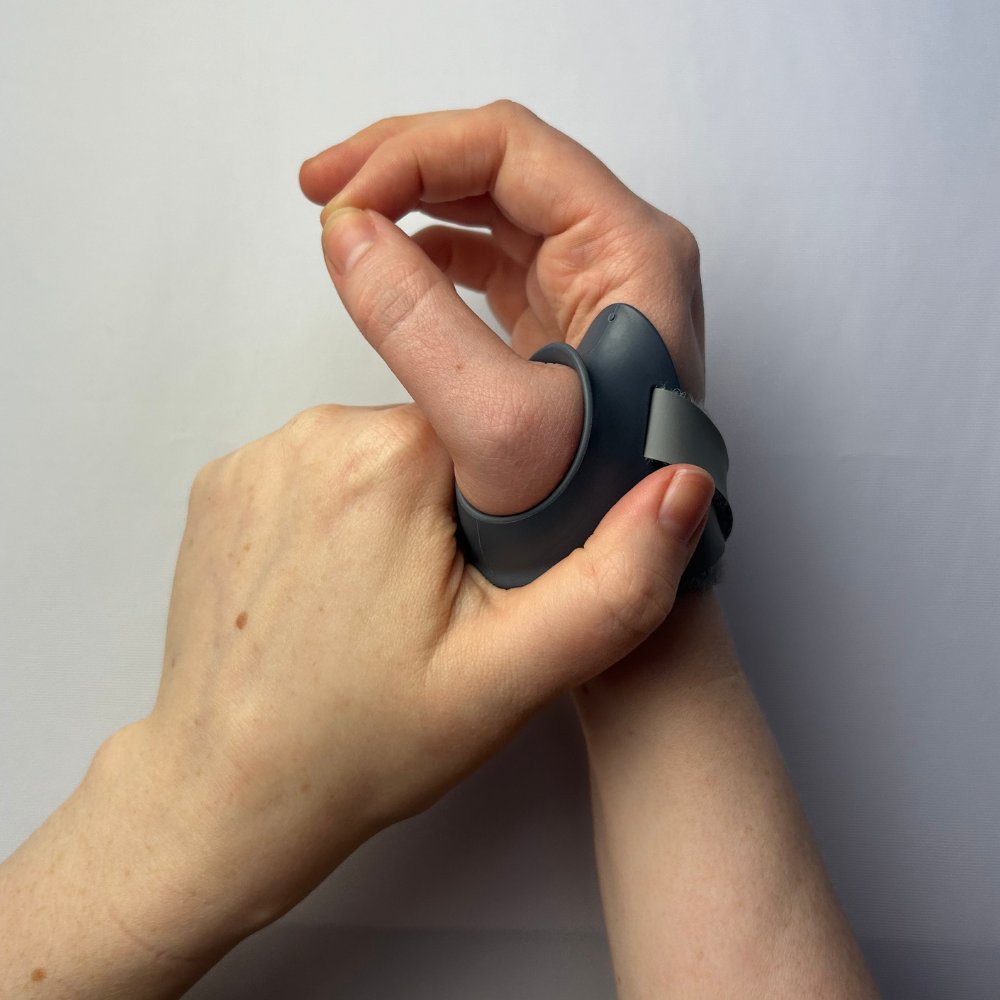
The secret to a good fit is in the squeeze. Squeezing the MetaGrip's embedded metal insert around the muscles at the base of your thumb is what gives the brace its custom fit. To apply it:
- Before wearing it for the first time, gently bend the metal insert slightly outward so the thumb area is a little larger.
- Open the straps, slide your fingers and thumb into the brace, and push it as far down on your thumb as it will go.
- Close the straps gently but firmly, without pulling them tight.
- Touch your thumb tip to your index fingertip to make a gentle "O." Keep your thumb muscles relaxed, your thumb joints slightly bent, and your thumb in a mid-position, not too far across your palm or too far out from it.
- Holding that relaxed position, squeeze the metal insert firmly so it fits snugly around your thumb muscles.
If your first size does not fit right, BraceLab offers a fit guarantee, so you can exchange the brace for a different size until the fit is correct.
Key Takeaways
- Yes, you can still use your hand while wearing a thumb brace, as long as you choose a brace designed to preserve hand function.
- Traditional immobilization splints do limit hand use, and that is by design. They exist for post-surgical recovery and acute injury, not for daily life.
- Stabilization braces like the Push MetaGrip take a different approach. They target one specific joint (the CMC joint at the base of the thumb) and leave the rest of the hand completely free.
- The MetaGrip encircles the thenar muscles at the base of the thumb. When you pinch or grip, those muscles contract and fill the brace, creating internal pressure that stabilizes the joint from within.
- People wear the MetaGrip during cooking, gardening, driving, sports, professional detail work, and almost every other daily activity that involves pinching or gripping.
- For the best fit, squeeze the metal insert snugly around your thumb muscles when you apply the brace. You can shape it yourself at home, and a hand therapist can help if you'd like guidance.
Frequently Asked Questions
Can I type with a thumb brace on?
Yes, easily, if the brace is designed to leave your fingers free. The Push MetaGrip only covers the base of the thumb, so all four of your fingers and the tip of your thumb move exactly as they normally would. Most people find they can type at their usual speed within a day or two of wearing the brace.
Can I drive with a thumb brace on?
Yes. Driving involves gripping the steering wheel and using your thumb for shifting and controls, and the MetaGrip is specifically designed to support the CMC joint during exactly those activities. Many people find that driving is more comfortable with the brace on than without it, especially on longer trips.
Can I sleep in a thumb brace?
You can, but we don't recommend it. The CMC joint does not typically need support during sleep, and taking the brace off at night gives your skin a chance to breathe. If a clinician has specifically directed you to wear it at night, follow their guidance.
Does it take time to get used to wearing a thumb brace?
The MetaGrip needs to be broken in a bit, similar to a new pair of shoes. Because it is small, lightweight, and only covers the base of the thumb, the adjustment period is much shorter than it is for larger immobilization splints. Most people find it feels natural within a week or two of consistent daily wear.
Will wearing a thumb brace long-term weaken my hand muscles?
Not with the Push MetaGrip. Because the brace works by engaging your thumb muscles (rather than immobilizing them), the muscles stay active every time you pinch or grip. Over time, the brace can actually help retrain those muscles to stabilize the joint more effectively, which is a very different outcome from what immobilization splints tend to produce.
Find the Right Thumb Brace for Your Situation
If you have been holding off on a thumb brace because you worried it would limit what you can do with your hand, the right design changes the equation completely. Explore the BraceLab thumb brace collection to compare options, find your size, and see the Push MetaGrip alongside the other clinician-designed thumb supports available. For the wider selection of clinician-designed braces across every joint, browse BraceLab.
Conclusion
The worry that a thumb brace will limit what you can do with your hand is understandable, especially if you are used to seeing thumb braces as the bulky, restrictive kind. But the design of modern thumb braces has moved well beyond that starting point. A well-designed stabilization brace like the Push MetaGrip is built specifically to give your hand back its function while still protecting the joint that is causing you pain.
If you have been holding off because of concerns about hand function, take a closer look. The right brace can genuinely change what daily life feels like, and it can do it without asking you to give up the activities you care about.