
How to Heal from Tennis Elbow: When a Tennis Elbow Brace Can Help
How to Heal from Tennis Elbow: When a Tennis Elbow Brace Can Help
By Laura Jones
Tennis elbow, clinically known as lateral epicondylitis, is one of the most common overuse injuries among recreational and amateur athletes. Repeated backhands, volleys, and serves place ongoing strain on the outer elbow tendons, leading to irritation and pain. Over time, even simple daily activities like lifting a bag or pouring coffee can become uncomfortable.
The good news is that the right tennis elbow brace, or wrist immobilization brace, combined with a structured sports injury rehabilitation plan, can significantly reduce pain and support a safe return to activity. An effective elbow brace for tennis elbow reduces tension on the irritated part of the tendon while allowing continued movement, while a wrist immobilization brace encourages rest. With proper guidance, gradual training progression, and the best brace for tennis elbow or a wrist immobilizer suited to individual needs, returning to sport becomes both realistic and sustainable.
Understanding Tennis Elbow and Its Impact
Tennis elbow is an overuse injury affecting the tendons that attach to the outside of the elbow. These tendons assist with wrist extension and grip stabilization. Repeated overload can lead to microscopic tearing, leading to inflammation and pain.
Common symptoms include:
• Pain on the outside of the elbow
• Tenderness with pressure
• Reduced grip strength
• Discomfort during lifting, twisting, or gripping
Although frequently associated with tennis, this condition also affects individuals who garden, type extensively, perform repetitive lifting, or participate in racquet sports such as pickleball or racquetball. Research published in the Journal of Orthopaedic & Sports Physical Therapy indicates that lateral epicondylitis affects approximately 2.6 to 7.8 million adults in the US each year.
Using a tennis elbow brace and following a structured sports injury rehabilitation program can help manage persistent symptoms. However, because tennis elbow is an overuse injury, a period of relative rest with a wrist immobilizer, typically 2–3 weeks, is often the most effective way to allow the tendon to properly heal. Tennis elbow braces may help offload the pressure on the worn-down tissues so they can heal.

How a Tennis Elbow Brace Works
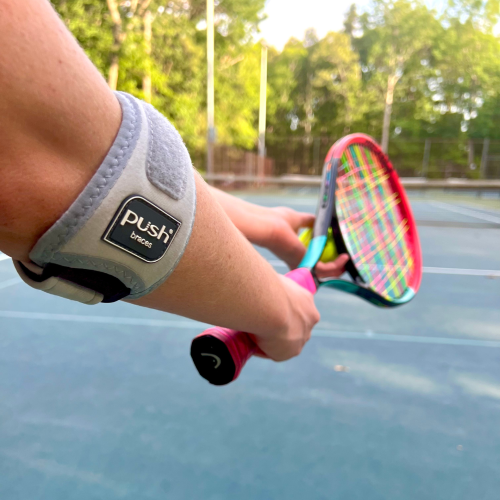
When using an elbow brace for tennis elbow, such as the Push med Elbow Brace Epi or the Push Sports Elbow Brace, correct positioning is essential.
A properly applied tennis elbow brace applies targeted compression to the forearm extensor tendons just below the elbow joint. It should not be placed directly over the bulk of the muscle belly (the thicker, softer part of the forearm muscle). For the brace to be most effective, it should sit just distal to the elbow (slightly below the elbow joint), over the proximal tendon region of the wrist extensors (the strong cord-like tissue that connects the forearm muscle to the outside of the elbow). Positioning is important because the goal is to redirect where force moves through the tendon, not simply squeeze the muscle itself.

When tightened appropriately, the brace creates a counterforce (a supportive pressure that works against the pull of the muscle) to help redistribute the load generated during gripping and wrist extension (bending your wrist backward). A tennis elbow brace must be snug to be effective, but not so tight that it causes numbness, tingling, or changes in circulation (such as your hand feeling cold or turning pale). Applying firm compression at this location reduces tensile strain (pulling stress) reaching the irritated tendon attachment at the lateral epicondyle (the bony bump on the outside of your elbow), helping to reduce pain during repetitive or forceful movements.

The Push med Epi includes an internal C-shaped reinforcement that directs pressure to the polymer pad without restricting blood flow and prevents the brace from shifting on your arm during active play.
Application tip: Place the Push logo over the area of pain to align the pressure pad with the irritated tendon for ideal pain relief.
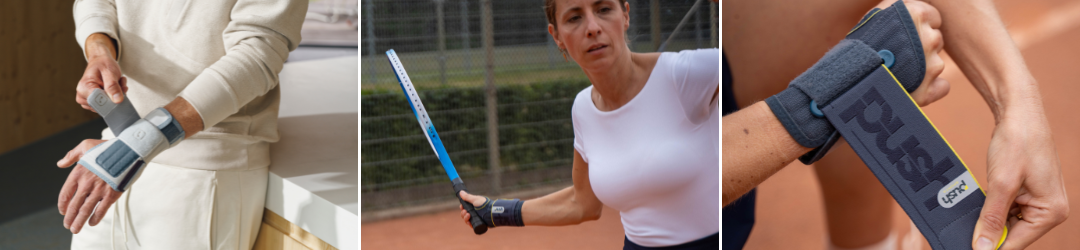
Wrist Immobilization Braces
A randomized controlled trial, Efficacy of extension wrist hand orthosis on pain, grip strength and electromyographic activities in lateral epicondylitis: A randomized single-blind clinical trial, found that immobilizing the wrist in a slightly extended position (around 45°) can significantly reduce strain on the lateral elbow tendons, especially in acute or persistent tennis elbow cases.
• Mechanism: By stabilizing the wrist, wrist immobilization reduces activation of the forearm extensors, allowing the tendon origin to rest and recover.
• Usage: Prefabricated wrist orthoses should be worn during daily activities or sleep, removed only for gentle range-of-motion exercises and bathing.
• Evidence: Patients wearing a wrist brace early in recovery have reported faster pain reduction and improved tendon healing compared to rest alone.
• Integration: A wrist brace can be used alone initially or alongside a tennis elbow brace once tendon pain decreases, supporting safe progression back to sport.
What clinicians recommend: Karol Young, OTD, OTR/L, CHT, notes that resting the arm in a wrist orthosis at 45° of extension can resolve ongoing symptoms in many patients.
Creating the Right Training Plan
A structured therapeutic exercise program helps recovery from tennis elbow and should be guided by a physician or physical therapist. Goals include:
• Stretching and strengthening the forearm muscles attached to the irritated tendon
• Improving muscular endurance
• Building resistance to repetitive stress
Most programs last 6–12 weeks, with exercises maintained long-term for prevention. Mild discomfort is normal, but sharp pain should be avoided.
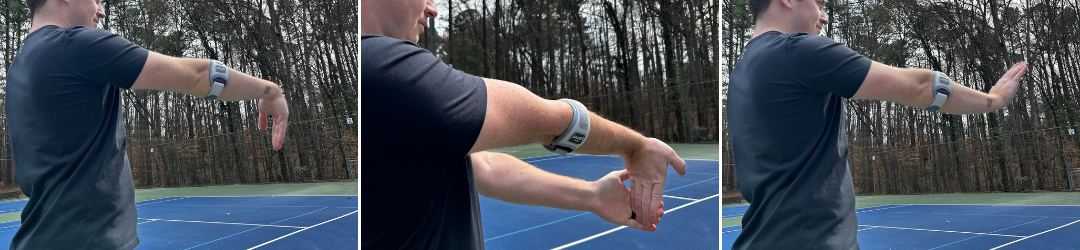
Stretching (5-7 Days per Week)
Stretching should be performed daily, especially before gripping activities:
• Wrist Extension Stretch: Arm straight (do not lock the elbow), bend wrist back, gently pull with the opposite hand. Hold 15 seconds, 5 reps, 4 times daily.
• Wrist Flexion Stretch: Arm straight, palm down, bend wrist downward and gently assist with opposite hand. Hold 15 seconds, 5 reps, 4 times daily.
Strengthening (5-7 Days per Week)
Begin without weight and progress only when 30 repetitions can be completed for two consecutive days without increased pain. Gradually increase from 1 lb. to 3 lbs.
• Wrist Extension: Palm down, lift wrist up for 1 count, slowly lower for 3 counts.
• Wrist Flexion: Palm up, lift wrist up, slowly lower.
• Forearm Rotation (Supination/Pronation): Rotate palm up and down in a controlled manner.
• Grip Work: Stress ball squeezes and finger band extensions, 10 repetitions daily.
For more information on this program, check out the American Academy of Orthopaedic Surgeons (AAOS) Exercise Program for Epicondylitis.
Tip: A tennis elbow brace may be worn during exercises or gradual return-to-sport activities to reduce tendon strain.
Returning to the Court and Daily Activities
A gradual, structured return to tennis is generally recommended after recovery from tennis elbow. Early stages should include shadow swings, light hitting, and mini-court rallies before progressing to full baseline play. Practice sessions should be kept short, with intensity and duration increased incrementally. Wearing a tennis elbow brace during activity helps manage tendon load.
Outside of sport, an elbow brace for tennis elbow or a wrist immobilization brace is also beneficial. Daily activities such as carrying groceries, typing for long periods, gardening, or household chores can cause tennis elbow symptoms, and a tennis elbow brace or a wrist immobilizing brace can help reduce pain. With proper bracing and gradual return to play, participation in other sports like basketball, pickleball, or racquetball can safely resume.
Other Common Tennis Injuries
Tennis players frequently experience additional upper- and lower-limb concerns.
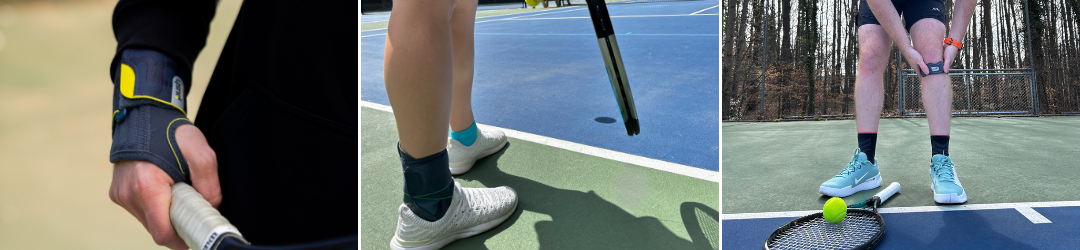
• Wrist tendonitis: A wrist brace for tendonitis stabilizes the joint during repetitive strokes.
• Wrist sprains: A wrist brace for sprain provides compression and protection during recovery.
• Ankle sprains: Ankle injury braces support stability during cutting and lateral movement.
• Patellar Tendonitis: Also known as jumper's knee, which can be supported with a patella brace.
From a prevention perspective, strengthening the wrist, elbow, shoulder, and ankle collectively reduces the risk of recurrence. Depending on your needs, using a tennis elbow brace, a wrist brace for sprain, a wrist brace for tendonitis, or an ankle injury brace can provide extra support.
Key Benefits of Using a Tennis Elbow Brace
• Reduces tendon strain during repetitive movement
• Minimizes pain while maintaining activity levels
• Allows gradual progression in training
Key Benefits of Using a Wrist Immobilization Brace
• Reduces strain on the forearm extensor tendons by keeping the wrist in a neutral or slightly extended position
• Minimizes pain during daily activities and early recovery from tennis elbow
• Supports healing by limiting movements that aggravate the tendon
Selecting the best brace for tennis elbow depends on comfort, adjustability, and consistent use during sports and daily activities. Explore tennis elbow braces and wrist immobilization braces on BraceLab.com.
Practical Tips for Daily Use and Maintenance
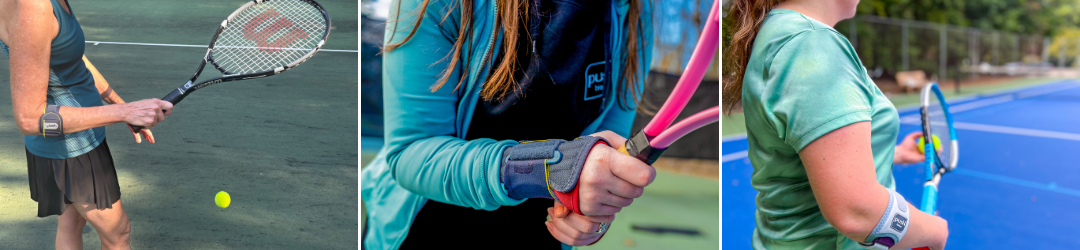
To position a tennis elbow brace correctly, place the strap just below the elbow joint over the area of tenderness. Use the Push logo to help position the brace properly.
An elbow brace for tennis elbow may be worn:
• During tennis practice and matches
• During strengthening exercises
• During daily tasks that provoke discomfort
All Push and Push Sports Braces are machine washable on a gentle cycle at a low temperature. Never place your brace in a dryer or dishwasher, as that can warp or ruin the brace.
Depending on your injuries, you can wear various braces for support, including a tennis elbow brace with a wrist brace for tendonitis, a wrist brace for sprain, or ankle injury braces, which can protect your joints both on and off the court.
Frequently Asked Questions
What is tennis elbow?
Tennis elbow, also known as lateral epicondylitis, is an overuse injury that causes pain and inflammation in the tendons on the outside of the elbow due to repetitive wrist and forearm movements.
How do I know if I have tennis elbow?
You may have tennis elbow if you have pain or tenderness on the outside of your elbow that worsens with gripping, lifting, or playing racket sports.
How to heal tennis elbow fast?
Clinical guidelines indicate that healing tennis elbow requires a period of relative rest, and using a wrist immobilizing brace or tennis elbow brace can provide supportive offloading, allowing continued light activity while the tendon recovers.
How to relieve pain from tennis elbow?
Tennis elbow pain can be relieved with rest, activity modification, ice, and bracing, such as a tennis elbow brace.
How long should a tennis elbow brace be worn during practice?
It may be worn throughout activity and removed during rest unless otherwise directed by a healthcare professional.
How should a tennis elbow brace be positioned for maximum relief?
It should sit just below the elbow joint, with the pressure pad directly over the most tender area.
Can other sports be played while wearing a tennis elbow brace?
Yes, provided pain remains manageable and activity progression is gradual.
What is the best brace for tennis elbow?
The best brace for tennis elbow delivers targeted compression, prevents over-tightening, and remains comfortable enough for consistent use, like the Push med Elbow Brace Epi.
Key Takeaways and Conclusion
A tennis elbow brace manages pain and allows movement, making both sports and daily activities more comfortable. Gradual return to tennis, combined with targeted support for the wrists and ankles, reduces the risk of new injuries. With the right brace and a structured approach, returning to the court and to life becomes not just possible but confident and controlled.
Explore sports injury rehabilitation options and determine which brace best matches your individual needs.
Medical Disclaimer:
This content is for educational purposes only and is not a substitute for professional medical advice. Always consult your healthcare provider for diagnosis, fitting, and treatment recommendations.
© BraceLab; 2026 all rights reserved