
Is There a Brace for Plantar Fasciitis? Yes, and Here Is How to Choose the Right One
|
Is There a Brace for Plantar Fasciitis? Yes, and Here Is How to Choose the Right One |
Yes, there is a brace for plantar fasciitis, and choosing the right one can meaningfully reduce the sharp heel pain that turns the first steps of every morning into a wincing routine. But, it is worth understanding what actually qualifies as a brace before you buy anything. The plantar fasciitis market is full of gadgets, insoles, compression sleeves, and night splints that all get marketed as solutions, and while some of them have their place, only a small number of products are true braces designed to do what a brace is supposed to do: offload the plantar fascia during weight-bearing so the tissue can heal even while you stay on your feet.
Plantar fasciitis is one of the most common causes of plantar heel pain in adults, affecting an estimated 10% of adults at some point in their lives, per clinical references maintained by the National Institutes of Health. Most people start with standard first-line approaches: stretching routines, more supportive shoes, ice, and periods of rest. These measures can help relieve symptoms, particularly in milder cases. But when heel pain keeps returning, or when work and daily routines make it difficult to stay off your feet, additional support can make a difference. That's where the right brace can play an important role, helping reduce strain on the plantar fascia while allowing you to stay active throughout the day.
This article breaks down what a plantar fasciitis brace actually does, what sets the Push med Foot Brace FP apart from other options, how to wear a brace for the best results, and how bracing fits alongside the other proven strategies for managing plantar fasciitis.
What is Plantar Fasciitis
|
The plantar fascia is a thick band of connective tissue that runs along the bottom of the foot, from the heel bone forward to the base of the toes. It acts like a shock-absorbing cable during every step, stretching and recoiling to distribute load across the foot. When this tissue becomes irritated or develops small tears from repetitive strain, it thickens and loses flexibility. When that happens, it is called plantar fasciitis. The pain is usually sharpest in the morning or after long periods of rest. This is because the fascia shortens while you are off your feet, then has to stretch quickly the moment you stand and put weight on it. The pain is usually most intense right at the base of the heel, though it can radiate along the arch. It tends to ease after the first few minutes of walking (as the tissue warms and lengthens) but returns later in the day, especially after long periods on your feet. That predictable pattern is one of the reasons plantar fasciitis is so recognizable clinically. |

|
Why the Right Brace Matters for Plantar Fasciitis
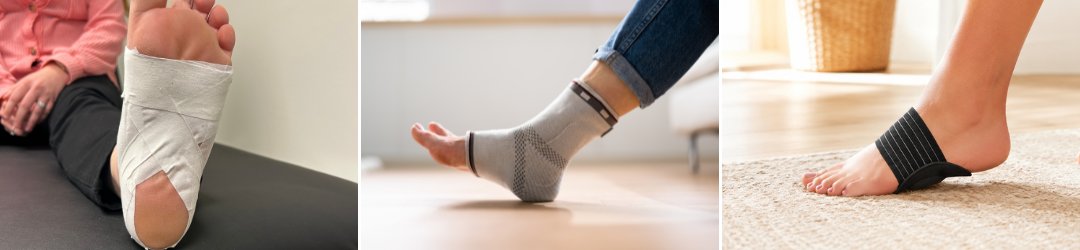
Not every foot support helps plantar fasciitis. Compression sleeves, generic arch supports, and even ankle braces are sometimes suggested for plantar fasciitis. The plantar fascia has specific mechanical needs that generic products do not address. The brace that actually helps has to offload the fascia during weight-bearing so the tissue takes less strain with every step.
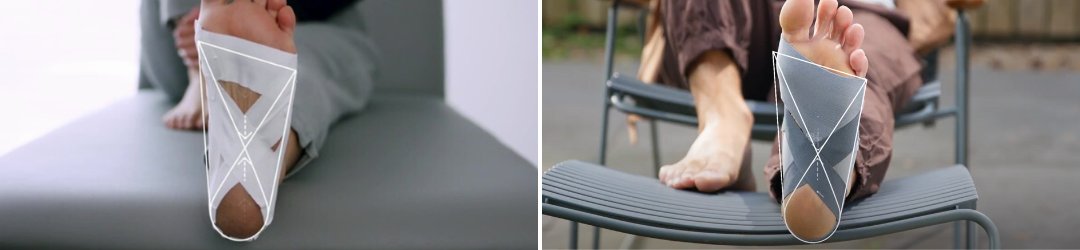
That mechanism is what separates a true plantar fasciitis brace from other foot or ankle supports. One of the most effective clinical treatments for plantar fasciitis is a specific taping technique that a clinician applies directly to the foot to offload the plantar fascia. A well-designed brace is built around that same principle, supporting the arch and heel to reduce mechanical pull on the tissue with every step. An ankle brace, by contrast, stabilizes the joint above the foot, which is useful for a rolled ankle but does not change how the plantar fascia is loaded. A compression sleeve provides warmth and mild proprioceptive input, but does not redistribute load.
The Push med Foot Brace FP: Purpose-Built for Plantar Fasciitis
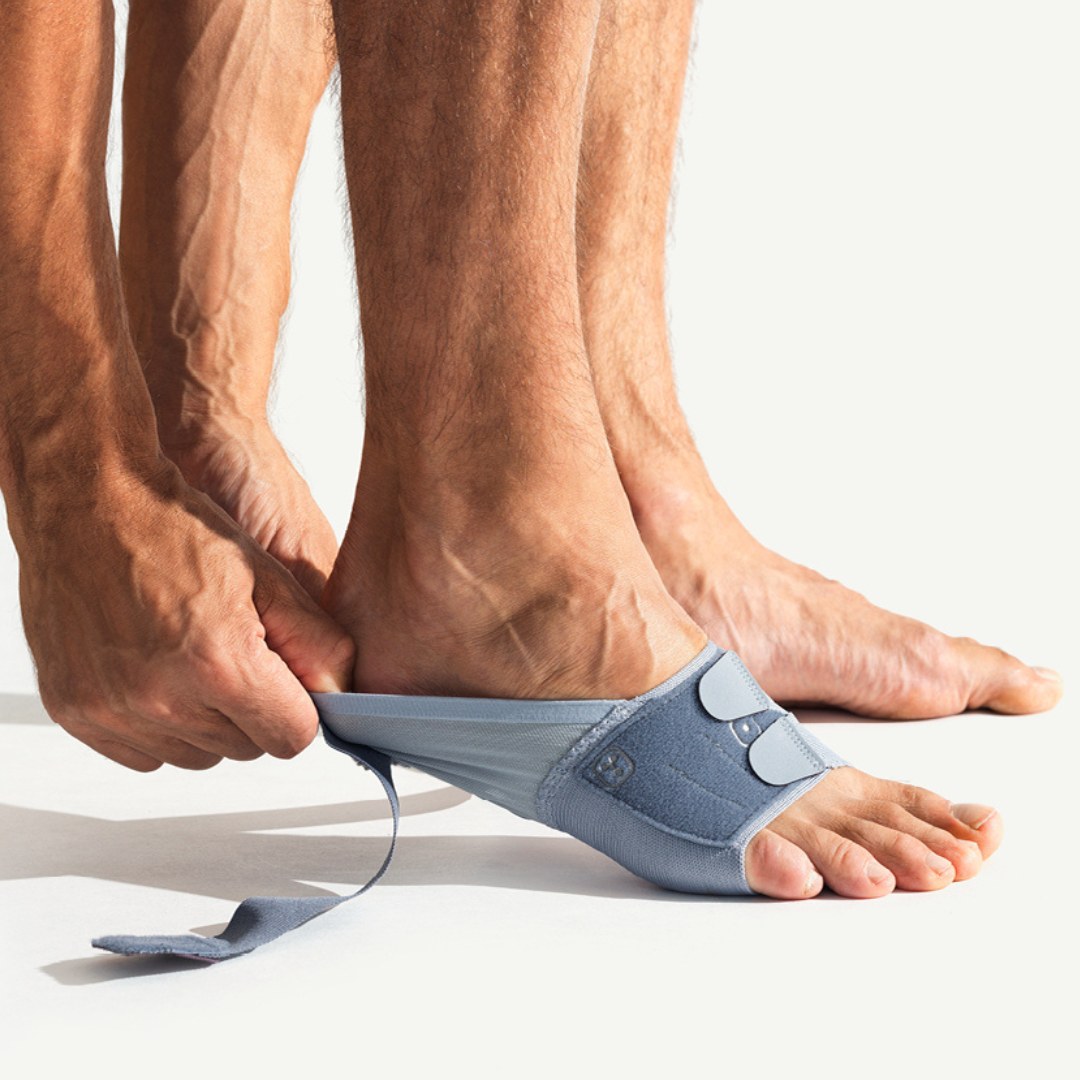
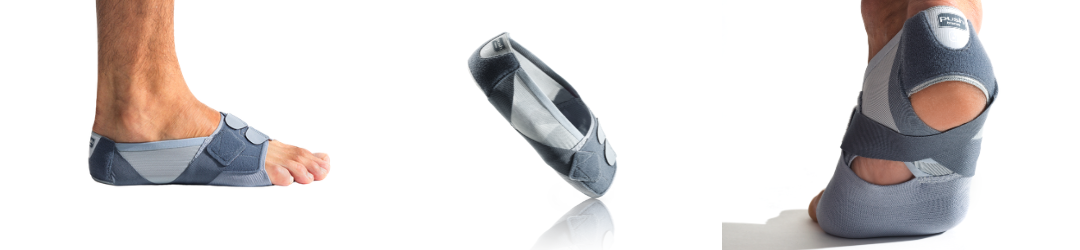
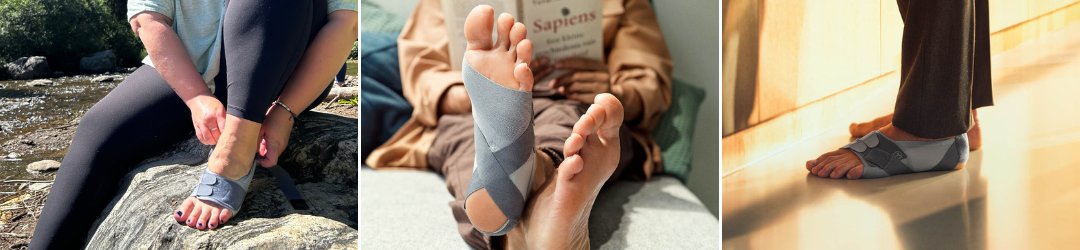
The Push med Foot Brace FP is the clinical option designed specifically for plantar fasciitis management. Its design is based on a proven taping technique that physical therapists have used for years to offload the plantar fascia, translating that same taping mechanic into a wearable brace that can be worn all day rather than needing to be reapplied. The brace provides anatomically shaped support underneath the foot, which redistributes load across the arch and away from the irritated fascia during each step. The brace is designed to actively support the plantar fascia's healing during wear, so the tissue is recovering during the same daily activity that would otherwise keep it irritated.
The design has three practical benefits worth understanding:
- It offloads the plantar fascia during weight-bearing, giving the irritated tissue a chance to recover through the day even while you stay on your feet
- It fits inside standard footwear, so it works during a normal workday rather than only at home or in specialist shoes
- It supports the natural mechanics of the foot, rather than restricting movement in ways that can create secondary problems
For people who spend much of the day on their feet, whether teaching, working in healthcare, retail, or other active jobs, consistent bracing can provide the added support needed to manage plantar fasciitis while staying active.
Other Support Strategies That Pair With Bracing
Bracing is most effective when paired with the other proven pillars of plantar fasciitis care. None of these individually resolves the condition, but together they compound:
- Consistent daily stretching, especially before your first steps in the morning and after any long period of sitting
- Supportive footwear with cushioning and arch support, worn throughout the day (not just for activity)
- Load management: reducing high-impact activity during flares and gradually building back up as symptoms allow
- Applying ice for 10 to 15 minutes after aggravating activity to help settle inflammation
- Working with a physical therapist or podiatrist to identify contributing factors such as gait mechanics, calf tightness, or footwear issues that need addressing
If your case has not responded to consistent conservative care over several months, a sports medicine doctor or podiatrist can discuss whether additional interventions such as shockwave therapy or targeted injections are appropriate. These are clinical decisions that fall outside what we can advise on, and they should only be considered under proper clinical guidance.

When to See a Physical Therapist or Podiatrist
Most cases of plantar fasciitis respond well to conservative management, but a proper clinical assessment is worth doing sooner rather than later if any of the following apply:
- Pain that has persisted for more than 6 to 8 weeks without meaningful improvement despite bracing, stretching, and footwear changes
- Severe pain that does not ease with walking
- Bilateral heel pain (both heels affected simultaneously), which can sometimes point to a systemic cause worth investigating
- Heel pain accompanied by swelling, redness, or warmth
- Heel pain that started after a fall, impact, or specific injury
- Significant limitations in daily function that have not responded to home care
A physical therapist, podiatrist, or sports medicine doctor can confirm the diagnosis, rule out other causes of heel pain (heel fat pad syndrome, tarsal tunnel syndrome, stress fracture, and others), and design a rehabilitation plan tailored to your specific mechanics and daily demands. Bracing is a strong part of that plan, but it works best when it is one piece of a broader strategy.
Key Takeaways
- Yes, there is a brace for plantar fasciitis. The right one is specifically designed to offload the plantar fascia during weight-bearing, not just to compress or warm the foot.
- Generic foot support, compression sleeves, and ankle braces are not designed for plantar fasciitis and often disappoint people who try them for this specific condition.
- The Push med Foot Brace FP is built specifically for plantar fasciitis management, based on a proven taping technique physical therapists have used for years, and it is designed to help the plantar fascia heal while you wear it.
- Consistency matters. Wear the brace during the working day and put it on before your first steps out of bed. Give it at least 4 to 6 weeks before evaluating results.
- Bracing works best alongside daily stretching, supportive footwear, load management, and, when needed, guidance from a physical therapist or podiatrist.
- If pain has persisted more than 6 to 8 weeks or is not steadily improving, get a proper clinical assessment to confirm the diagnosis and rule out other causes of heel pain.
Frequently Asked Questions
How quickly should I feel a difference after starting to wear a plantar fasciitis brace?
Most people notice reduced pain during the working day within the first week or two of consistent wear. Full symptom improvement typically takes several weeks to a few months of cumulative use, because the plantar fascia heals slowly. Bracing works best as a steady, everyday intervention rather than something you reach for only during flares.
Can I wear a plantar fasciitis brace all day?
Yes, that is what it is designed for. The Push med Foot Brace FP is built for all-day wear through the ordinary activities that put load on your feet: walking around the house, standing at the kitchen counter, going to work, running errands, or being on your feet through a long shift. Consistent daytime wear during recovery is exactly when the brace does its most valuable work. It is not a rest-only device.
Do I still need to stretch if I am wearing a brace?
Yes. Bracing and stretching are complementary, not alternatives. The brace offloads the fascia during weight-bearing; stretching keeps the fascia and calves supple so that the tissue does not shorten during periods of rest. The combination consistently outperforms either intervention alone.
Can I wear the brace inside my normal shoes?
Yes. The Push med Foot Brace FP is designed to fit inside standard footwear, so it works with the shoes you already wear during the working day. That practicality is a large part of why the brace suits people who need support during real-life activity rather than only in specialist settings.
What if my heel pain is not actually plantar fasciitis?
Several other conditions can cause plantar heel pain, including heel fat pad syndrome, tarsal tunnel syndrome, stress fracture, and Haglund's deformity. Each responds to different treatment, so a proper clinical assessment matters if you are unsure. A physical therapist or podiatrist can distinguish between these conditions and guide you toward the right intervention.
Find the Right Support for Plantar Fasciitis
If plantar heel pain is affecting your working day or your ability to stay active, the right brace can meaningfully shift the pattern. Explore the range of foot braces available for plantar fasciitis and related conditions to compare options, find your size, and get clinically informed support shipped straight to you. For the wider selection of clinician-designed braces across the body, browse BraceLab.

Conclusion
Plantar fasciitis is one of the most stubborn everyday injuries because it is easy to keep aggravating, hard to fully rest, and slow to heal even when treated correctly. A well-designed brace is not a shortcut, but for many people it is the specific tool that finally lets the fascia recover under the load of a normal working day.
Understanding what a plantar fasciitis brace is supposed to do, choosing one built for the condition, and pairing it with the other proven strategies is what turns a stalled recovery into a steady one. The right support makes a real difference. It usually just takes consistency and a little patience to see it.