Patella Brace vs Knee Brace: Which One Helps Most for Runner's Knee and Patellofemoral Pain?
|
Patella Brace vs Knee Brace: Which One Helps Most for Runner's Knee and Patellofemoral Pain? |
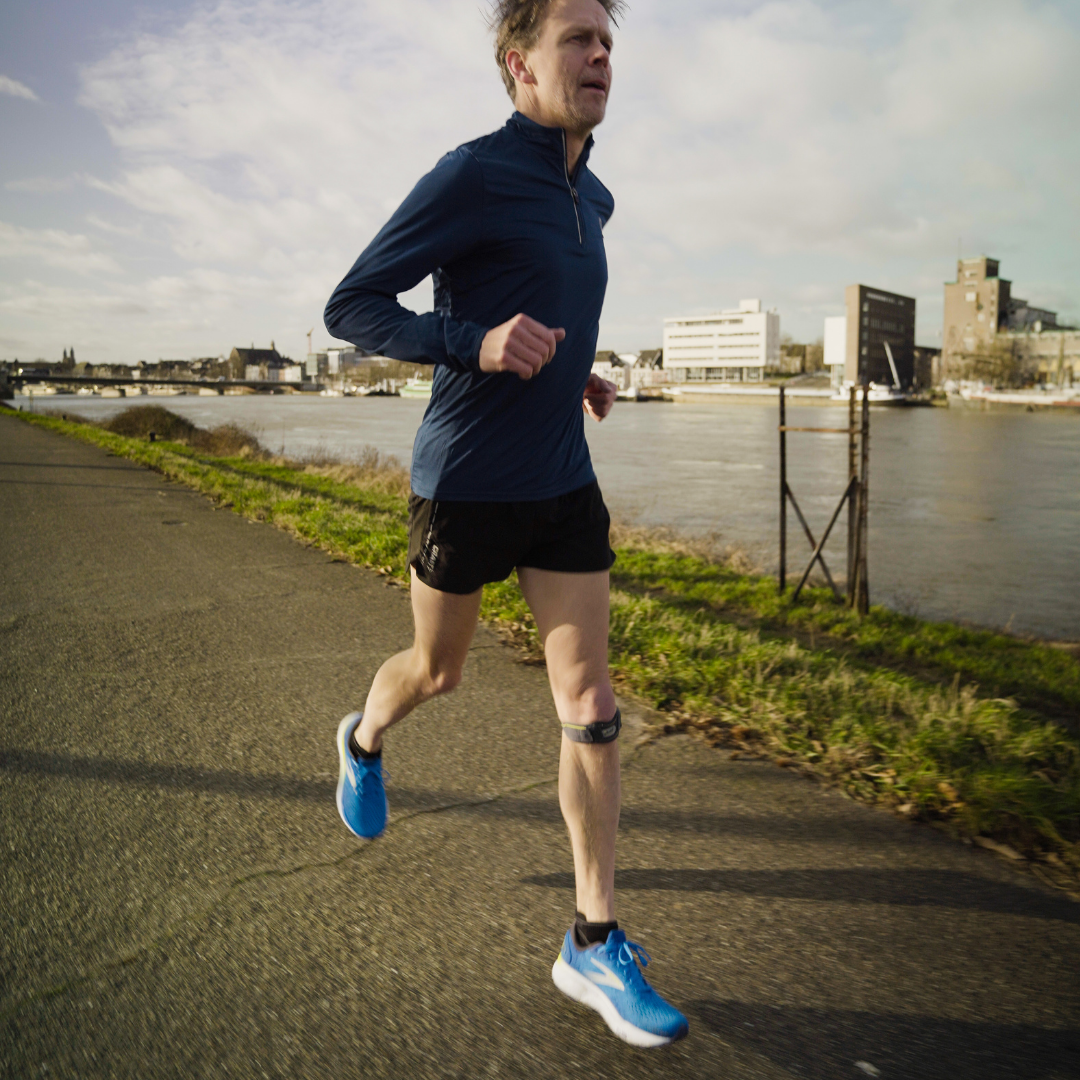
Runner's knee is one of the most common complaints we hear from active people, and yet the question of which brace actually helps most is one that confuses people constantly. Is it a patella strap? A full knee brace? Does it even matter? It does, and the answer usually comes down to one thing: where exactly does it hurt, and why.
This article breaks down the real difference between a patella brace and a knee brace, explains when each one is appropriate, and helps you match the right support to your specific symptoms. Whether you are training for a marathon, getting back after an injury, or just trying to get through the day without that aching grind under your kneecap, there is a practical answer here for you.
What Is Runner's Knee, Really?
"Runner's knee" is a catch-all term that most people use to describe any aching, grinding, or throbbing pain at the front of the knee. Clinically, it most often refers to patellofemoral pain syndrome (PFPS), a condition where the kneecap (the patella) does not track smoothly in its groove on the femur.
When the kneecap tracks incorrectly, the cartilage underneath it gets unevenly loaded. Over time, that creates pain, especially with:
- Running, particularly downhill
- Climbing or descending stairs
- Squatting or kneeling
- Sitting for long periods with knees bent
But here is where it gets important. Runner's knee is not always a kneecap tracking problem. Sometimes the pain is actually coming from the patellar tendon, the thick band of tissue that connects your kneecap to your shinbone. Patellar tendinopathy (also called jumper's knee or patellar tendonitis) produces pain at the front of the knee too, but it is more localised, usually just below the kneecap, and it often feels sharp with loading activities like jumping, sprinting, or kneeling.
These two conditions call for different types of support. That is the core of the patella brace vs knee brace conversation.
Patella Brace vs Knee Brace: What Is the Actual Difference?
Before you can choose the right support, it helps to understand what each type of brace is designed to do.
What a Patella Brace Does
|
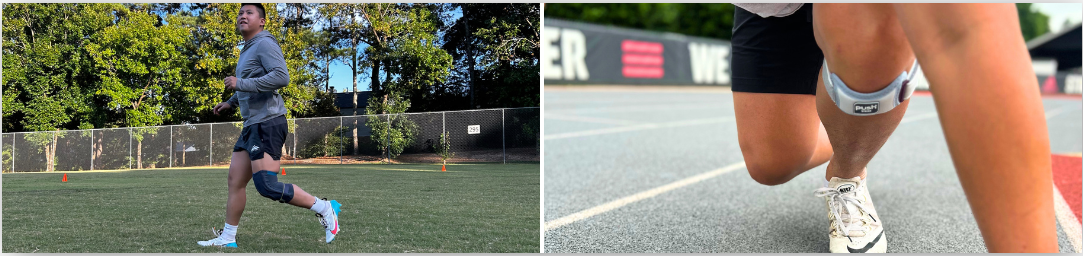
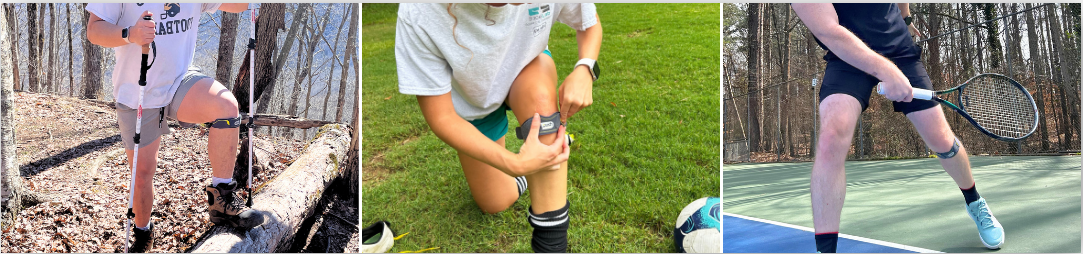
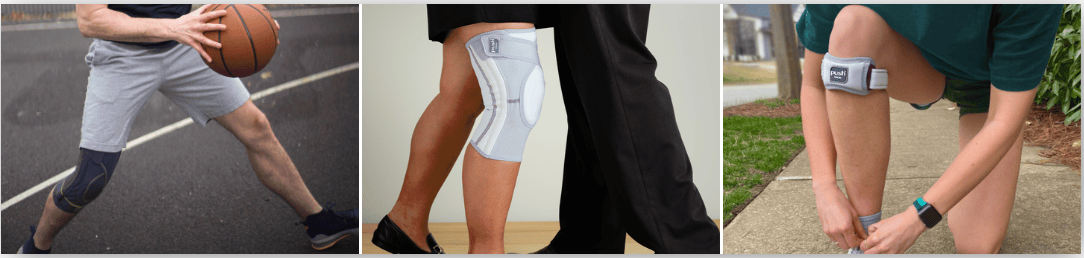
A patella brace, more accurately called a patellar tendon strap, is a narrow band worn just below the kneecap. It works by applying focused, targeted pressure directly to the patellar tendon. This pressure changes the angle of tendon pull and may reduce the load placed on the tendon attachment point during activity. Patella braces are relatively simple. They do not wrap the whole knee joint. They are designed for one purpose: targeted tendon offloading. The key word here is targeted. A good patella brace is not just a strip of elastic. The best clinical versions use anatomically shaped pads with specific material properties to distribute pressure evenly across the tendon rather than creating a single pressure point. |

|
What a Knee Brace Does
|
A knee brace covers more of the joint. Depending on the design, it may:
For runner's knee caused by kneecap tracking issues, a knee brace with bilateral patella support is often the more appropriate tool. It addresses the source of the problem rather than just offloading one tendon. |

|
The right choice between a patella brace and a knee brace depends on one central question: Is the pain mainly at the patellar tendon, or is the kneecap itself tracking incorrectly?
When a Patella Brace May Be the Right Choice
If your pain is:
- Localised just below the kneecap
- Worse with jumping, sprinting, or kneeling
- Described as sharp or aching at a specific point
- Diagnosed or suspected as patellar tendonitis, jumper's knee, or Osgood-Schlatter disease
Then a patella brace is likely the more appropriate starting point. You are dealing with a tendon load problem, and targeted pressure is what addresses that.
We carry two excellent options for this, and they suit slightly different users.
Push med Patella Brace: The Clinical-Grade Choice
The Push med Patella Brace is the most clinically precise option in our patella brace range. What sets it apart from generic foam straps is the pad material itself: an anatomically shaped viscoelastic polymer pad that conforms to the shape of the tendon and delivers even, consistent pressure across its entire width.
Viscoelastic polymer is not the same as foam. Foam compresses unevenly and degrades over time. Viscoelastic polymer maintains its shape, distributes load more precisely, and stays skin-compatible through repeated use. For anyone dealing with a genuine patellar tendon issue, that distinction matters.
The semi-rigid strap reinforcement helps keep that pressure exactly where it needs to be, even as you move through a full run. A non-slip internal pad reduces migration, so you are not constantly readjusting mid-session.
Indicated for: patellofemoral pain, jumper's knee, Osgood-Schlatter disease, patellar tendonitis, and tibiofibular joint subluxation.
One practical note: the Push med Patella Brace contains latex. If you have a latex sensitivity, this is important to check before purchasing. It is machine washable and HSA/FSA eligible. One size fits knee circumferences of 10 5/8 to 17 3/4 inches, so it fits right or left knee without a separate sizing process.
Best for: runners and active adults who want a clinically precise patellar tendon brace with even pressure distribution and strong anti-migration performance.
Push Sports Patella Brace: The Athlete's Strap
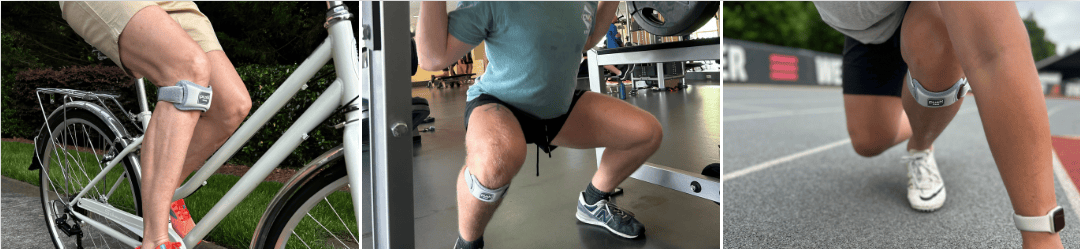
The Push Sports Patella Brace takes a simpler, more athletic approach. It uses a resilient springy pad rather than the viscoelastic polymer of the med version, but what it offers is strong anti-slip hold, even during sweaty competition conditions, and minimal material behind the knee.
That last point matters more than it sounds. When you are running, squatting, or doing deep knee movements, bulk behind the knee creates discomfort. The Push Sports design keeps the popliteal area (the hollow at the back of the knee) clear, so you get clean movement through the full range.
It is one size fits most, latex-free, machine washable, and HSA/FSA eligible. Easy to put on, straightforward to use, and built to stay in place when you are working hard.
Indicated for: jumper's knee, Osgood-Schlatter disease, and patellar tendonitis.
Best for: recreational and competitive runners who want a no-fuss, reliable strap they can throw on before training or a race and forget about.
When a Knee Brace May Be the Better Option
If your pain is:
- Spread across or around the kneecap rather than focused below it
- Associated with a grinding or clicking sensation when the knee moves
- Worse on stairs, hills, or long runs where the kneecap is being loaded from different angles
- Related to kneecap shifting, mild instability, or a diagnosed tracking issue
- Part of a broader picture that includes arthritis or post-injury weakness
Then a knee brace that supports the kneecap on both sides, and potentially provides medial-lateral joint stability, is likely the more useful tool.
Push Sports Knee Brace: For Active Users With Tracking or Stability Issues
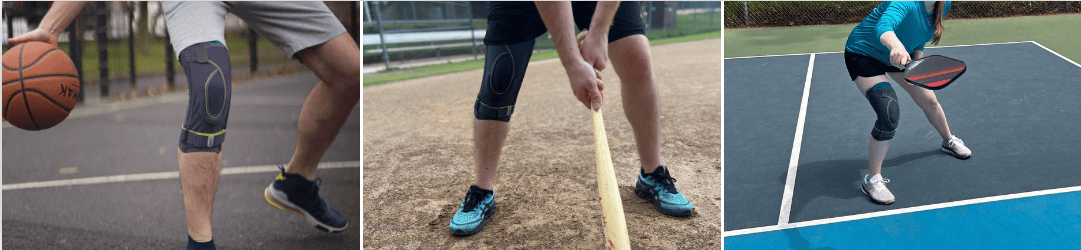
The Push Sports Knee Brace is one of our most versatile options for runners dealing with patellofemoral pain caused by kneecap tracking or mild instability.
It features a U-shaped pad that stabilises the patella on both sides, which directly addresses lateral or medial tracking issues. If your kneecap is drifting during the push-off phase of your stride, this bilateral stabilisation may help keep it better centred in the groove.
It also uses non-axial leaf-spring hinges positioned close to the knee joint. These hinges follow the knee's natural rotational axis rather than forcing a fixed pivot point. For runners, this is significant. A hinge that does not match the knee's actual movement pattern creates friction and resistance. The non-axial design means you keep your natural running range of motion without sacrificing lateral support.
Internal silicone strips help prevent the brace from migrating down the leg during a run, which is a real problem with lower-quality supports.
Indicated for: patellofemoral pain, mild patella instability, osteoarthritis, rheumatoid arthritis, mild collateral ligament instability, and end-stage ACL rehabilitation.
It is latex-free, machine washable (gentle cycle, air dry), and HSA/FSA eligible. Unlike the patella braces, this one is sized by knee circumference, so use the sizing guide on the product page before ordering.
Best for: active runners and athletes whose knee pain involves kneecap tracking, lateral instability, or a broader joint support need rather than a single tendon point.
Push care Knee Brace: For Recovery, Daily Wear, and Arthritic Components
Some of you are managing a knee that has been through a lot, dealing with the overlay of arthritis on patellofemoral pain, or simply looking for reliable everyday support between activity sessions.
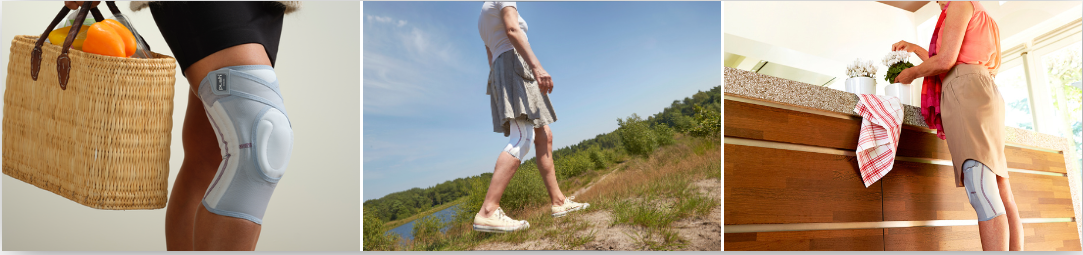
The Push care Knee Brace is built for that situation. It supports both sides of the patella and helps control upward kneecap movement, which is a common issue in patellofemoral pain. Adjustable pressure lets you dial in the right amount of support for your comfort level on any given day.
The open thigh design and step-in application make it genuinely easy to put on, which matters for people managing arthritis or reduced hand strength. Sympress microfiber lining keeps it breathable and moisture-wicking against the skin, and internal silicone strips prevent slippage.
Indicated for: osteoarthritis, rheumatoid arthritis, patellofemoral pain, patella instability, and mild functional instability.
It is latex-free, machine washable, and HSA/FSA eligible. Sized by circumference.
Best for: people who need a softer, comfortable everyday knee support, those in recovery or less active phases, and anyone managing an arthritic component alongside their patellofemoral symptoms.
How to Choose Based on Your Symptom Pattern
Here is a simple decision guide to help you narrow it down:
If the pain is mainly below the kneecap, sharp, and worse with jumping or sprinting: Start with a patella brace. If you want clinical precision and even pressure distribution, choose the Push med Patella Brace. If you want something lighter and athlete-ready, the Push Sports Patella Brace is the one.
If the pain is around or under the kneecap, associated with grinding or shifting, and worse on hills and stairs: A knee brace with bilateral patella support is more appropriate. The Push Sports Knee Brace is the right fit for active users who need that support without losing their running range of motion.
If the pain is chronic, involves arthritis, or you are in a lower-intensity phase: The Push care Knee Brace gives you daily comfort, gentle patella support, and an easy-to-wear design that works well as a recovery or maintenance tool.
If you are not sure: Start by pressing gently just below your kneecap. If that is the primary painful point, lean toward a patella brace. If the discomfort is more diffuse around or under the kneecap, a knee brace is likely the better first step. When in doubt, speaking with a physio or orthopaedic specialist before purchasing is always a good call. You are also welcome to contact our team at BraceLab for product guidance.
A Note on Sizing and Fit
Both patella braces (Push med and Push Sports) are one size, fitting knee circumferences from 10 5/8 to 17 3/4 inches. That makes online ordering simple, no measuring required.
The knee braces (Push Sports and Push care) are sized by circumference, so you will need to measure below the knee before selecting. Refer to the sizing guides on each product page. A well-fitted brace is a functional brace. Too loose and it migrates. Too tight and it restricts circulation. Getting the size right is as important as choosing the right product.
All four products are:
- HSA/FSA eligible
- Machine washable
- Latex-free, with the exception of the Push med Patella Brace, which contains latex
These are not generic pharmacy braces. Every Push Brace is a European-manufactured, clinical-grade support designed with input from orthopaedic and physiotherapy specialists. The materials, the pad geometry, the hinge engineering, all of it reflects a clinical design process rather than a mass-market approach. That is the difference you feel when you put one on.
The Bottom Line
Patella brace vs knee brace is not a one-size-fits-all question. It is a symptom question. Tendon-focused pain below the kneecap calls for the targeted pressure of a patella brace. Kneecap tracking issues or broader joint instability usually respond better to a knee brace with bilateral patella support. And if you are managing recovery, arthritis, or daily wear needs, a softer everyday knee brace may serve you best.
Explore the full range at BraceLab and use the product pages to match your symptoms to the right support. If you have questions about which option suits your situation, our team is always happy to help.
Frequently Asked Questions
What is the difference between a patella brace and a knee brace?
A patella brace is a narrow strap worn just below the kneecap. It applies targeted pressure to the patellar tendon to reduce tendon load during activity. A knee brace covers more of the joint and can stabilise the kneecap on both sides, support the joint through hinges, and address kneecap tracking problems. The right choice depends on where your pain is coming from.
Can I use a patella brace for runner's knee?
It depends on what is causing your runner's knee. If the pain is focused just below the kneecap and feels sharp with jumping or sprinting, a patella brace is likely appropriate. If the pain is more diffuse, sits around or under the kneecap, or involves a grinding sensation, a knee brace with bilateral patella support will usually work better.
How do I know if my pain is from the patellar tendon or the kneecap itself?
Press gently just below your kneecap. If that spot is the main source of pain, you are likely dealing with a patellar tendon issue. If the discomfort is spread more broadly around or under the kneecap, and is worse on stairs or hills, kneecap tracking is the more likely culprit. A physiotherapist or orthopaedic specialist can confirm the diagnosis if you are unsure.
Can I wear a patella brace and a knee brace at the same time?
In most cases, no. Wearing both creates unnecessary bulk and can interfere with how each brace functions. Choose the one that matches your primary symptom. If you genuinely have both a tendon issue and a tracking problem, speak with a clinician about the best approach for your specific situation.
Are these braces suitable for running?
Yes. Both patella brace options and the Push Sports Knee Brace are designed with active use in mind. Anti-slip features and materials that stay in place during movement are key parts of their design. The Push care Knee Brace is better suited to lower-intensity activity, recovery, and daily wear.
Do I need a prescription to buy these braces?
No prescription is required. All four products are available directly through BraceLab. They are also HSA/FSA eligible, which means you may be able to use pre-tax health savings funds toward your purchase.
How do I find the right size?
Both patella braces are one size and fit knee circumferences from 10 5/8 to 17 3/4 inches, so no measuring is needed. The Push Sports Knee Brace and Push care Knee Brace are sized by circumference. Measure around your knee at the point specified in the sizing guide on each product page before ordering.
Can these braces be used for conditions other than runner's knee?
Yes. The patella braces are indicated for jumper's knee, Osgood-Schlatter disease, and patellar tendonitis. The knee braces cover a broader range including osteoarthritis, rheumatoid arthritis, mild collateral ligament instability, and patella instability. Check the indications listed on each product page to see whether your condition is covered.