
Why Your First Step Out of Bed Causes Stabbing Heel Pain (And What to Do About It)

|
Why Your First Step Out of Bed Causes Stabbing Heel Pain (And What to Do About It) |
That first step out of bed should be automatic. Instead, for millions of people, it's a sharp, breath-taking jolt of pain shooting through the heel. You reach for the floor, and suddenly it feels like you're stepping on broken glass.
It passes after a few minutes. You walk it off, get on with your day. But the next morning, it's back.
This pattern is so specific it practically diagnoses itself. If that scenario sounds painfully familiar, you are almost certainly dealing with plantar fasciitis — by far the most common cause of heel pain in adults — and the morning ritual is one of its hallmark signs. Understanding exactly why it happens, not just that it does, puts you in a much better position to actually address it.
The Anatomy Behind That First-Step Pain
|
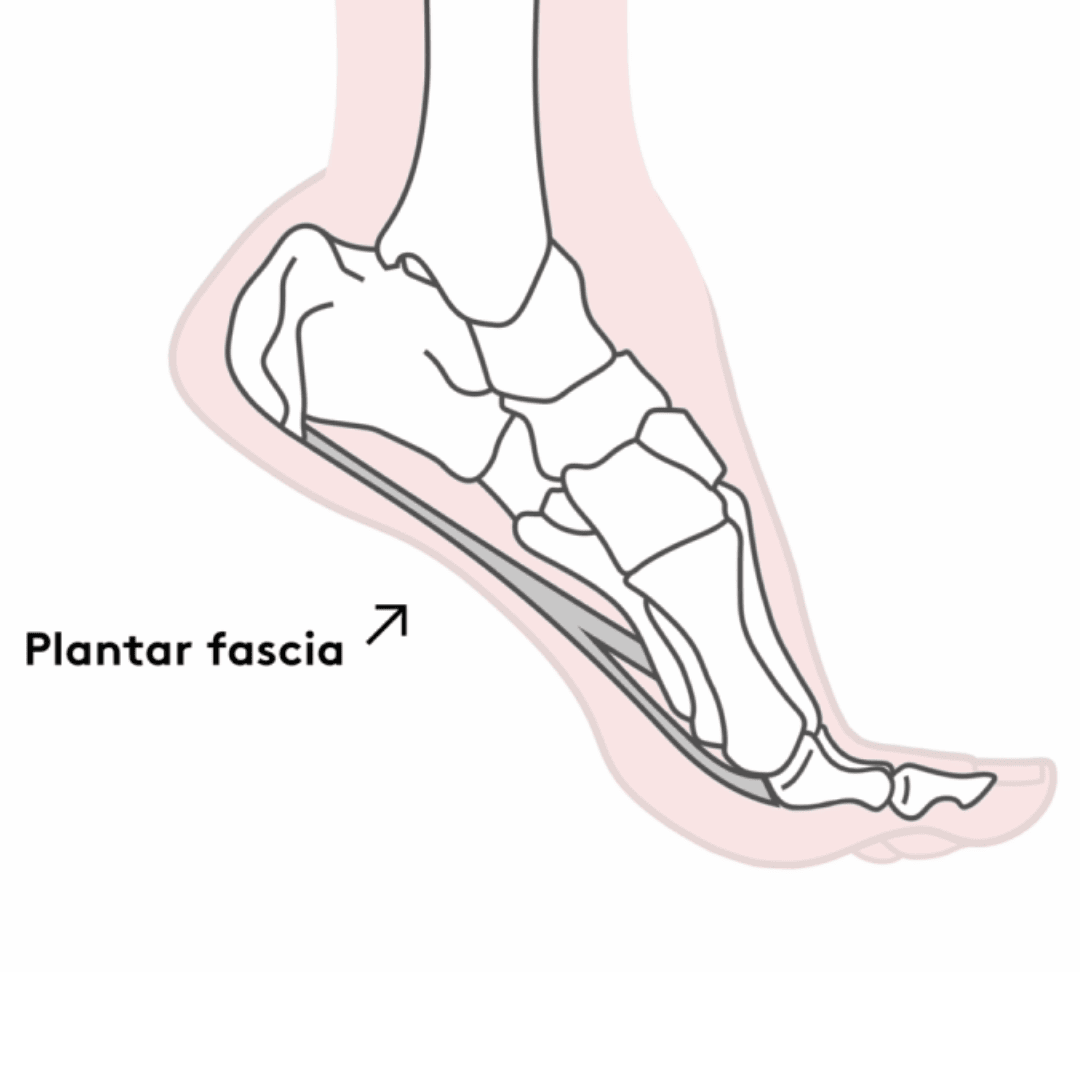
The heel is a surprisingly complex structure. The plantar fascia, a thick band of connective tissue running along the bottom of your foot from the heel bone to the base of your toes, acts like a shock-absorbing cable during every step you take. When you walk or run, it stretches and recoils, distributing load across the foot. When this tissue becomes irritated or develops micro-tears from repetitive strain, it thickens and loses flexibility. That's plantar fasciitis, and it's the most common cause of heel pain in adults, affecting roughly 10% of people at some point in their lives according to widely cited estimates in sports medicine literature. |
|
Here's the key to why mornings are the worst: when you sleep, your foot relaxes into a plantarflexed position, meaning the toes point slightly downward and the plantar fascia shortens. It sits in that contracted state for six to eight hours. Then the alarm goes off.
The moment you stand and load your full body weight onto that cold, shortened, already-irritated tissue, it's forced to stretch rapidly. That sudden elongation of an inflamed structure is exactly what causes the stabbing sensation.
Why Does My Heel Hurt When I Wake Up Specifically?
The morning pain pattern is one of the most reliable diagnostic clues for plantar fasciitis first step pain. It's not random. There's a clear biomechanical reason it happens at this time and not, say, after sitting at your desk for an hour (though that can cause a similar secondary flare).
During sleep and rest, your body attempts to begin healing micro-tears in the fascia. Light scar tissue and inflammatory proteins accumulate at the site of irritation. When you suddenly load the foot, that fragile early-repair work is disrupted before it's had a chance to set properly.
This is also why the pain often eases after five to ten minutes of walking. As circulation increases and the tissue warms and lengthens, the acute discomfort subsides. But this "warming up" effect can give a false sense that the problem is resolving. It isn't. The underlying tissue damage is still there.
Who Is Most at Risk?
Plantar fasciitis doesn't discriminate, but certain factors stack the odds considerably:
- Foot structure: High arches or flat feet both alter how load is distributed across the fascia. Neither is ideal.
- Calf tightness: Tight gastrocnemius and soleus muscles increase tension through the Achilles tendon and into the plantar fascia. This is one of the most underappreciated contributing factors.
- Footwear: Worn-out shoes, unsupportive flats, or going barefoot on hard surfaces for extended periods all increase fascia strain.
- Activity load: Sudden increases in running mileage, long periods of standing on hard floors, or starting a new exercise routine without adequate adaptation time.
- Age and weight: Fatty heel pad atrophy begins in most adults after the age of 40, reducing natural cushioning. Carrying additional body weight increases loading force substantially.
- Occupation: Teachers, nurses, warehouse staff, and anyone who stands for long hours on hard flooring are disproportionately affected.
Other Causes of Heel Pain Worth Knowing
While plantar fasciitis accounts for the majority of cases, it's not the only explanation for stabbing heel pain with your first step in the morning.
Heel Fat Pad Syndrome
As the natural cushioning beneath the heel thins with age or repetitive impact, the heel bone absorbs more direct stress. The pain tends to be more centralised directly under the heel rather than toward the arch.
Tarsal Tunnel Syndrome
The tibial nerve runs through a narrow passage near the inner ankle. When compressed, it can produce pain, burning, or tingling that radiates into the heel and arch. Unlike plantar fasciitis, this often includes neurological symptoms like numbness.
Haglund's Deformity
This bony enlargement at the back of the heel can cause Achilles tendon irritation and heel pain, though the location and character differ from plantar fasciitis.
Stress Fractures
Less common but important to rule out, particularly in runners or those with osteoporosis. Stress fractures produce localised bony tenderness and don't follow the characteristic "worse in morning, better after walking" pattern.
If the pain doesn't follow the classic morning pattern, worsens with rest but not with movement, or is accompanied by swelling, bruising, or neurological symptoms, a clinical assessment is necessary before self-managing.
How to Manage Plantar Fasciitis First Step Pain
The good news is that most cases of plantar fasciitis resolve with conservative management. The less-good news is that it typically takes months, not weeks, and requires consistency.
Stretching Before Your First Step
This is the single most effective thing most people overlook. Before you put your foot on the floor in the morning, spend 60 to 90 seconds doing these:
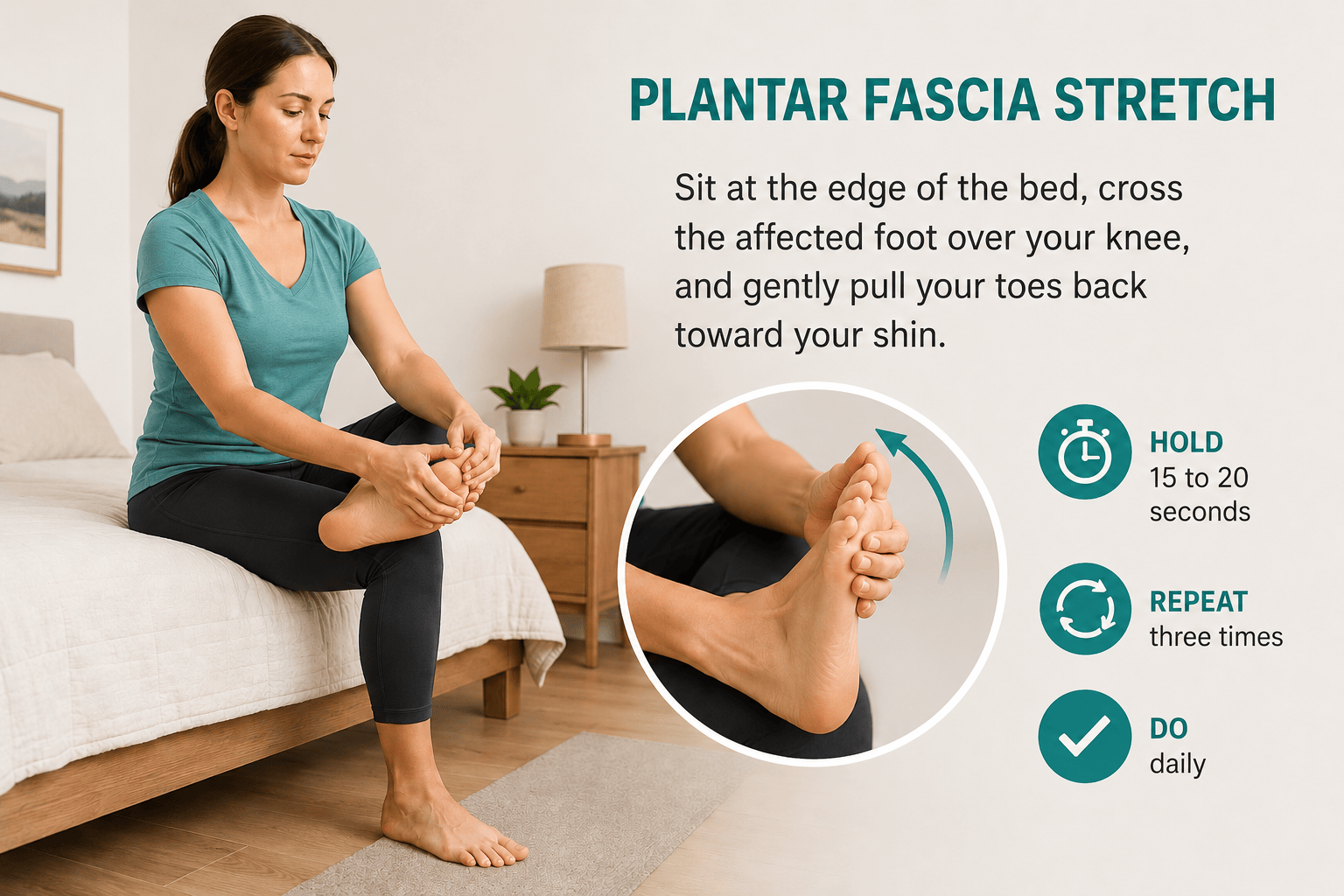
- Plantar fascia stretch: Sit at the edge of the bed, cross the affected foot over your knee, and gently pull your toes back toward your shin. Hold 15 to 20 seconds. Repeat three times.
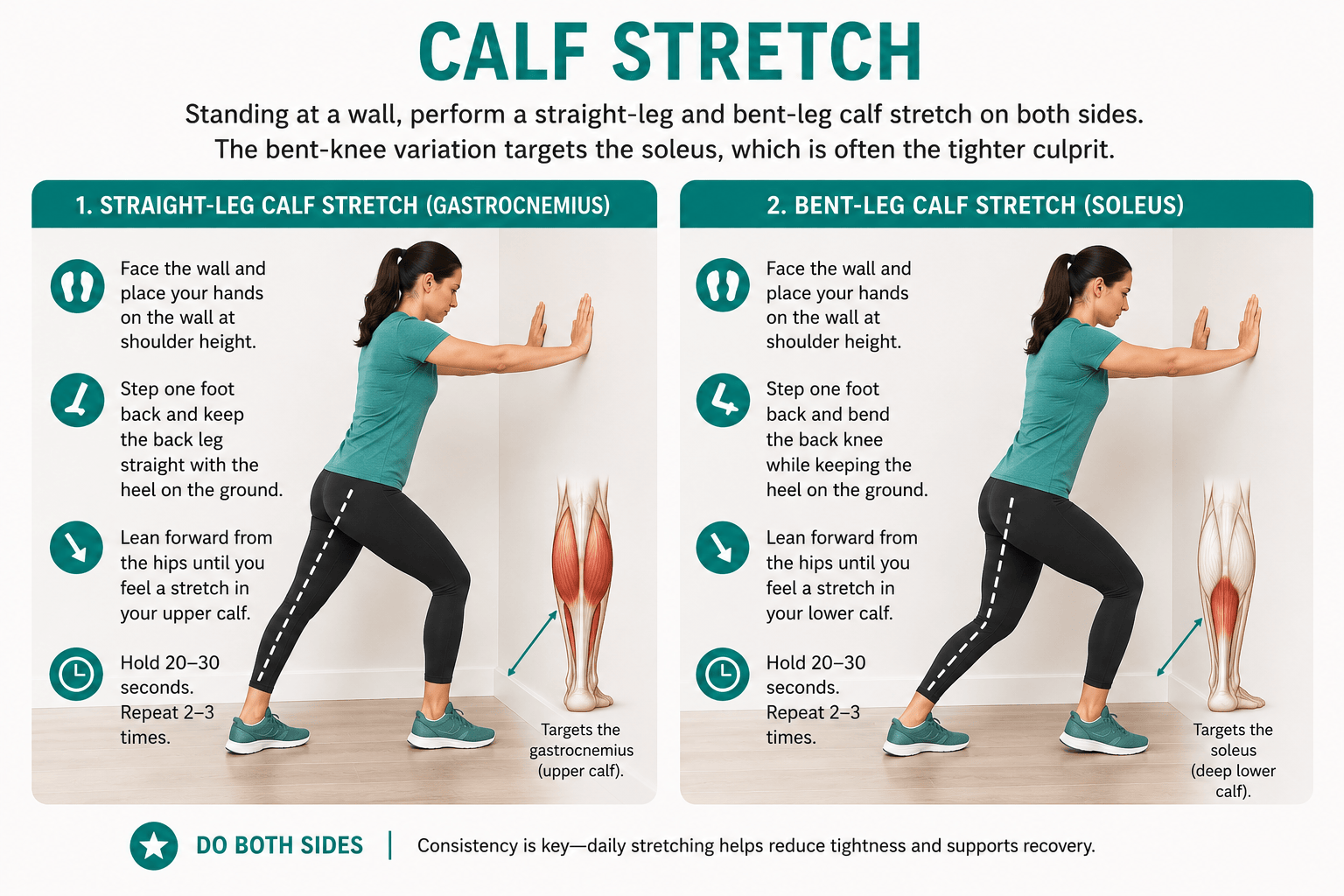
- Calf stretch: Standing at a wall, perform a straight-leg and bent-leg calf stretch on both sides. The bent-knee variation targets the soleus, which is often the tighter culprit.
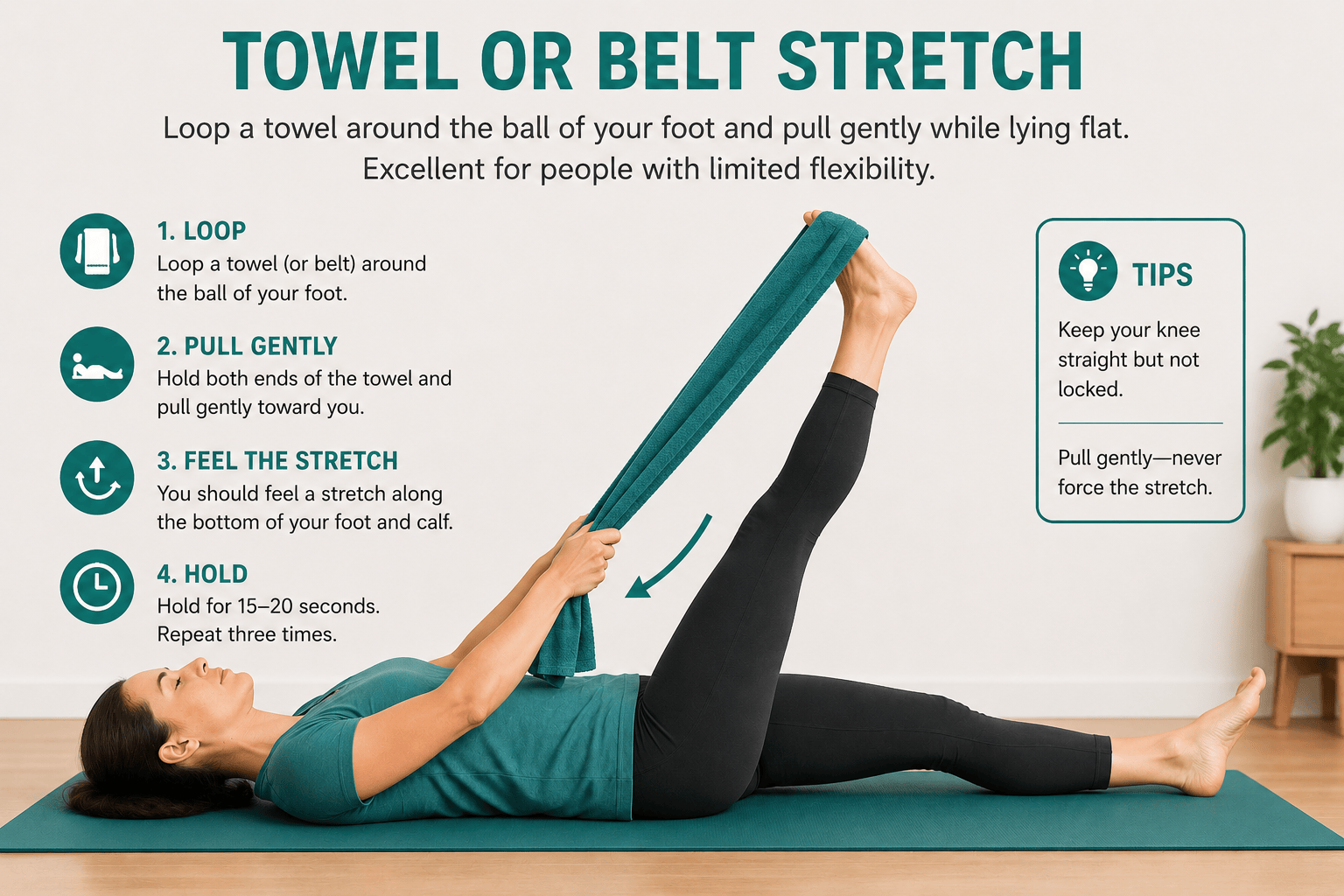
- Towel or belt stretch: Loop a towel around the ball of your foot and pull gently while lying flat. Excellent for people with limited flexibility.
These pre-step stretches warm the fascia gradually before load is applied, dramatically reducing that initial sharp pain.
Night Splints
|
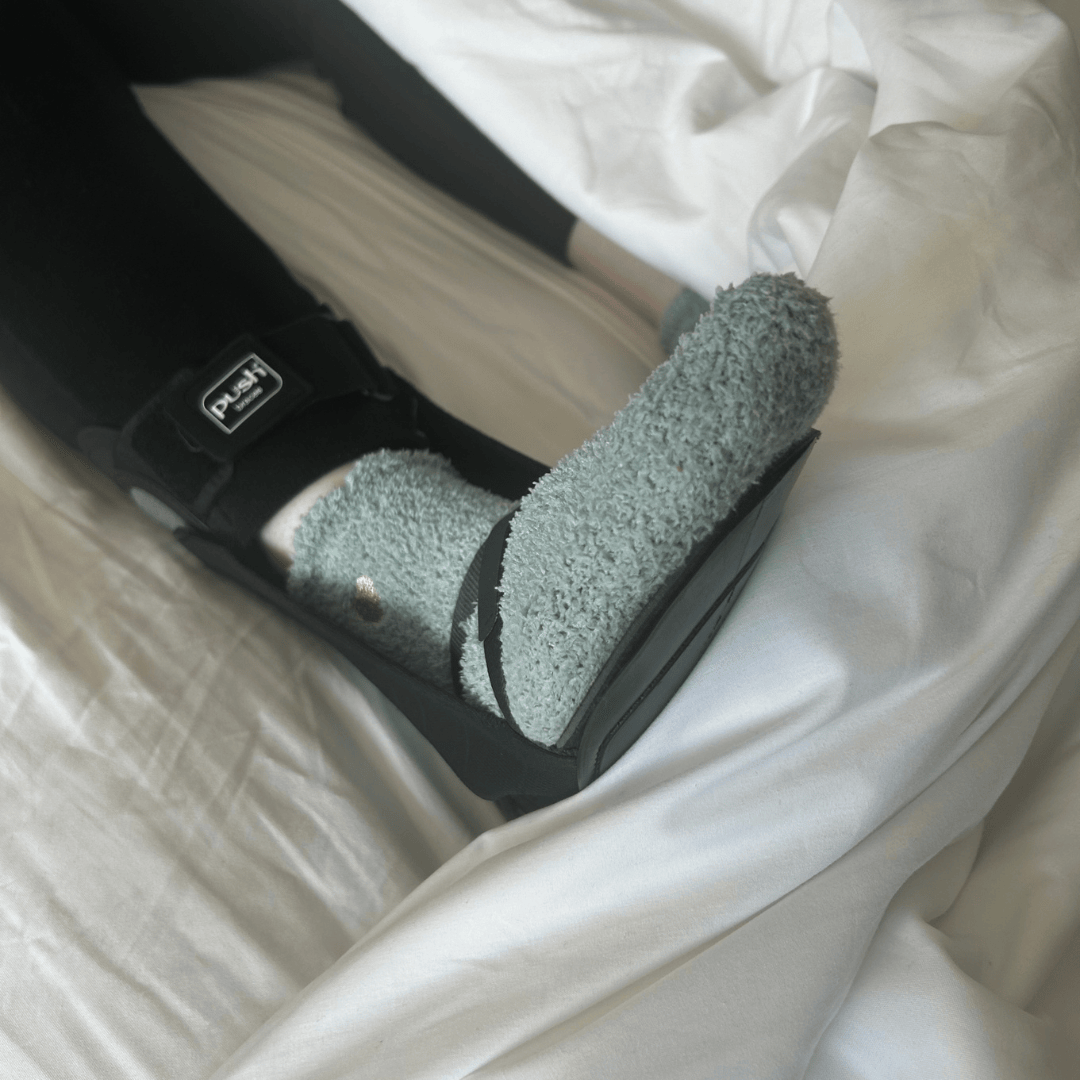
Wearing a night splint keeps the foot in a neutral or slightly dorsiflexed position during sleep. This means the plantar fascia stays at a gentle stretch overnight rather than shortening, so the morning elongation isn't such a shock to the tissue. Research published in journals like the Journal of Bone and Joint Surgery has consistently supported night splints as an effective adjunct for chronic plantar fasciitis. |
|
Supportive Footwear and Orthotics
Walking barefoot on hard floors, especially on cold tiles first thing in the morning, is genuinely damaging for healing plantar fascia. Supportive footwear with cushioning and arch support should be the first thing on your feet every morning, not an afterthought.
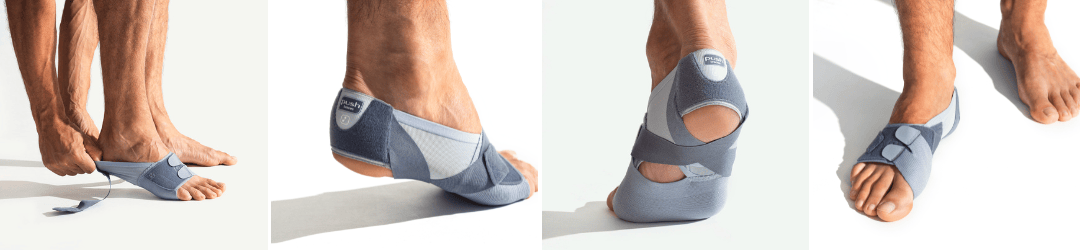
For those who need structured foot support during recovery or daily activity, foot braces designed specifically for plantar conditions can help maintain proper alignment and reduce the strain placed on the fascia with each step. These are particularly useful for people whose occupation requires long periods of standing or walking.
The Push med Foot Brace FP is one option worth looking into for plantar fasciitis management. Its design is based on a proven taping technique that physiotherapists have used for years to offload the plantar fascia, translating that same taping mechanic into a wearable brace. It provides anatomically shaped support underneath the foot, helping to offload the plantar fascia during weight-bearing activity without restricting natural movement, and is built to support the fascia in healing while you wear it. This kind of support is particularly relevant during the working day when consistent fascia loading is unavoidable.
Load Management
Reducing high-impact activity during flare-ups isn't giving up, it's smart tissue management. Swap running for swimming or cycling temporarily. Avoid prolonged standing on hard surfaces where possible. Gradual, progressive return to activity is far more effective than pushing through pain repeatedly.
Physical Therapy
A physiotherapist or podiatrist can assess gait, foot mechanics, and muscle imbalances that contribute to the condition. Shockwave therapy has gained significant evidence as an effective option for chronic cases that haven't responded to standard conservative care.
When to Seek Professional Advice
Most plantar fasciitis cases improve with consistent self-management over three to six months. But there are situations where professional input is necessary sooner:
- Pain that is severe and doesn't ease with walking
- Bilateral heel pain (both heels affected simultaneously)
- Pain accompanied by swelling, redness, or heat
- No improvement after six to eight weeks of consistent stretching and footwear changes
- Heel pain following a fall or impact
A podiatrist, physiotherapist, or sports medicine physician can confirm the diagnosis and rule out other structural causes.
Key Takeaways
- Stabbing heel pain with your first step in the morning is almost always caused by the plantar fascia being forced to stretch rapidly after hours in a shortened position during sleep.
- The temporary relief after walking doesn't mean the condition is healing. The underlying tissue damage persists until properly addressed.
- Stretching the plantar fascia and calf muscles before placing your foot on the floor every morning is one of the most effective ways to reduce that initial sharp pain.
- Night splints, supportive footwear, and structured foot braces help maintain proper alignment and reduce cumulative strain throughout the day.
- Most cases respond well to conservative management, but persistence over several months is required. Pushing through pain without addressing root causes typically prolongs recovery.

Frequently Asked Questions
Is it normal for heel pain to go away after walking for a few minutes?
Yes, this is a hallmark feature of plantar fasciitis. The fascia warms and lengthens with movement, reducing the acute pain. However, this improvement is temporary and doesn't indicate recovery. The tissue is still damaged and will typically flare again after prolonged rest.
Can I run with plantar fasciitis?
In mild cases with appropriate footwear and load management, some running is possible. But running through significant pain usually extends recovery time. Reducing mileage, switching to softer surfaces, and adding heel support can help maintain fitness while the tissue heals.
How long does plantar fasciitis typically take to resolve?
Most cases improve within three to twelve months with consistent conservative management. Chronic cases, especially those left untreated for extended periods, can take longer and may benefit from shockwave therapy or other clinical interventions.
Do heel spurs cause the pain?
Heel spurs (calcium deposits on the heel bone) are often found on imaging in people with plantar fasciitis, but research suggests they are a result of chronic fascia tension rather than the cause of pain. Many people have heel spurs with no symptoms at all. The fascia irritation itself is the primary pain source.
What type of shoes are worst for plantar fasciitis?
Flat, unsupportive footwear such as flip-flops, ballet flats, and worn-down trainers are consistently the worst options. Hard-soled shoes without cushioning and going barefoot on hard floors also significantly increase fascia strain. Look for shoes with a slight heel lift, firm arch support, and cushioned soles.
Can wearing a foot brace actually help my plantar fasciitis heal faster?
Yes, and that is part of why bracing is increasingly recommended alongside stretching, footwear changes, and load management. A well-designed brace like the Push med Foot Brace FP offloads the plantar fascia each time you take a step, which both relieves immediate pain and gives the irritated tissue room to recover during the day. For people who cannot avoid long periods of standing or walking, that ongoing support can be the difference between a recovery that stalls and one that steadily progresses.
Conclusion
That morning stabbing heel pain is your foot's way of flagging a mechanical problem that won't fix itself without some deliberate action. The biology behind it is well understood, the management strategies are practical, and most people who stay consistent with stretching, load management, and proper support do recover fully.
Start with the pre-step stretches tomorrow morning before your foot touches the floor. That single change, done daily, can meaningfully reduce the severity of that first-step pain within days. Build from there.
For people managing this condition through active recovery or daily work demands, exploring structured support options through BraceLab can be a useful next step in finding the right level of foot support for their specific situation.