
Tennis Elbow Without Tennis: How Everyday Repetitive Tasks Trigger Inner and Outer Elbow Pain
|
Tennis Elbow Without Tennis: How Everyday Repetitive Tasks Trigger Inner and Outer Elbow Pain |
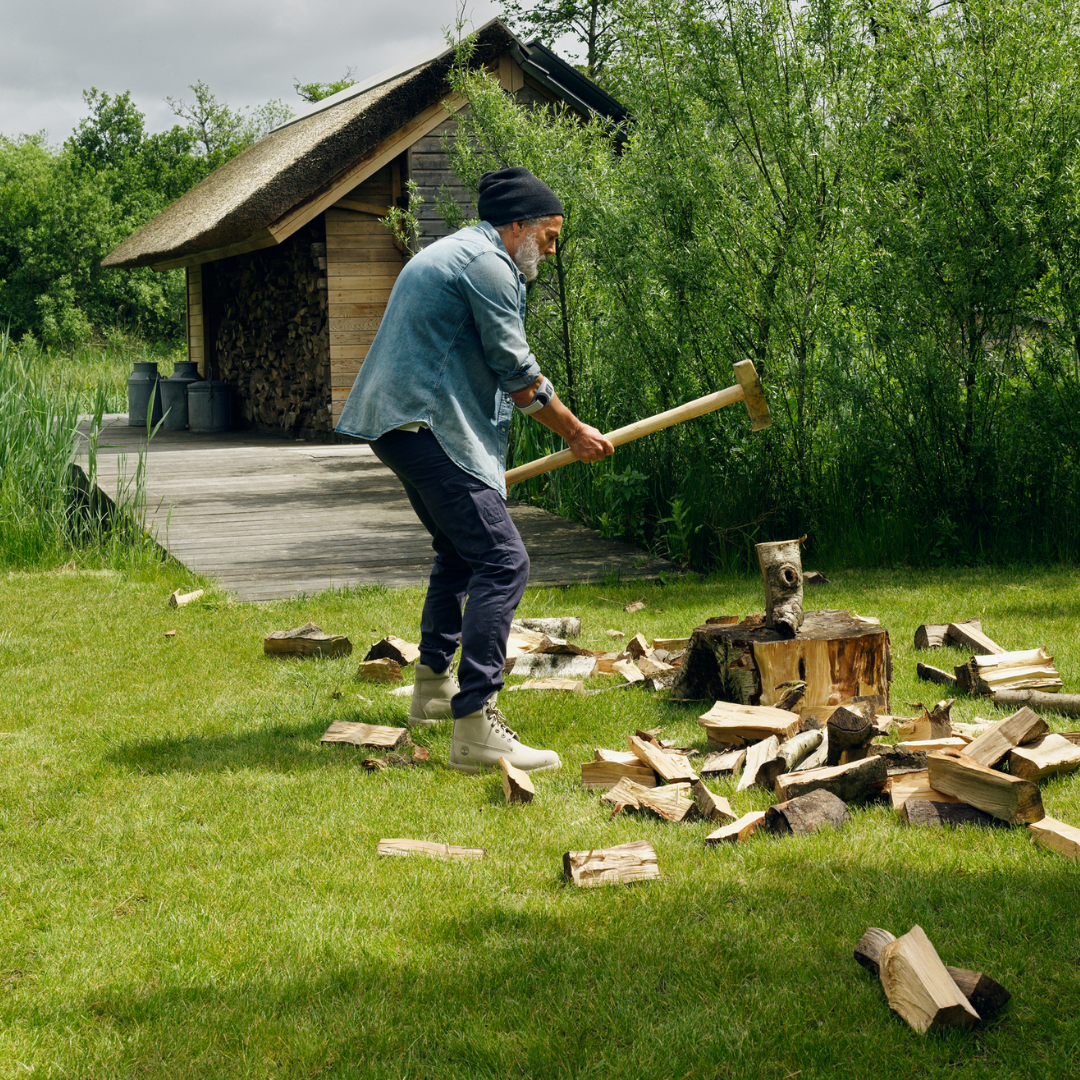
Tennis elbow is rarely caused by tennis, and golfer's elbow is rarely caused by golf. Most people who develop these conditions are not athletes at all. They are gardeners who spent a weekend pruning shrubs, parents who carried a toddler in one arm for months, bakers who knead dough by hand, or anyone who picked up a new household project and pushed through some forearm soreness without realizing what was happening.
The pattern is almost always the same. The pain does not follow an obvious injury. There is no fall, no sudden snap. One day the elbow just starts aching, and gripping a kettle or carrying a grocery bag feels like it is making things worse.
Most of the time, the cause traces back to one of two conditions: medial epicondylitis or lateral epicondylitis. These are the clinical names for what most people know as golfer's elbow and tennis elbow. Both develop from the same root cause: too much repetitive forearm load over too little recovery time. This article breaks down what is actually happening inside the joint when each one flares up, the everyday activities that drive them, how to recognize which side is affected, and the practical mix of activity modification, exercise, and supportive bracing that genuinely changes the pattern.
The Anatomy Behind the Pain
|
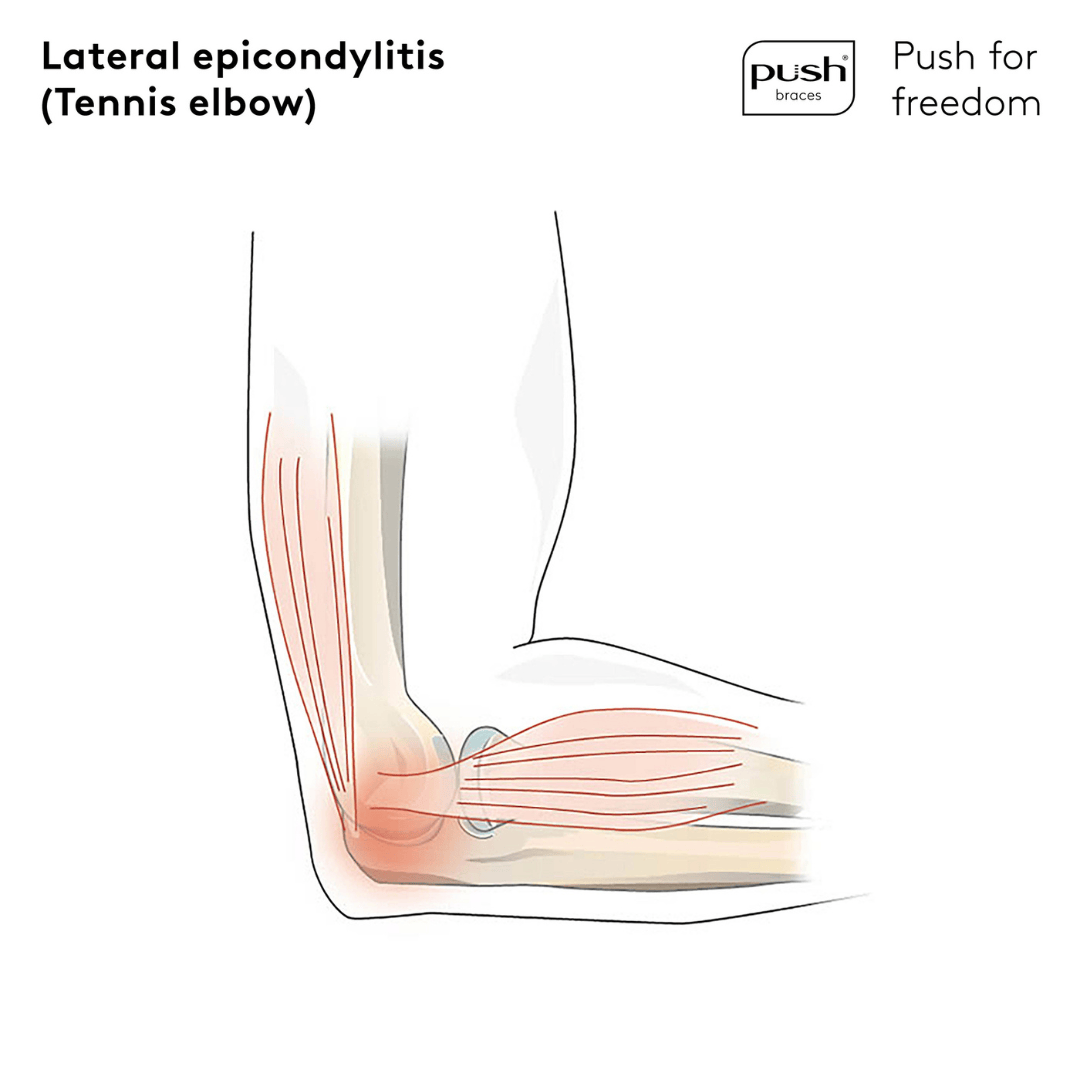
Your elbow is a meeting point for three bones, but the pain you feel on either side usually traces back to the tendons connecting your forearm muscles to the bony projections on either side of the elbow, called epicondyles. There are two of them:
Tendons from your forearm muscles attach at these points and run down to the wrist and hand. Every time you grip something, twist a tool, or load your forearm in any direction, those tendons are working. When the work piles up faster than the tissue can repair itself, small tears develop in the tendon, inflammation sets in, and the persistent ache that makes everyday tasks genuinely difficult takes hold. |

|
Outer Elbow Pain: What's Happening and Why
|
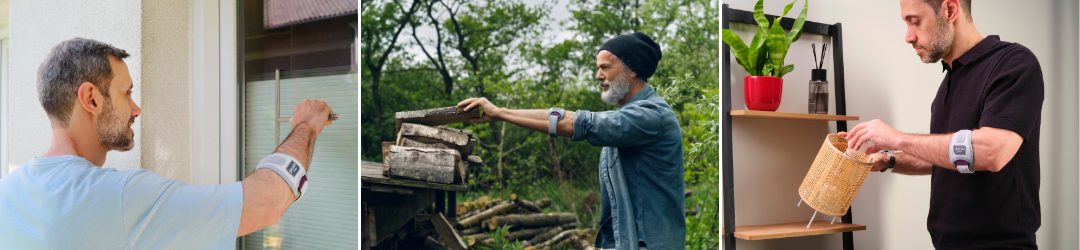
Pain on the outer side of the elbow, the lateral epicondyle area, is typically lateral epicondylitis, or tennis elbow. Despite the name, research consistently shows that the majority of cases occur in people who have never played tennis. The condition is driven by repetitive gripping with the wrist extended, especially when force or twisting is involved. Common everyday triggers for outer elbow pain:
|
|
The pain is usually sharp on the outer bony part of the elbow and can radiate down the forearm. Gripping objects, shaking hands, lifting a coffee cup, or opening a jar can aggravate it. In some cases, the pain wakes people up at night if they roll onto the affected arm.
Inner Elbow Pain: The Less-Discussed Side
Medial epicondylitis, or golfer's elbow, involves the tendons on the inner side of the elbow. The muscles affected control wrist flexion and forearm pronation (turning the palm down), so activities that repeatedly curl the wrist downward, twist the forearm inward, or involve sustained gripping are typically the cause.
Common everyday triggers for inner elbow pain:
- Mopping floors, particularly with the wringing or twisting motion most mops require
- Vacuuming with a push-pull motion that loads the forearm flexors repeatedly
- Baking and kneading dough by hand, especially in large batches or stiffer doughs
- Chopping wood or repeated hammering
- Carrying heavy objects with a palm-down grip (like a heavy laundry basket or carry bag)
- Scrubbing pots, pans, bathtubs, or floors with sustained pressure
- Lifting and carrying children or pets in one arm for extended periods
- Hand-tightening lids, jars, or fittings repeatedly
People with inner elbow pain often describe a dull, aching sensation on the inside of the joint that sharpens during gripping or wrist flexion. It can feel sore to touch the inner bony point directly. Activities like opening a tight jar, twisting a key in a stiff lock, or lifting a saucepan with the palm-down grip can produce a sharp twinge that confirms which side is affected.

Why Everyday Repetitive Activities Cause This
Tennis and golfer's elbow are conditions of accumulation, not single events. They develop when the volume of repetitive forearm load outpaces the tissue's capacity to recover. That is why someone can do these activities for years without a problem, then suddenly develop pain after a particularly busy weekend or a new project that introduces an unfamiliar pattern of loading.
The issue is rarely about brute force. It is about how often the same tendons are being asked to work without rest. Tendons need time to adapt to load, and when you mop the kitchen, then weed the garden, then knead a loaf of bread, then carry the groceries in, those tendons never fully offload between tasks. Over weeks or months, the cumulative stress outpaces the tissue's ability to repair itself.
Factors that compound the risk:
- Sudden increases in repetitive activity (a big garden project, a baking weekend, a deep clean)
- Poor tool grip or handle ergonomics, particularly with cheap or worn-out tools
- Sustained gripping with too much force, often unconsciously
- No structured breaks during long tasks
- Existing forearm tightness or weakness that has not been addressed
- Age-related tendon changes, particularly in the 35 to 54 range when epicondylitis is most common
According to the American Academy of Orthopaedic Surgeons, lateral epicondylitis affects approximately 1% to 3% of the population, with higher rates among people aged 35 to 54 in physically repetitive roles. The same age and activity pattern applies to people whose repetitive load comes from gardening, household tasks, or hobbies rather than paid work.
Getting a Rough Sense of Which Side Is Affected
You cannot reliably self-diagnose epicondylitis, and confirming the diagnosis still requires a clinician. The simple movement checks below are not diagnostic tests. They are meant to give you a starting hypothesis you can bring to a hand therapist, physical therapist, or doctor, and to help you identify which movements to modify in the meantime.
For suspected lateral epicondylitis (outer):
- Extend your arm in front of you and try to bend your wrist upward against light resistance
- Pain on the outer elbow side suggests lateral tendon involvement
For suspected medial epicondylitis (inner):
- With your palm facing up, try to bend your wrist upward against light resistance
- Pain on the inner side suggests medial tendon involvement
Practical Steps to Manage Elbow Pain
1. Modify the Activity
Before reaching for a brace or pain relief, look at the tasks that are loading the elbow. Small changes to how you do the activity can dramatically reduce tendon strain:
- Use tools with a wider, softer grip to reduce the squeeze force your hand has to generate
- Where possible, switch to powered tools (electric pruners, an upright vacuum with self-propulsion, a stand mixer for dough) during a flare
- Break long tasks into smaller blocks instead of marathon sessions
- Alternate hands where the task allows, so neither forearm takes the full load
- Keep the wrist in a neutral position when carrying or lifting, rather than letting it bend up or down under load
Stopping the activity completely is usually not necessary, and total rest often leads to stiffness and prolonged recovery. The goal is to reduce the provocative load while keeping the joint moving.
2. Build in Recovery Between Tasks
Rest alone rarely resolves epicondylitis, but the spacing of activity matters. Short, structured breaks every 30 to 45 minutes during repetitive tasks matter more than long breaks taken infrequently. Stretching the forearm flexors and extensors between blocks of activity gives the tendons a brief offload that, repeated over the day, makes a real difference.
3. Strengthening Through Eccentric Exercise
Research from physical therapy and sports medicine consistently supports eccentric loading for tendon rehabilitation. Eccentric exercise simply means lengthening the muscle under load, like slowly lowering the wrist after curling it up, rather than focusing on the contraction itself. For both tennis and golfer's elbow, slow wrist extension and flexion exercises performed with light resistance help rebuild tendon tolerance.
A hand therapist or physical therapist can guide a structured program. Attempting this without guidance and doing too much too soon can prolong recovery.
4. Use Supportive Bracing When Needed
Bracing can be a genuinely useful tool during the acute or sub-acute phase, particularly when you cannot avoid the activities that are loading the elbow. The goal is to reduce stress on the affected tendons during use, not to immobilize the joint.
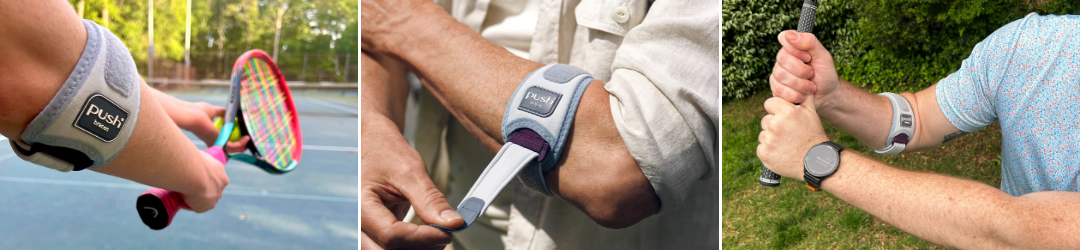
For epicondylitis specifically, a counterforce brace that applies pressure to the forearm just below the elbow joint can reduce the amount of force transmitted through the epicondyle during gripping and twisting tasks. This does not cure the condition, but it makes continuing daily activities far more manageable while the tendon heals.
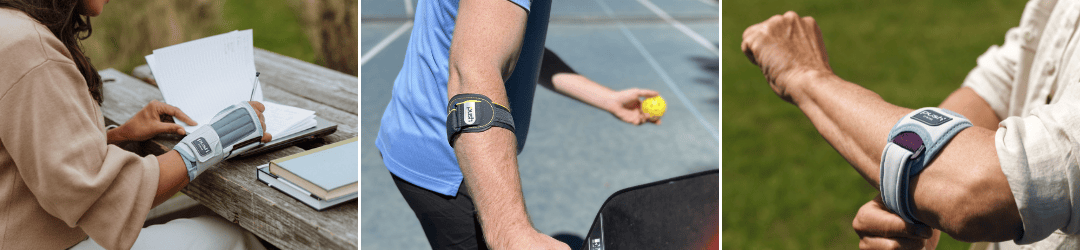
The Push med Elbow Brace Epi is a clinically designed option built specifically for both medial and lateral epicondylitis, so it covers golfer's elbow and tennis elbow with the same brace. Its viscoelastic polymer pad delivers comfortable, localized pressure to either the extensor or flexor tendon origin (depending on which side is affected), and the internal C-shaped reinforcement directs that pressure precisely where it is needed without restricting blood flow. The slim profile makes it practical to wear through long days of gardening, cleaning, baking, or any other repetitive activity that triggers a flare.
For people whose pain shows up most during repetitive wrist motion (mopping, vacuuming, sustained gripping), pairing the elbow brace with the Push med Wrist Brace can be worth considering. The forearm tendons that attach at the elbow run all the way down to the wrist, and immobilizing the wrist reduces the strain on those tendons at their elbow attachment point. The fingers remain free to grip, so it does not stop you using your hand, but it offloads the muscles that are driving the inflammation. A hand therapist or physical therapist can help you decide whether elbow bracing alone is enough or whether the combined approach makes sense for your specific pattern of pain.
You can explore the full range of elbow braces available for different levels of support and activity requirements.
5. Anti-Inflammatory Strategies
In the early stages, applying ice for 10 to 15 minutes after an aggravating session of gardening, cleaning, or any high-load activity can help manage inflammation. Over-the-counter NSAIDs may also reduce pain in the short term, but they are not a long-term fix and do not address the underlying tendon damage.
If symptoms have persisted for more than 6 to 8 weeks without improvement, a doctor or sports medicine specialist may consider corticosteroid injections or refer for further imaging.
When to See a Professional
Most cases of elbow epicondylitis respond well to conservative management. But there are signs that warrant proper clinical assessment by a hand therapist, physical therapist, or sports medicine doctor:
- Pain that has lasted more than 3 months without improvement
- Numbness or tingling in the fingers, which may suggest nerve involvement
- Significant weakness in grip strength
- Pain that wakes you at night consistently
- Swelling, redness, or warmth around the elbow joint
These could indicate complications beyond typical tendinopathy, including nerve entrapment at the elbow (cubital tunnel syndrome or radial tunnel syndrome), which requires a different approach entirely.
Key Takeaways
- Tennis elbow and golfer's elbow are rarely caused by tennis or golf. Most cases come from everyday repetitive activities like gardening, mopping, vacuuming, baking, chopping wood, or carrying heavy objects.
- Outer elbow pain typically points to lateral epicondylitis (tennis elbow), often driven by gripping while the wrist is extended. Inner elbow pain points to medial epicondylitis (golfer's elbow), driven by repeated wrist flexion and forearm pronation.
- These conditions develop from accumulated load, not single events. Sudden increases in repetitive activity, poor tool ergonomics, and missing recovery time are the most common drivers.
- Activity modification (better grips, powered tools, structured breaks) is the first thing to address, not the last.
- A counterforce elbow brace like the Push med Elbow Brace Epi can reduce tendon load during repetitive tasks and works for both inner and outer epicondylitis. Pairing it with a Push med Wrist Brace can help when wrist motion is part of what triggers the pain.
- Self-checks can hint at which side is affected, but a clinician (hand therapist, physical therapist, or doctor) should confirm the diagnosis, particularly if symptoms persist beyond 6 to 8 weeks or include numbness, weakness, or swelling.
Frequently Asked Questions
Can I really get tennis elbow without playing tennis?
Yes, and most people who develop tennis elbow have never played the sport. The condition is named for the motion pattern (gripping with an extended wrist) rather than the activity itself. Anyone doing repetitive gripping during gardening, painting, hand tool use, or similar everyday tasks can develop it.
Can I keep gardening or cleaning if I have tennis or golfer's elbow?
Usually yes, but you need to modify how you do the activity rather than push through the pain. Switch to tools with better grips, break long sessions into smaller blocks, alternate hands where possible, and consider a counterforce brace during high-demand tasks. Complete rest often prolongs recovery rather than speeding it up.
How long does elbow epicondylitis take to heal?
It varies. Mild cases may resolve in 6 to 12 weeks with proper management. More persistent cases, particularly those that have gone untreated for months, can take 6 to 12 months. Early intervention with appropriate activity modification, exercise, and load management significantly improves recovery timelines.
Is a brace enough on its own to fix the problem?
No. A brace manages symptoms and reduces tendon load during activity, but it does not treat the underlying tissue damage. It is best used alongside activity modification, eccentric strengthening exercises, and clinical guidance, not as a standalone solution.
What is the difference between cubital tunnel syndrome and golfer's elbow?
Golfer's elbow is a tendon problem at the medial epicondyle. Cubital tunnel syndrome is a nerve compression issue involving the ulnar nerve as it passes around the inner elbow. The key difference is that cubital tunnel syndrome typically causes numbness, tingling, or weakness in the ring and little fingers, not just localized elbow pain.
Should I apply heat or ice to my elbow?
Ice is generally more useful in the first 48 to 72 hours after a flare or during acute inflammation. Heat can be more helpful for chronic, stiff tendon pain. If in doubt, ice after activity and apply gentle heat before it to warm up the tissue.
Find the Right Brace for Your Elbow Pain
If outer or inner elbow pain is starting to interfere with the activities you rely on every day, the right support can make a real difference while the tendon recovers. The Push med Elbow Brace Epi is purpose-built for both tennis and golfer's elbow, with targeted compression that reduces tendon load during gripping and twisting tasks. For pain patterns driven by repeated wrist motion, the Push med Wrist Brace can complement it by offloading the forearm tendons that attach at the elbow. Explore the full BraceLab elbow brace collection to compare options, find your size, and get clinically informed support shipped straight to you.
Conclusion
Elbow pain from everyday activities is not just an inconvenience. Left unmanaged, it has a way of expanding into something that disrupts sleep, limits basic tasks, and drags on for far longer than it should.
The good news is that most cases of inner and outer elbow pain respond well to relatively simple changes: smarter tool choices, better pacing of activity, targeted strengthening, and appropriate support during high-load tasks. The key is catching it early and taking it seriously rather than assuming it will disappear on its own.
Understanding which side is affected and which everyday tasks are driving it gives you a starting point. From there, it is about making the right adjustments and getting the right clinical support in place.