
What Does a Thumb Brace Do? How to Tell If You Need Support for the Base of Your Thumb
|
What Does a Thumb Brace Do? How to Tell If You Need Support for the Base of Your Thumb |
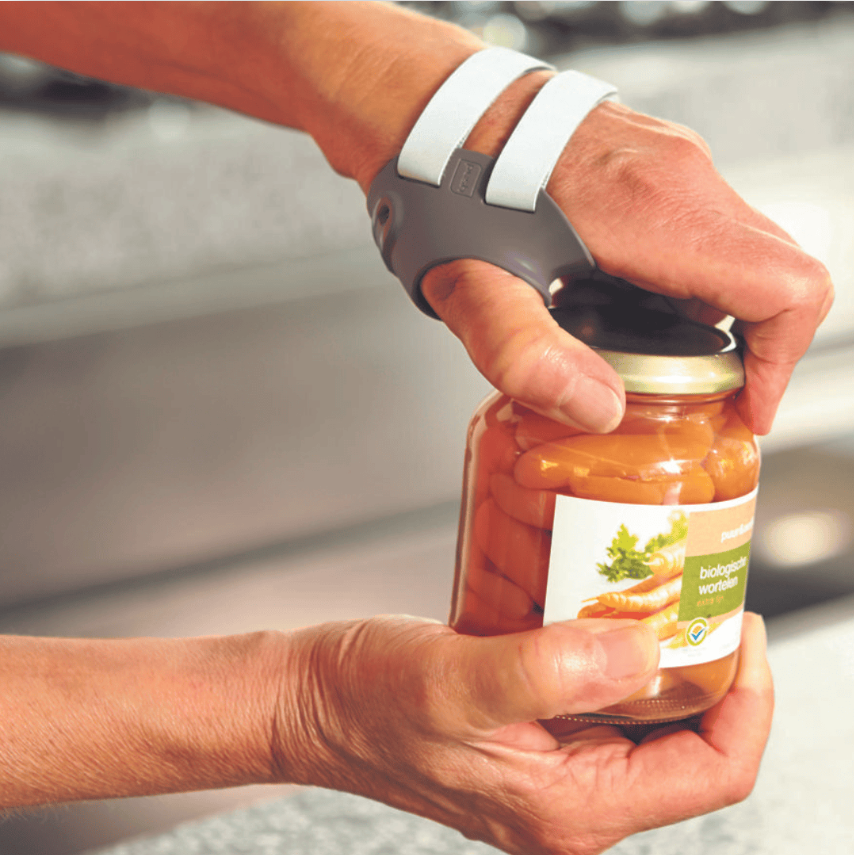
You go to twist open a jar lid and something at the base of your thumb catches under the force. Not a sharp pain exactly, but enough to make you switch hands. You notice it later when you pinch a key between your thumb and finger, again when you try to open a stiff car door. It fades after a few minutes, so you shrug it off. But over the next few weeks it starts showing up more often, in more ordinary movements, and lasting a little longer each time.
That pattern is one of the most common early signs of trouble at the carpometacarpal (CMC)/basal joint, the small saddle-shaped joint at the base of the thumb. It is remarkably common: research from the American Academy of Orthopaedic Surgeons estimates that basal joint arthritis of the thumb affects roughly one in four women and one in twelve men at some point in their lives. A well-designed thumb brace can meaningfully reduce the pain and protect the joint through daily life. This article breaks down what a thumb brace actually does, why the CMC joint takes so much daily wear, how to recognize the signs that you need support, and how the Push MetaGrip is designed specifically to protect the CMC joint without giving up the use of your hand.
What a Thumb CMC Brace Actually Does
A well-designed thumb CMC brace does three specific things: it stabilizes the affected joint, reduces the mechanical load that concentrates on it during everyday activities, and keeps the fingers free to grip, type, and carry out normal hand function. When people picture a thumb brace, they often imagine a bulky splint that wraps the whole thumb and forearm, immobilizing the hand almost entirely. That kind of splint has its place for acute injuries or post-surgical recovery, but it is not what most people with everyday thumb pain actually need.
|
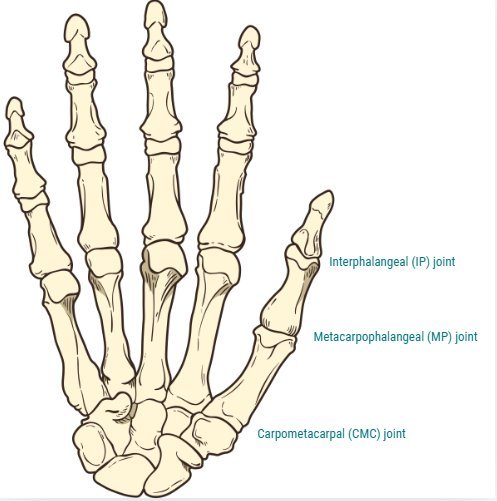
The important thing to know is that not all thumb braces target the same joint. Some are built for the tip of the thumb (the interphalangeal (IP) joint), some for the middle knuckle (the metacarpophalangeal (MP) joint), and some for the base of the thumb (the CMC joint). If you have persistent pain during pinching, gripping, or twisting motions like opening a jar, the joint that is almost certainly involved is the CMC. A brace that targets a different joint will not solve the problem, no matter how supportive it feels. A CMC-focused brace is anatomically shaped to stabilize the small saddle joint at the base of the thumb while leaving the rest of the thumb and all of the fingers free to move naturally. That is the difference between a brace that protects the joint you actually need to protect and a brace that just gets in your way. |
|
The most effective CMC braces go a step further. Rather than passively holding the joint still, they use your own thumb muscles to create the stability. When you pinch or grip, the muscles at the base of your thumb naturally contract and enlarge. A well-designed brace uses that expansion to its advantage, converting muscle contraction into internal pressure that actively stabilizes the joint at the exact moment you need stability most. This principle, called dynamic stabilization, is fundamentally different from older immobilization splints that simply keep the thumb still and let the muscles weaken with disuse.
The CMC Joint: Why It Takes So Much Load
To understand why the CMC joint is such a common source of pain, it helps to understand what it does. The thumb's basal joint, technically called the carpometacarpal joint, sits at the base of the thumb where it meets the wrist. It is a saddle-shaped joint, which gives the thumb its remarkable range of motion. You can move your thumb in nearly every direction because of this design, and that mobility is what makes the human hand so functional.
But, that mobility comes at a cost. The CMC joint handles enormous compressive forces during ordinary tasks. When you pinch something between your thumb and forefinger, approximately 12 times that pinch force is transmitted through the CMC joint. Opening a jar, turning a key, squeezing a pen, buttoning a shirt, or lifting a heavy bag all channel stress directly into this small joint. Over years and decades, that cumulative load slowly wears down the cartilage that cushions the joint. Once the cartilage is thin enough, the forces are no longer absorbed cleanly, and that is when the pain starts.
Certain factors increase how quickly this progression happens:
- Age: prevalence rises steadily after 40, with most diagnosed cases in the 40 to 65 range
- Genetics: a family history of osteoarthritis meaningfully raises risk
- A previous thumb sprain or fracture, even one that healed years earlier
- Occupations or hobbies that involve years of repetitive pinching and gripping (baking, gardening, knitting, hairdressing, dentistry, and many others)
- Naturally hypermobile joints, which place more strain on the CMC over time
Signs You Might Need Support for Your CMC Joint
|
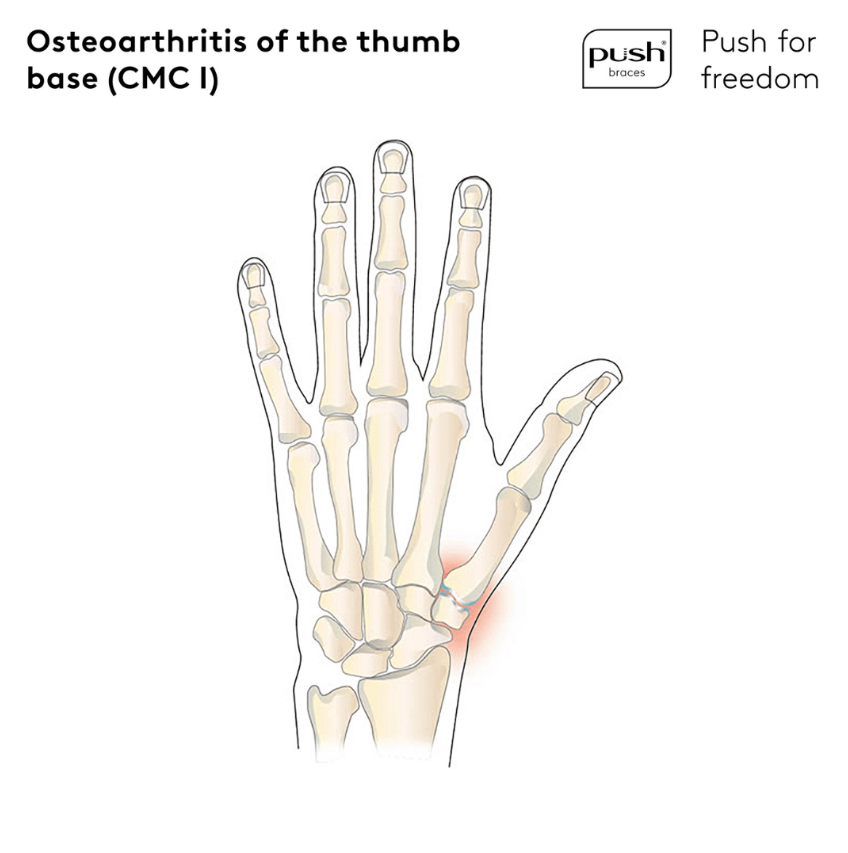
CMC pain tends to develop gradually, and most people spend months or years assuming it will resolve on its own before they seek help. Recognizing the pattern earlier is what makes early intervention possible. The signs typically fall into a recognizable progression:
|
|
Some people also describe a feeling of the joint catching or grinding during specific movements, particularly circular motions of the thumb. That grinding sensation, combined with pain that reliably shows up during pinch-and-grip activities, is often what pushes people to finally seek an assessment.
It is worth being clear about this: you cannot reliably self-diagnose CMC arthritis or instability, and confirming what is actually driving the pain requires a clinician. A hand therapist or hand surgeon can perform a standard clinical exam (including the grind test, in which the joint is gently compressed and rotated to reproduce the pain) and, where useful, order imaging to confirm the diagnosis. Even so, recognizing the pattern in yourself is what makes it possible to seek that assessment before the joint degrades further.
How the Push MetaGrip Supports the CMC Joint
|
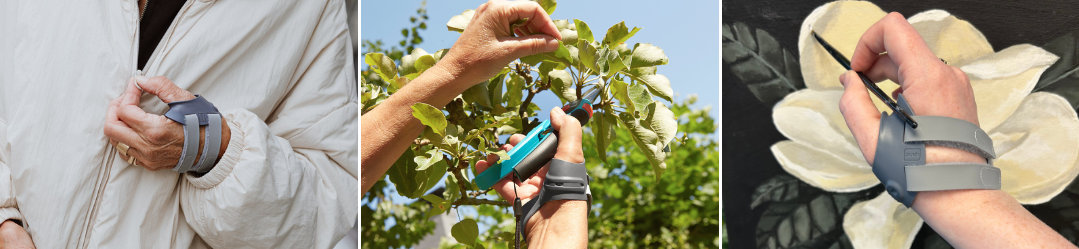
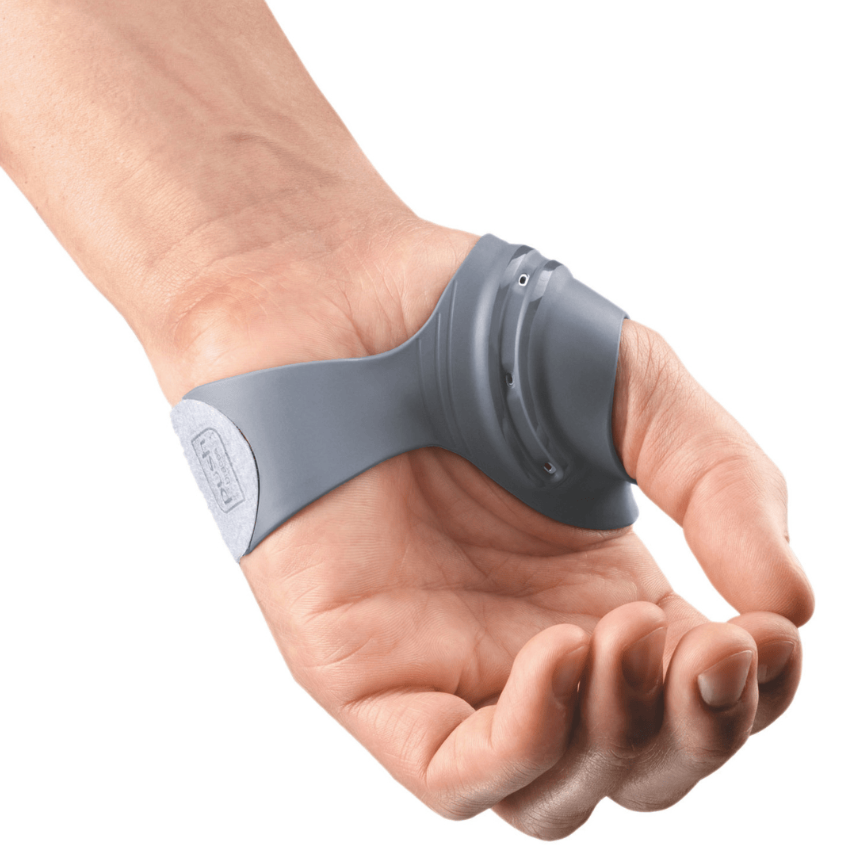
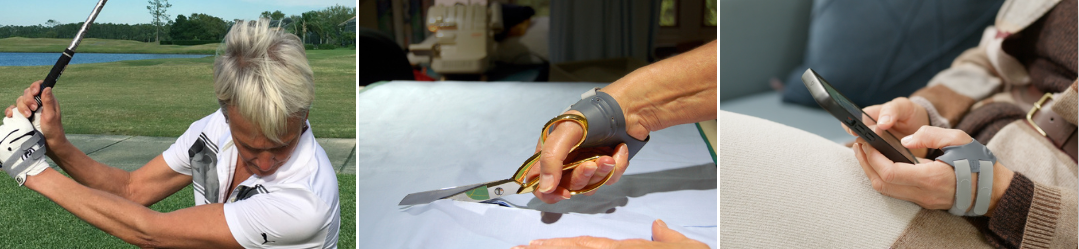
The Push MetaGrip is designed around the same three principles of an effective CMC support: stabilize the joint, reduce the load placed on it, and preserve hand function. As a brace for CMC joint pain and basal joint instability, it stabilizes the CMC joint precisely where the load concentrates, reduces the mechanical force transmitted through the joint during pinching and gripping, and keeps the fingers and the rest of the thumb free to move naturally. It is not a general thumb splint or an immobilization brace. It is a purpose-designed brace with a custom-fitting shape that targets one specific joint while leaving everything else free to function. |
|
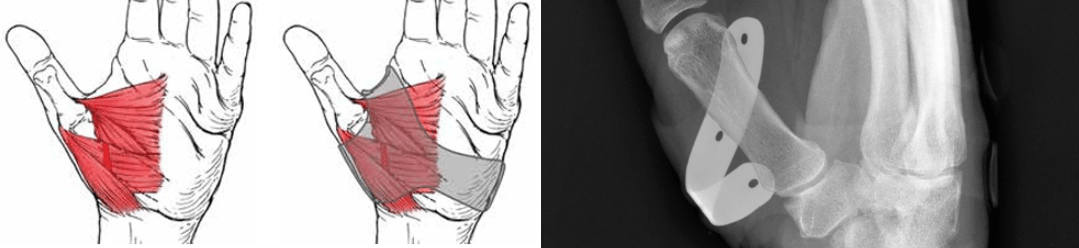
What sets the MetaGrip apart is how it creates stability. Rather than simply holding the thumb still, its contoured fit works with the muscles at the base of the thumb. As these muscles contract during pinching and gripping, they expand against the brace, creating pressure that helps stabilize the CMC joint when support is needed most. This dynamic approach allows the thumb muscles to remain active while the joint is supported, rather than restricting movement in a way that can lead to muscle disuse. Over time, continued muscle activation may also help improve the thumb's natural stability and function.
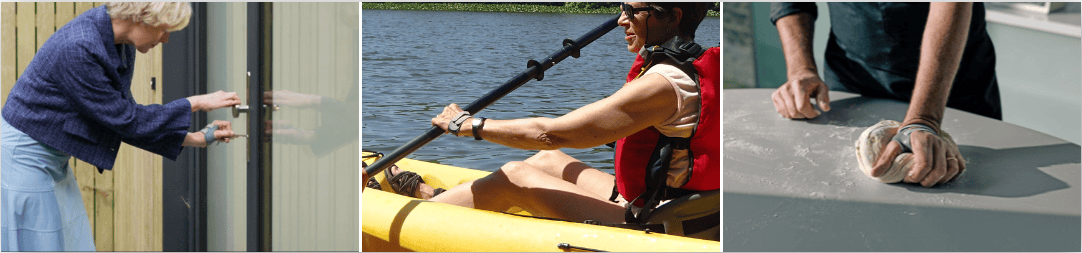
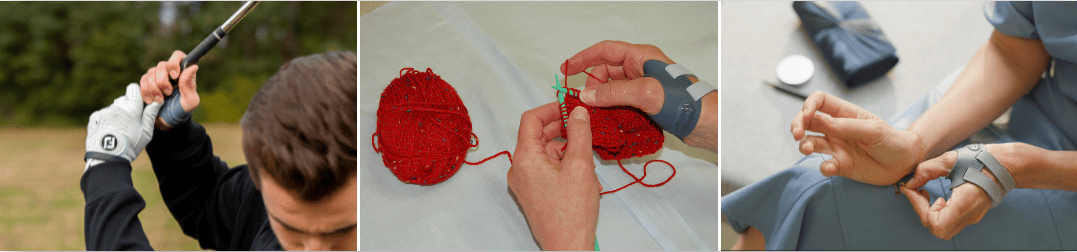
That freedom of movement makes a real difference in everyday life. Because the MetaGrip supports the CMC joint without restricting the fingers or the other joints of the thumb, it can be worn while cooking, gardening, golfing, driving, knitting, swimming, and doing many of the activities that can otherwise aggravate thumb pain. Designed for comfortable, all-day wear, the MetaGrip can be used for thumb CMC osteoarthritis, CMC joint instability, and as part of post-operative care following CMC surgery. Its anatomically contoured design can also be custom fitted to the hand for more precise support and comfort.
Practical Adjustments for Daily Life With CMC Pain
Bracing works best as one part of a broader strategy. A few simple adjustments to how you use your thumb during everyday tasks can meaningfully reduce the load on the CMC joint and slow the progression of symptoms:
- Use jar openers, key turners, and wide-grip pens rather than gripping small objects with a pinched thumb
- Lift with your whole palm rather than pinching between thumb and index finger when possible
- Choose tools with wider, softer handles that reduce the force your thumb has to generate
- Break long tasks (baking, gardening, sewing) into shorter blocks with rest between them
- Apply gentle heat before an aggravating activity to ease stiffness and improve circulation
- Apply cold after an activity to help manage inflammation
None of these individually will resolve CMC arthritis. Together, they take meaningful load off the joint through the day, and paired with a well-fitted brace they give the joint the best possible chance to stay comfortable and functional for as long as possible.
When to See a Hand Therapist
Most cases of CMC pain respond well to conservative care, and the earlier you start, the more options you have. But some signs warrant a proper clinical assessment sooner rather than later:
- Pain that has persisted for more than a few weeks or is worsening rather than settling
- A visible bump or deformity developing at the base of the thumb
- Significant loss of grip or pinch strength that affects daily activities
- Numbness, tingling, or weakness in the thumb or fingers, which may suggest nerve involvement
- Symptoms that appear in both hands simultaneously with prolonged morning stiffness, which can indicate a systemic condition rather than mechanical wear
A hand therapist should be your first port of call. They specialize in the small joints of the hand and wrist, can confirm the diagnosis, guide brace fitting and use, and design a targeted exercise program to strengthen the muscles that support the CMC joint. A physical therapist or hand surgeon can also assess and treat the condition, and for more advanced cases where conservative care no longer manages the pain, a surgeon can discuss options such as corticosteroid injections or, eventually, joint reconstruction.
Key Takeaways
- The CMC joint at the base of the thumb takes disproportionate load during pinching and gripping, roughly 12 times the pinch force is transmitted through this small joint during ordinary activities.
- CMC pain is common, affecting roughly one in four women and one in twelve men, with prevalence rising steadily after 40.
- Early signs include a dull ache at the base of the thumb after activity, sharp pain during pinching or opening jars, morning stiffness, and weakening pinch grip.
- A thumb brace designed specifically for the CMC joint, like the Push MetaGrip, stabilizes the joint where the load concentrates while leaving the fingers free for normal daily activity.
- You cannot reliably self-diagnose CMC arthritis or instability. A hand therapist, physical therapist, or hand surgeon should confirm the diagnosis and guide brace fitting.
- Early intervention (activity modification, bracing, and targeted exercise) protects joint function and reduces flare-ups over the long term.
Frequently Asked Questions
Can I wear a thumb brace all day, or is it only for painful moments?
The Push MetaGrip is designed for comfortable, all-day wear. Because it stabilizes only the CMC joint and leaves the fingers free, you can wear it through most daily activities, including cooking, gardening, driving, knitting, and light sport. Many people wear it consistently during any activity that would otherwise trigger a flare, and remove it only for sleep and bathing.
Will a thumb brace weaken the muscles of my hand over time?
No, and this is where the MetaGrip works differently from traditional immobilization splints. Rather than holding the joint still and letting the surrounding muscles weaken with disuse, the MetaGrip actively engages your thumb muscles. When you pinch or grip, the muscles at the base of your thumb (the thenar muscles) contract and enlarge to fill the snug shape of the brace, creating internal pressure that stabilizes the CMC joint. Over time, this active use can retrain the thumb muscles to stabilize the joint in a healthier position, which is why many patients can eventually be weaned off the brace under clinical guidance. Disuse atrophy is not a concern because the muscles keep working through every wear.
Does the Push MetaGrip work for de Quervain's tenosynovitis?
No. De Quervain's tenosynovitis is a different condition that affects the tendons on the thumb-side of the wrist, not the CMC joint. It requires a different type of brace, typically a thumb-spica splint that immobilizes both the thumb and the wrist. If you suspect de Quervain's, a hand therapist can confirm the diagnosis and recommend the appropriate brace for that specific condition.
How long does it take to feel a difference after starting to wear the brace?
Most people notice reduced pain during aggravating activities within the first few days of consistent wear. The protective benefit continues to build over the following months as the joint takes less punishing daily load. Pairing the brace with activity modification and targeted exercises from a hand therapist typically produces the best long-term results.
Is CMC arthritis reversible?
The cartilage damage itself does not reverse, but the symptoms are highly manageable. Many people stabilize with the right combination of bracing, hand therapy, activity modification, and, when appropriate, targeted anti-inflammatory strategies. Progression can often be slowed meaningfully with early, consistent care, and many people go years without needing more invasive interventions.
Find Support for Your CMC Joint
If pain when pinching, gripping, or opening jars is starting to affect your daily life, the Push MetaGrip is the clinical-grade CMC brace designed to protect the exact joint that is driving your symptoms. It is anatomically shaped to stabilize the base of the thumb while keeping your fingers free, so you can keep cooking, gardening, working, and living without giving up the use of your hand. Explore the full range of thumb braces to compare options, find your size, and get clinically informed CMC support shipped straight to you, and browse the wider selection of clinician-designed support at BraceLab.
Conclusion
CMC joint pain has a way of creeping into daily life quietly, a twinge here, a switch of hands there, until it becomes the reason you avoid the tasks you used to do without thinking. Understanding what is actually happening in the joint and knowing that a well-designed brace can protect it puts you in a much better position than the millions of people who never realize there is anything to be done.
If you recognize the pattern in yourself, take it seriously earlier rather than later. Getting the right support in place, alongside guidance from a hand therapist and a few simple activity adjustments, can meaningfully preserve your hand's function for many years to come.