
Why Does My Ankle Keep Rolling? The Real Reasons and How to Stop It

|
Why Does My Ankle Keep Rolling? The Real Reasons and How to Stop It |
An ankle that gives way on flat ground, in a parking lot, a hallway, or your own kitchen, is one of the more common reasons people first start looking into ankle support. There's no curb, no uneven surface, nothing on the ground that should have caused it, and yet it keeps happening. When the joint rolls without an obvious trigger, that pattern is almost always pointing to something specific worth understanding.
What looks like clumsiness is usually something more specific going on inside the joint, and the pattern tends to compound the longer it's left unaddressed. Repeated ankle rolling, even when it doesn't cause a bad sprain each time, can quietly erode the ligament structure and proprioceptive function of your joint until a minor stumble becomes a significant injury.
This article breaks down what's actually happening inside the joint when an ankle rolls on flat ground, why the same ankle keeps giving way long after the original sprain feels healed, and the practical mix of rehab work, supportive footwear, and bracing that genuinely changes the pattern.
What "Ankle Rolling" Really Means
|
The technical term is ankle inversion, where the foot rolls inward and the outer edge of the ankle takes the strain. Most people have experienced it at least once. For some, it happens constantly, and that's the problem worth paying attention to. The ankle joint is supported by three main lateral ligaments on the outside: the anterior talofibular ligament (ATFL), the calcaneofibular ligament (CFL), and the posterior talofibular ligament (PTFL). When the ankle rolls, these ligaments stretch or tear. Even a minor sprain that "healed fine" may have left those ligaments slightly looser than before, making the joint more likely to roll again. |

|
This is why chronic ankle instability is so common. Research published in the Journal of Athletic Training has estimated that roughly 40% of people who sprain their ankle go on to develop chronic instability, a pattern of repeated rolling that can persist for years.
The Most Common Reasons It Keeps Happening
Ligament Laxity From a Previous Sprain
Ligament laxity left over from a previous sprain is by far the most common reason an ankle keeps rolling on flat ground. Many people sprain their ankle, rest it for a few days, and assume they're fine once the swelling goes down. But the ligaments may have healed in a slightly stretched or irregular state. That millimeter or two of extra looseness is enough for the joint to shift beyond its stable range under load.
If you've had one or more ankle sprains in the past, even mild ones, there's a good chance the ligament laxity from those incidents is contributing to the ongoing rolling.
Poor Proprioception
Proprioception is the body's ability to sense where a joint is in space. Muscles and nerves around the ankle constantly send signals to the brain about joint position, and the brain fires back corrective signals to stabilising muscles. When this system works well, your ankle makes dozens of tiny automatic adjustments as you walk, without you thinking about it.
Ankle injuries disrupt this feedback loop. The same nerves and mechanoreceptors damaged by a sprain are responsible for proprioception, so even after the ligaments heal structurally, the neurological sensing system may still be impaired. The result: your ankle moves into a roll position before your muscles can react to correct it.
Peroneal Muscle Weakness
The peroneal muscles run along the outer side of the lower leg and are the primary dynamic stabilisers of the ankle. They contract reflexively to pull the foot back when it begins to invert. If these muscles are weak, fatigued, or not being recruited quickly enough, that protective reflex is too slow to prevent a roll.
This is particularly relevant for people who are on their feet all day, runners who have increased mileage too quickly, or anyone who has been relatively sedentary for a period and then returned to activity.
Foot Mechanics and Alignment Issues
High-arched feet (pes cavus) place the ankle in a structurally vulnerable position. The foot sits in slight inversion at rest, which means less force is needed to tip it further. People with high arches often roll their ankles more frequently as a result.
Conversely, flat feet can affect lower limb alignment in ways that make certain ligaments take excessive strain. Gait mechanics, leg length discrepancies, and even hip weakness can all contribute indirectly to an ankle that doesn't sit or move the way it should.
Footwear That Offers No Lateral Support
|
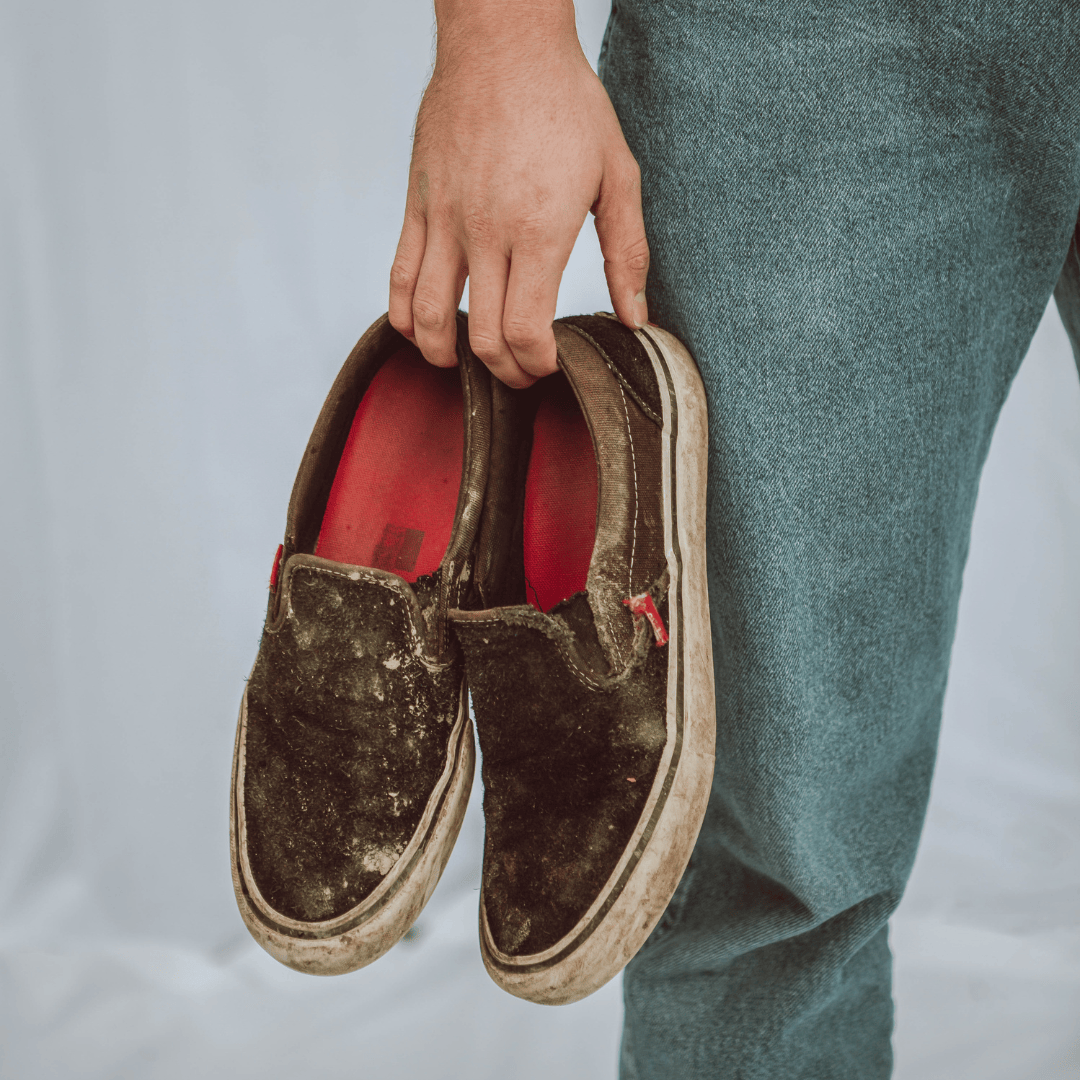
Flat, unsupportive shoes, worn-down trainers, or walking in bare feet on hard surfaces all reduce the external stability available to the ankle. This matters more if the joint is already vulnerable. A worn outer sole tilts the whole foot into inversion with every step. |
|
When It's Worth Taking Seriously
Occasional rolling that causes no pain and resolves immediately is one thing. But you should see a physiotherapist or sports medicine specialist if:
- Your ankle rolls more than once or twice a month without a clear cause
- You feel the ankle "give way" rather than just slip
- There's persistent aching, stiffness, or swelling after episodes
- You've modified how you walk to compensate, even subconsciously
Chronic ankle instability can be confirmed with physical examination and imaging if needed. More importantly, it can be treated effectively once it's properly diagnosed.
What Actually Helps: From Rehab to Support
Targeted Proprioception and Strengthening Work
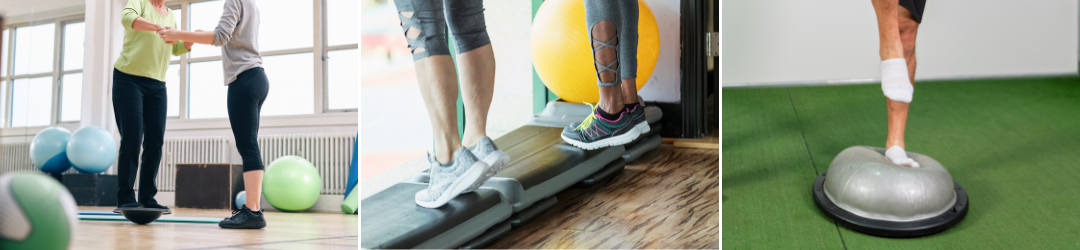
This is the core of any good ankle rehab program. Balance exercises on unstable surfaces (a wobble board, a foam pad, or even a folded towel) retrain the proprioceptive system. Single-leg standing progressions, peroneal strengthening exercises, and calf work all contribute to a more stable, responsive ankle.
A physiotherapist can build a program specific to your deficits. The results take weeks, not days, but they are lasting.
Taping and Bracing During Activity
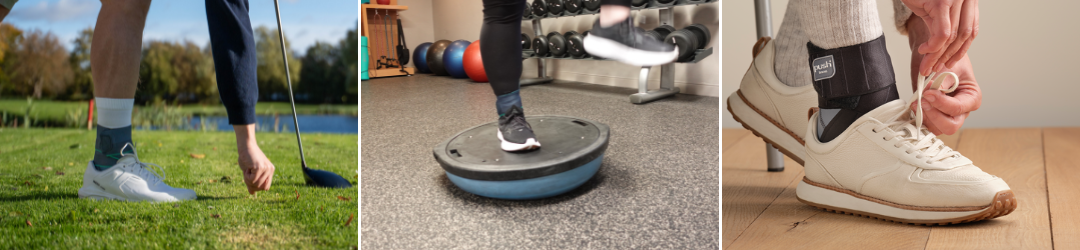
For many people, wearing an ankle brace during activity is a sensible short to medium-term strategy, and in cases of significant ligament laxity, it can be a long-term one.
Bracing does two things: it provides mechanical stability that reduces the available range of inversion, and it also improves proprioception by adding tactile input to the skin and surrounding tissues. This second benefit is often underappreciated.
There are meaningful differences between braces, though. A basic sleeve offers compression but limited lateral control. For genuine instability, you need something designed specifically for that purpose.
The Push med Ankle Brace Aequi Flex is a well-regarded option for moderate to severe or chronic ankle instability, as well as post-sprain and post-surgical recovery. Its flexible Flex-protect shell, rigid through the center and softer towards the edges, combines with patented medial support that counteracts the lateral stress driving the inward roll, while a front diagonal strap provides inversion stability and figure eight elastic straps add adjustable compression. It allows early full weight-bearing while maintaining stability, making it a practical choice for managing instability during daily activities or sport, and it has been trusted by medical professionals worldwide since 1998.
For early or chronic ankle instability, the Push ortho Ankle Brace Aequi is another medial-support option. Rather than relying on bulky lateral straps, it uses a patented rigid medial support system to counteract lateral stress and stabilise the joint, paired with moisture-wicking compression that helps control swelling, while still preserving enough range of motion for natural gait. That balance matters: over-rigid bracing can actually weaken the muscles further over time if the joint is never allowed to work.
If you're comparing options and want to understand the full range of support levels available, ankle braces span everything from lightweight preventive sleeves to orthopaedic-grade supports, and choosing the right level depends on the severity of your instability and the demands of your daily life.
Choosing Footwear With More Lateral Structure
Supportive footwear matters more than most people realize. A shoe with a firm heel counter, reasonable sole thickness, and lateral support reduces the environmental risk of rolling. This isn't about expensive specialist footwear. It's about avoiding worn-down flat shoes with no structure at vulnerable stages of recovery.
Key Takeaways
- Chronic ankle rolling is usually caused by ligament laxity from a previous injury, impaired proprioception, or weak peroneal muscles, not clumsiness.
- A single sprain that seemed minor can still lead to long-term instability if the neurological and structural repair isn't fully addressed.
- Proprioception retraining and peroneal strengthening are the most effective long-term solutions, but they take time and consistency.
- Ankle bracing provides meaningful mechanical and sensory support during recovery and ongoing activity, particularly for those with true ligament laxity.
- If episodes are frequent or you're adapting your gait to compensate, getting a proper assessment is worth doing sooner rather than later.
Frequently Asked Questions
Can I make my ankle stop rolling just by doing exercises, or do I need a brace?
For mild instability with no significant ligament damage, targeted rehabilitation exercises are often enough over several weeks. For moderate to severe instability, combining exercises with a supportive brace gives better protection during the recovery period and reduces the risk of further injury while the strengthening work takes effect.
Is it normal for an ankle to keep rolling years after the original sprain?
Unfortunately, yes, it's common. Without proper rehabilitation after the initial injury, chronic instability is a well-documented outcome. The good news is that it can still be addressed years later through the same combination of proprioceptive retraining, strengthening, and appropriate support.
Will wearing an ankle brace make my ankle weaker over time?
This concern comes up often. The evidence suggests it depends on how the brace is used. If it's worn as a substitute for any effort at strengthening, the muscles around the joint may become less active over time. Used alongside rehabilitation work and removed during low-risk situations as the ankle improves, a brace is unlikely to cause significant deconditioning.
What's the difference between a brace and taping for ankle instability?
Both aim to limit inversion and improve proprioception. Taping is typically applied by a therapist and lasts one session. A good brace achieves similar mechanical effects, can be applied independently, lasts much longer, and tends to be more consistent in fit across the day. For regular activity with an unstable ankle, a brace is usually the more practical option.
Should I see a doctor or a physiotherapist first?
If there's been a recent significant injury, a doctor or sports medicine specialist is the right first step to rule out fractures or complete ligament tears. For chronic rolling without a recent traumatic event, a physiotherapist can usually assess the joint, identify the contributing factors, and put together a structured plan.
Conclusion
An ankle that keeps rolling on flat ground is trying to tell you something. It's not just bad luck or weak ankles in some vague genetic sense. There's usually a specific mechanical or neurological reason, and most of those reasons are addressable with the right approach.
Rehabilitation work, sensible footwear choices, and appropriate bracing at the right level of support can genuinely change the pattern. The key is not waiting until a bad roll causes a serious injury to do something about it.
Retailers like BraceLab offer detailed product information and sizing guides that make it easier to identify which level of ankle support suits your specific needs, particularly if you're navigating the difference between recovery and prevention.
