
Why Does My Wrist Click or Feel Unstable During Push-Ups and Weight Bearing?
|
Why Does My Wrist Click or Feel Unstable During Push-Ups and Weight Bearing? |
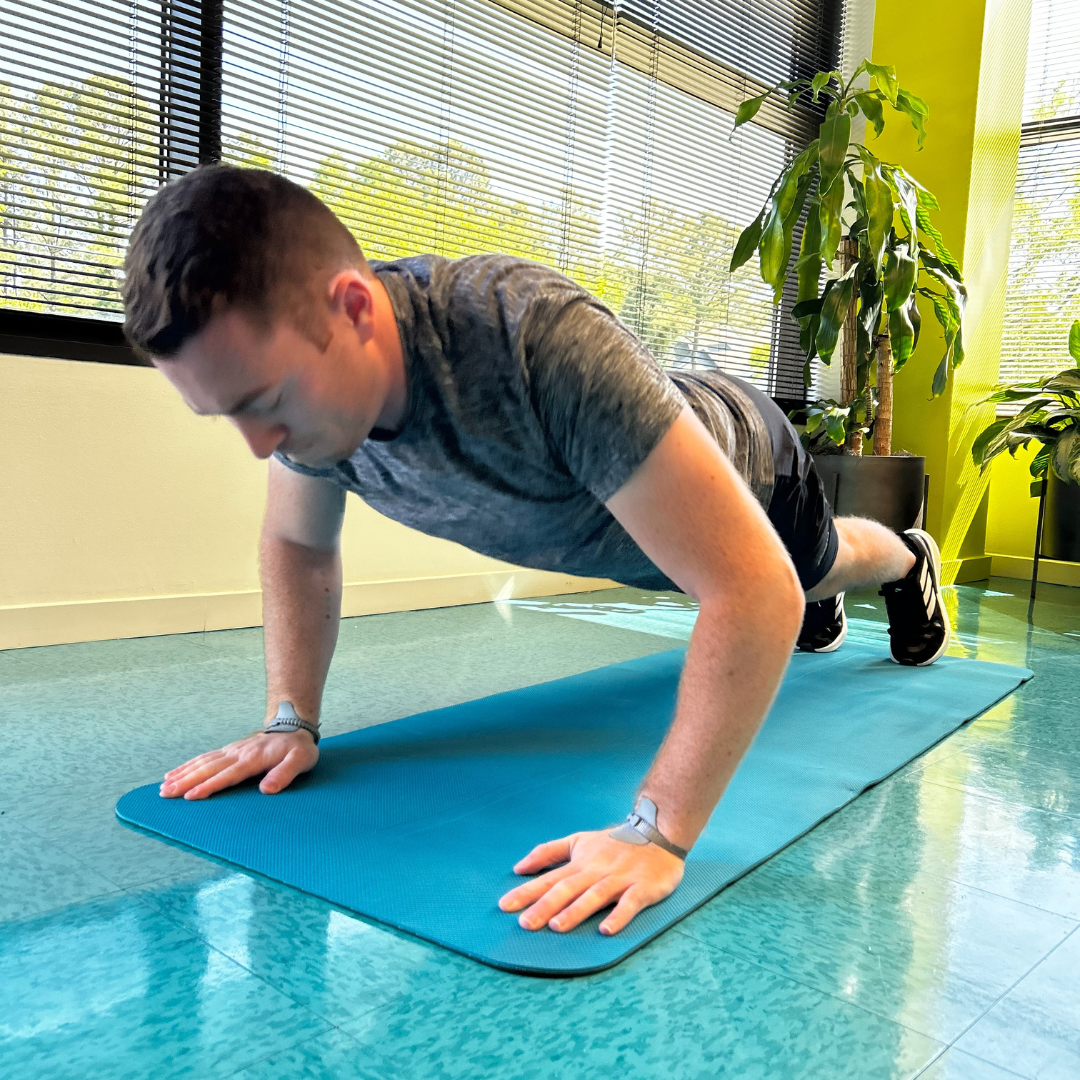
That clicking sound when you lower yourself into a push-up is hard to ignore. For some people, it is painless and passes quickly. For others, it comes with a deep ache, a sense that the joint is "giving way," or a growing reluctance to put any weight through the hand at all. Either way, that is a signal worth paying attention to rather than dismissing as a quirk of the joint.
Wrist pain during weight-bearing is more common than most people realise. Gymnasts, CrossFit athletes, yoga practitioners, pilates enthusiasts, and anyone working through a callisthenics program report it regularly. The problem is that the wrist is an anatomically complex joint, eight small carpal bones, a network of ligaments, and a disc of cartilage all working together under load, and the difference between a benign click and something that needs proper attention is not always obvious from the outside.
This article breaks down what is actually happening inside the wrist when it clicks, the difference between a harmless cavitation pop and a genuine ligament problem, why scapholunate injuries get missed so often, and the practical steps, from load management and technique tweaks to wrist strengthening and supportive bracing, that genuinely help recovery.
What Is Actually Happening Inside a Clicking Wrist?
The wrist does not click for one single reason. Understanding the different mechanisms helps narrow down what might be going on in your specific case.
Cavitation: The Harmless Pop
The most common cause of a clicking joint is cavitation, the same phenomenon behind knuckle cracking. Gas bubbles form in the synovial fluid (the slippery, lubricating liquid that cushions the inside of the joint) and collapse under pressure, producing an audible pop. This is generally painless, does not cause joint damage, and resolves on its own. If your wrist clicks once during a movement but feels fine otherwise, this is probably all it is.
Tendon Snapping
Tendons can snap over bony prominences as the wrist moves through its range of motion. This tends to produce a more consistent clicking or snapping sensation that follows a predictable path, often at the same point in a movement every time. It may feel like something is flicking over a ridge. Tendons around the ulnar side of the wrist (the little finger side) are particularly prone to this. You'll often notice it during repetitive motions like turning a steering wheel, lifting weights, twisting open a door handle, or carrying heavy shopping bags, anything that asks the same tendon to glide back and forth across a bony edge over and over.
Ligament Instability and Carpal Bone Movement
This is the one that warrants more attention. When a ligament connecting two carpal bones is stretched, partially torn, or fully disrupted, those bones can shift out of their normal alignment under load. The resulting click or clunk is often accompanied by pain, weakness, or that unsettling feeling of the joint "catching" or giving way. In practical terms, it tends to feel deeper and more alarming than a normal knuckle pop, almost as if something inside the joint shifts before sliding back into place. People often describe a moment of weakness when pushing up off the floor, lowering into a plank, or even pressing through the hand to stand up from a chair. If you find yourself instinctively avoiding weight on that hand, that is a sign worth taking seriously.
The scapholunate ligament is the most commonly injured in this group. Scapholunate pain typically presents on the back of the wrist, just below the base of the index and middle fingers, and it gets worse specifically under weight-bearing positions like a push-up or a plank.
The Scapholunate Ligament: Why It Matters So Much
The scapholunate joint sits at the heart of wrist mechanics. It connects the scaphoid (the small bone on the thumb side) and the lunate (the central carpal bone), and it plays a critical role in load distribution. When this ligament is compromised, the scaphoid and lunate begin to move independently instead of as a unit. Under compression, like the kind produced in a push-up, that abnormal movement is what creates the painful click or clunk.
Scapholunate instability is frequently underdiagnosed. Many people assume wrist pain from exercise is just a minor strain and continue training through it. The problem is that without proper support and rest, a partial ligament injury can progress to a complete tear, and eventually to a pattern of wrist arthritis called SLAC wrist (scapholunate advanced collapse). Early recognition genuinely matters here.
Signs that point more specifically toward scapholunate involvement include:
- Pain directly over the scapholunate joint (the "anatomical snuffbox" area and just ulnar to it)
- A painful or palpable clunk when moving the wrist in a circular motion
- Weakness in grip, particularly when the wrist is extended
- Symptoms that worsen significantly with push-ups, planks, or gymnastics-style movements
A clinical test called the Watson test, performed by a physiotherapist or sports medicine physician, applies pressure to the scaphoid while moving the wrist. A painful click or clunk during this test is a strong indicator of scapholunate instability. If you suspect scapholunate involvement, a certified hand therapist should be your first port of call — they specialise in this exact area of the wrist and can guide both diagnosis and the rehab that follows. For a deeper clinical breakdown, BraceLab's Clinicians Classroom hosts dedicated articles on scapholunate instability that are well worth reading alongside this guide.
Wrist Pain in Gymnastics and Weight-Bearing Sports
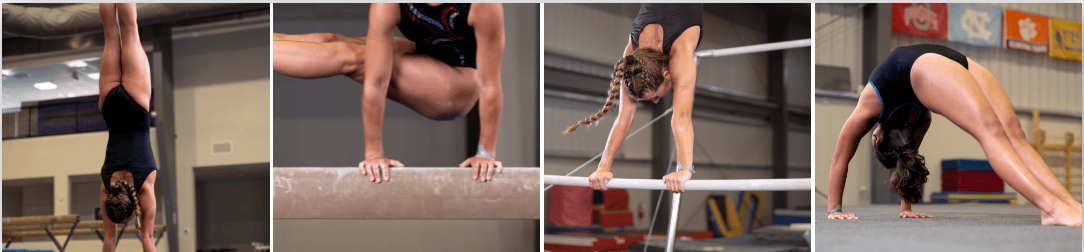
Wrist pain in gymnastics is a recognised and well-documented problem in the sports medicine world. Gymnasts regularly bear weight through a fully extended, maximally dorsiflexed wrist, a position that places enormous stress on the carpal bones and their supporting ligaments. Research published in sports medicine literature suggests that up to 88% of elite gymnasts report wrist pain at some point in their career.
The same mechanism affects people doing handstands, rings work, parallette training, and even high-volume push-up or planche progressions. The common thread is repetitive loading through a compromised or poorly prepared wrist.
For these athletes and active individuals, the solution is rarely "just stop." It is more about understanding load management, addressing any structural issues early, and using appropriate support during the rehabilitation period.
Other Causes Worth Considering
Not every unstable or clicking wrist traces back to the scapholunate joint. A few other possibilities are worth ruling out.
TFCC Injury
The triangular fibrocartilage complex (TFCC) sits on the ulnar side of the wrist and acts as a cushion between the ulna and the carpal bones. TFCC injuries are common in racket sports, gymnasts, and anyone who falls on an outstretched hand. Pain tends to be on the little finger side of the wrist and often worsens with rotation of the forearm (turning a door handle, for instance).
Ganglion Cysts
These fluid-filled lumps can develop on the back or front of the wrist and sometimes cause discomfort or a sense of clicking during movement. They are benign but can be irritating under load. A ganglion on the dorsal wrist can also put pressure on local nerves, causing tingling or weakness.
Distal Radioulnar Joint (DRUJ) Instability
The joint where the radius and ulna meet at the wrist can become unstable after a forearm fracture or TFCC injury. Rotation movements and loading in a weight-bearing position often reproduce the symptoms.
What You Can Actually Do About It
Get a Proper Assessment First
This matters more than any exercise or brace recommendation. A sports physiotherapist or hand specialist therapist can distinguish between these causes through clinical testing and, where necessary, imaging. An MRI arthrogram is the most sensitive imaging tool for detecting ligament injuries in the wrist, though plain X-rays in specific positions can also reveal abnormal carpal bone alignment.
Do not guess and do not delay if you are experiencing pain alongside the click.
Load Management and Technique Adjustments
While you are working toward a diagnosis or through early rehab, reducing the provocative load is sensible. For push-ups, using push-up handles (which allow the wrist to stay in a more neutral position rather than being forced into full extension) can dramatically reduce symptoms. Fist push-ups on a padded surface serve the same purpose.
In gymnastics contexts, grip position, surface type, and progressive loading matter enormously.
Wrist Strengthening
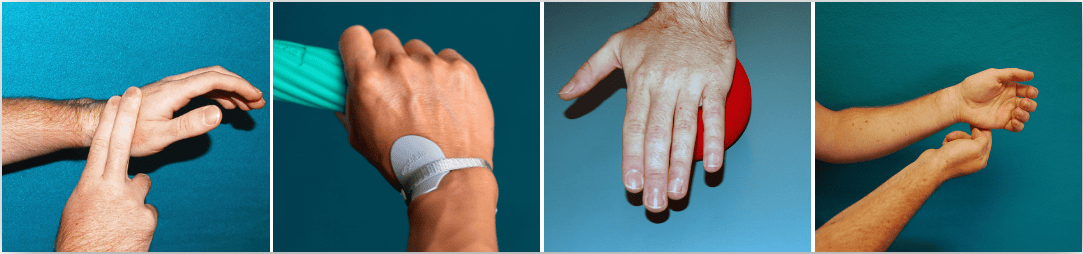
The muscles and tendons around the wrist provide dynamic stability to complement the passive support of the ligaments. Targeted strengthening of the wrist flexors, extensors, and forearm pronators and supinators is a core part of rehab for most wrist instability conditions. A physiotherapist or hand therapist should guide the program, particularly in cases of confirmed ligament injury. BraceLab's Clinicians Classroom also hosts a Clinical Pearl on wrist strengthening exercises that is worth working through alongside your therapy plan.
Supportive Bracing
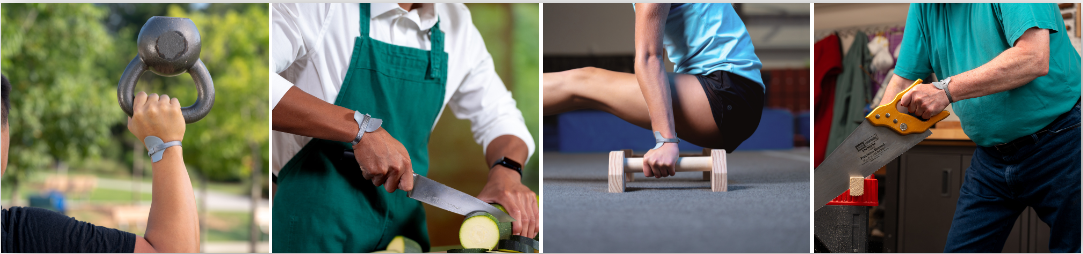
Bracing does not fix an underlying structural problem, but it serves a real purpose during the recovery period. It limits the provocative range of motion, provides proprioceptive feedback (which helps the nervous system stabilise the joint more efficiently), and allows continued activity at a reduced risk of aggravation.
For wrist instability during weight bearing, the goal is a brace that restricts excessive extension and ulnar deviation without locking out all movement. The WriStable from BraceLab is one example of an anatomically shaped option designed to allow functional movement while still providing meaningful stabilisation. The WriStable is not only useful during recovery either, many gymnasts, climbers, and CrossFit athletes wear it preventatively to manage repeated wrist load before symptoms ever develop. It is worth exploring the full range of wrist braces available to find the most appropriate fit for your specific condition and activity level, what works for a post-sprain recovery is different from what suits an active gymnast managing chronic instability.
Key Takeaways
- A clicking wrist during push-ups or weight bearing can range from harmless cavitation to scapholunate ligament instability. Pain is the key differentiator.
- Scapholunate pain is one of the most commonly missed wrist injuries. It presents on the back of the wrist and gets worse under load, particularly in extension.
- Wrist pain in gymnastics and weight-bearing sport is prevalent and should not be managed by simply pushing through. Early assessment protects long-term joint health.
- Wrist strengthening, load management, and positional adjustments (like push-up handles) are all practical tools during rehabilitation.
- Supportive bracing plays a legitimate role in recovery by limiting provocative movement and improving proprioception, but it should complement a rehab plan, not replace one.
Frequently Asked Questions
Is it normal for my wrist to click during push-ups?
An occasional, painless click during exercise is usually benign and most often caused by gas cavitation in the synovial fluid. If the click is accompanied by pain, weakness, or a feeling of instability, that changes the picture and warrants proper assessment by a physiotherapist or sports medicine doctor.
How do I know if I have scapholunate instability?
The classic signs include pain over the back of the wrist (near the base of the index and middle fingers), a painful clunk with wrist rotation, and symptoms that worsen specifically during weight-bearing positions like planks or push-ups. The Watson test, performed by a clinician, is a standard diagnostic tool. Imaging, particularly an MRI arthrogram, can confirm the extent of ligament damage. Importantly, you cannot reliably self-diagnose scapholunate instability, if any of these signs sound familiar, see a hand therapist, physiotherapist, or sports medicine physician for a proper assessment.
Can I continue training with wrist instability?
This depends heavily on the cause and severity. With minor tendon snapping or mild joint irritation, modifying load and wrist position is often enough to continue training. With suspected or confirmed ligament injury, continuing to load through the wrist without support or medical guidance risks making things significantly worse. Modified training, not complete rest, is usually the more realistic middle ground.
Do wrist braces actually help with instability during exercise?
Yes, within limits. A well-fitted wrist brace restricts the movements most likely to aggravate an unstable joint and improves proprioceptive awareness, which helps the surrounding muscles respond more efficiently. They are most useful as part of an active rehab programme rather than as a standalone fix.
How long does wrist instability take to recover from?
It varies considerably. Mild ligament sprains with conservative treatment can resolve in six to twelve weeks. Moderate scapholunate injuries may take several months of physiotherapy. Severe or complete ligament tears sometimes require surgical intervention, followed by an extended rehab period. Early diagnosis dramatically improves outcomes, which is why getting assessed promptly is always the right first step.
Conclusion
A clicking or unstable wrist during push-ups is not something to dismiss or train through indefinitely. In many cases, it is manageable with the right information, some targeted rehab, and sensible load adjustments. In others, it is an early warning of a structural issue that responds far better to early treatment than to a wait-and-see approach.
The wrist is a joint that tends to be underappreciated until something goes wrong. If yours is making noise or feeling unreliable under load, that is a reasonable moment to take it seriously, get it assessed, and give it the support it needs to function properly.