
First-Time AFO Brace User Guide: What is an AFO Brace and How to Care for your Push AFO

First-Time AFO Brace User Guide: What is an AFO Brace and How to Care for your Push AFO
By Laura Jones
What is an AFO Brace?
An AFO, or Ankle Foot Orthosis, is a medical brace designed to support the ankle and foot during walking. An AFO brace is commonly prescribed for people who experience foot drop, ankle weakness, or difficulty lifting the front of the foot while walking.
For first-time users and caregivers, understanding how an AFO works can make the transition to wearing one much easier and far more effective.

Different Types of AFO's
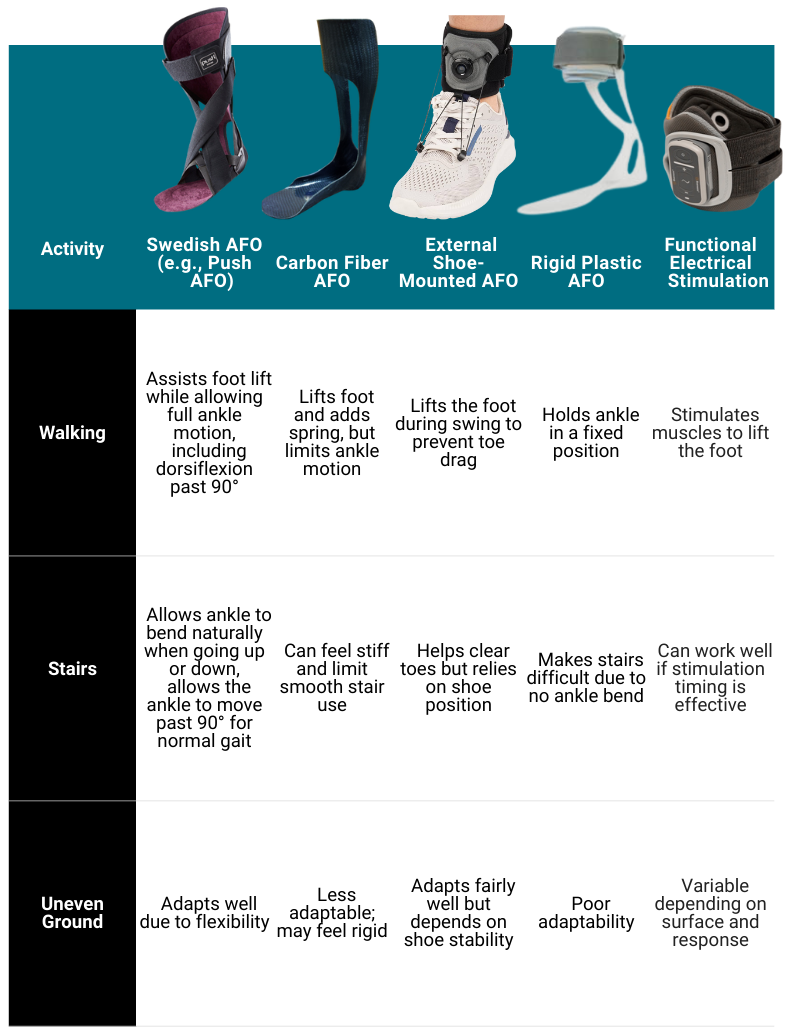
Not all AFO’s are the same. Ankle Foot Orthoses come in several designs, each intended for different levels of weakness, activity levels, and personal preferences. The most common categories include:
• A Swedish AFO, also known as a dynamic AFO, provides flexible support that assists with lifting the foot while still allowing natural ankle motion.
• A carbon fiber AFO uses a rigid, spring-like design to store and release energy during walking.
• External shoe-mounted AFOs clip onto the outside of the shoe and help lift the foot while walking, making it easier to clear the toes without putting pressure inside the shoe.
• Rigid plastic AFO Braces or solid plastic AFOs fully restrict ankle movement to stabilize the foot and ankle.
• Functional Electrical Stimulation (FES) devices use small electrical impulses to stimulate the muscles responsible for lifting the foot.
Choosing the right AFO depends on the severity of foot drop, muscle control, lifestyle needs, and comfort expectations.

What Is Foot Drop and Why Is an AFO Brace Used?
Foot drop is a condition where lifting the front of the foot is difficult due to muscle weakness or nerve involvement. This can cause the toes to drag during walking, impacting your gait, leading you to shuffle and drag your foot, and increasing the risk of trips and falls.
An AFO for foot drop helps by:
• Supporting the ankle and foot
• Improving toe clearance during walking
• Promoting safer, more efficient movement
Many people searching for AFO braces or AFO for drop foot are looking for a solution that supports walking without restricting natural movement, and that’s where the Push ortho Ankle Foot Orthosis (AFO brace) stands out.
How Each AFO Works for Everyday Activities
Introducing the Push AFO Brace
The Push ortho Ankle Foot Orthosis (AFO brace), available in the USA through BraceLab, is designed for individuals with moderate foot drop who want support without feeling locked into a rigid brace.
Unlike traditional rigid or carbon fiber AFO designs, the Push AFO brace uses a dynamic support system, also known as a Swedish AFO, that works with your body, not against it.

How the Push AFO Brace Works
• Lifts the foot during the swing phase
The “swing phase” is when your foot is off the ground while walking. The Push AFO provides gentle dorsiflexion assist, meaning it helps lift your toes so you don’t trip.
• Criss-cross elastic straps for ankle stability
These straps help control foot positioning when your foot is on the ground (called the stance phase) without locking your ankle.
• Allows natural foot movement
Allows full dorsiflexion (toes lifting up) and lets you roll through your forefoot naturally because of the flexible sole, making walking feel smoother.
• Controls ankle rolling
The Push AFO supports both the inside and outside of the ankle, helping manage inversion and eversion (rolling in or out).
• Comfortable when sitting or standing
The brace allows normal ankle motion during sit-to-stand movements, so it doesn’t feel restrictive as you transition from sitting to standing.

Key Benefits of the Push AFO for Foot Drop
For patients and caregivers, this AFO brace offers several meaningful advantages:
• Encourages a more natural gait pattern
• Reduces tripping risk with dynamic foot lift
• Lightweight and low-profile compared to carbon fiber AFO options
• Comfortable for daily wear in regular shoes
• Supports mobility without over-restricting movement
• Secures foot to the brace, allowing use of a wide variety of shoe styles, including sandals and slippers
If you’re looking for AFO braces that balance support and freedom, the Push AFO is a great option.

First-Time AFO Fitting: What You Need to Know
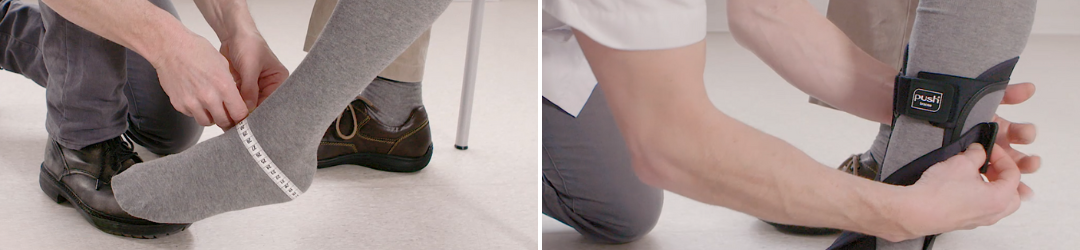
Important: We highly recommend that your first Push AFO fitting be performed by a qualified healthcare professional, such as an orthotist, physical therapist, physiatrist, podiatrist, or physician.
Why Professional Fitting Matters
• Ensures correct sizing and customization
• Confirms appropriate support level
• Prevents skin irritation or improper alignment
Understanding the Straps
The Push AFO uses a combination of elastic and non-elastic straps that are essential to proper function. These components have various purposes, for example:
• Elastic straps to help lift the foot during walking and control ankle stability
• Non-elastic straps attach the brace to the foot, allowing the use of a wide variety of shoe styles, including dress shoes, sandals and slippers
• Removable setting indicators to prevent users with sensory loss from over-tightening the straps, which are to be applied to the loop strap at the back and at both sides of the orthosis to provide adjustable dorsiflexion assistance
Your provider will show you how to apply the straps correctly and how much tension is appropriate for your needs.
How to Wear an AFO Brace for Daily Use
When should you wear your AFO Brace?
• Drop foot during walking and standing activities
• Can be worn indoors or outdoors, as recommended by your provider
• If you have a nerve disorder, stroke, multiple sclerosis, or cerebral palsy
Tips for comfort and success:
• Always wear socks to reduce friction
• Start with shorter wear times and gradually increase
• Check your skin daily, especially during the first few weeks

How to Care for Your AFO
Proper care helps extend the life of your AFO brace and keeps it working as designed.
Cleaning your AFO Brace
• Close all straps before washing, and place the AFO brace in the net bag provided with the brace
• Can be machine-washed on gentle cycle at low temperature
• Air dry completely before wearing again
• DO NOT add bleach
• DO NOT dry in dryer or wash in a dishwasher
Regular Checks
• Inspect straps for wear
• Ensure buckles and elastic components remain secure
Frequently Asked Questions About AFO Braces
What does AFO stand for in medical terms?
AFO medical abbreviation is short for Ankle Foot Orthosis, a brace that supports the ankle and foot.
Is the Push AFO the same as a carbon fiber AFO?
No. While carbon fiber AFOs are rigid, the Push AFO uses a dynamic elastic strap system for more natural movement.
Can I wear my AFO brace all day?
Wear time should be guided by your healthcare provider, especially for first-time users.
Can I machine wash my AFO?
Yes, you can machine wash the Push AFO on the gentle cycle at a low temperature. Close all straps before washing, and place the AFO in the net bag provided with the brace. Allow to air dry.
Is the Push AFO covered by insurance?
The Push ortho Ankle Foot Orthosis (AFO) can be submitted to your insurance for reimbursement using the L-code L1930. BraceLab is not a provider. We do not file insurance, nor can we provide information on insurance coverage or reimbursement rates. Please contact your insurance provider for filing information.
Do I need a prescription to buy a Push AFO?
No, you do not need a prescription for the Push AFO brace. However, we always recommend consulting your healthcare provider to ensure you are receiving the appropriate support.
How long does an AFO brace last?
AFO braces will last different lengths of time for different people, depending on their activity level. It is like a pair of shoes; you want to replace them periodically to ensure you get the right amount of support. Typically, insurance covers a new AFO brace annually, but you may need one more frequently.
How can I try on the Push AFO brace?
BraceLab offers free returns and exchanges within 30 days of purchase to ensure that individuals obtain the correct size and fit. You can also see if your medical provider has a sample in their office to try on. If they do not have one, have your medical provider reach out to Support@BraceLab.com for more information.

Key Takeaways for First-Time AFO Users
• An AFO brace helps manage foot drop and improve walking safety
• The Push AFO supports movement without restricting natural motion
• Proper fitting and strap application are essential
• Daily care and skin checks improve comfort and long-term success
Final Thoughts & Next Steps
If you or a loved one is new to AFO braces, the Push AFO from BraceLab offers a thoughtful balance of support, comfort, and mobility. Designed for real-world movement, it helps make walking safer and more natural again.
Explore the Push AFO on BraceLab and speak with your healthcare provider to determine if it’s the right AFO for your needs.
Medical Disclaimer:
This content is for educational purposes only and is not a substitute for professional medical advice. Always consult your healthcare provider for diagnosis, fitting, and treatment recommendations.
© BraceLab; 2026 all rights reserved