How To Choose The Right Brace Based On Pain Location
How To Choose The Right Brace Based On Pain Location
Choosing the right brace should not feel like guesswork. Start with where it hurts, then match your symptoms and activity to the right support. This interactive injury guide walks you step by step so you can narrow down options fast and pick the brace that fits your needs.
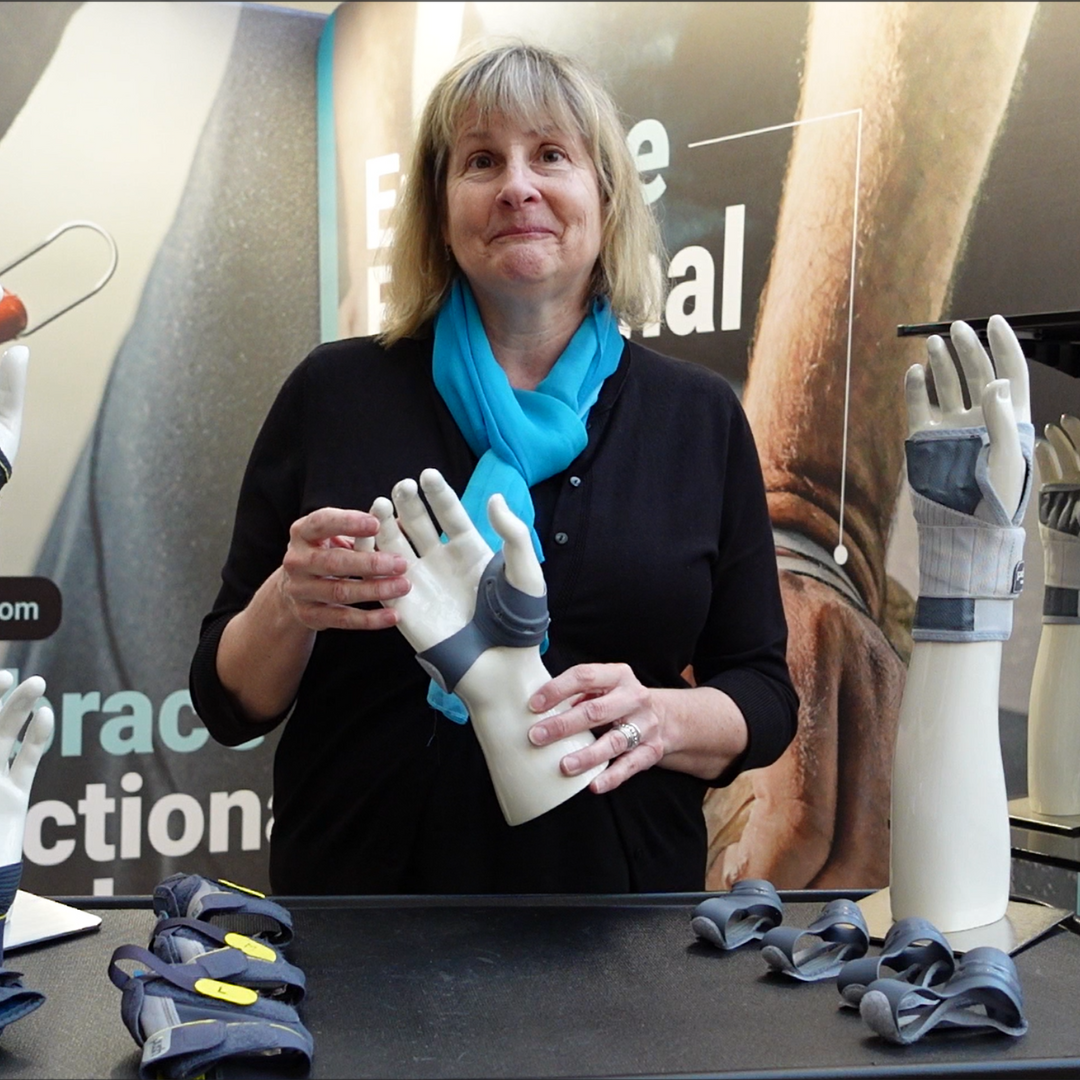
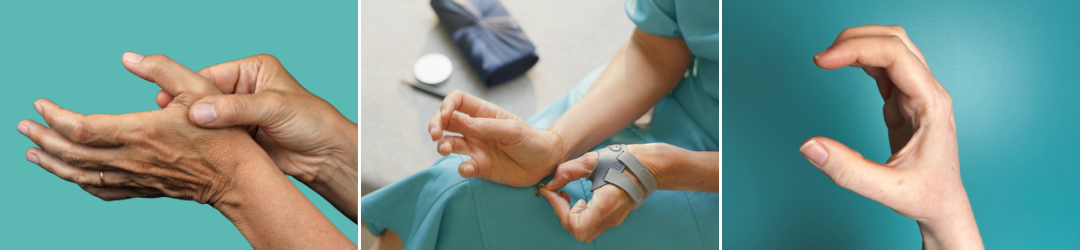
If your pain is at the base of your thumb, this guide will help you narrow down the right type of support for osteoarthritis. Answer a few quick questions about your symptoms and daily activities, then follow the recommended brace style for your needs.
How To Use This Guide
Select Your Pain Zone
- Upper limb: wrist, thumb, or elbow
- Spine and shoulder: neck, lower back, or shoulder
- Lower body: knee, ankle, or foot
Pick the section that matches your main pain location. If pain spans multiple areas (say, knee and ankle), prioritize the one limiting you most right now.
Rate Pain and Instability
Ask yourself:
- Pain level at rest and during activity (0–10)
- Instability or "giving way" (none / mild / moderate / severe)
- Swelling and stiffness (none / mild / moderate / severe)
- Primary goals: pain relief, stabilization, protection for sport, or posture/positioning
Your answers determine whether you need light compression, targeted support, or a rigid/hinged brace.
Match Brace Features to Goals
- Pain relief and swelling: soft sleeves, gel pads, compression wraps
- Tracking and alignment: patella buttress, straps, taping-style figure-8 designs
- Instability control: hinged frames, lace-up systems, rigid shells
- Protection after injury/surgery: immobilizers, CAM/walking boots, thumb spica, lumbar supports
- Comfort for long wear: breathable knit, low-profile edges, moisture-wicking fabrics
Move to your pain area below and match features to your needs.
Fit and Sizing Essentials
Measure Correctly
Measure in the spots the manufacturer specifies (don't guess your T‑shirt size):
- Knee: thigh and calf circumference at stated distances above/below the kneecap
- Ankle: narrowest ankle, midfoot/arch, or shoe size (varies by model)
- Wrist/thumb: wrist circumference and palm width
- Elbow: around the forearm/biceps at set distances from the crease
- Back: waist/hip circumference at the level the brace will sit: torso length for some supports

Measure at the end of the day if you tend to swell. If you're between sizes, most people do better sizing up for sleeves and down for lace‑ups, check the brand's chart and recommendation.
Comfort, Breathability, and Wear Time
- Fabrics: Look for materials that support the joint while letting air flow. If you get hot easily or wear braces all day, lightweight and low-profile knit fabrics are usually more comfortable than thick neoprene.
- Edges and seams: look for bound edges and flatlock seams to prevent rubbing.
- Adjustability: dual straps let you fine-tune compression as swelling changes.
- Wear schedule: ease in. Start 30–60 minutes, then build to activity blocks. Your skin should look slightly pink after removal, not red, numb, or irritated.
Open Vs. Closed Designs and Support Levels
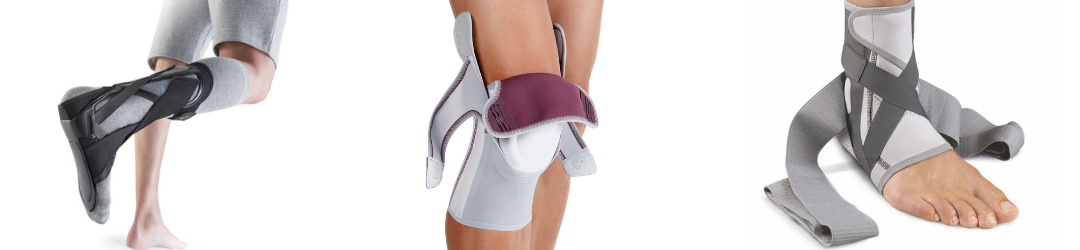
- Open patella knee sleeves help guide the kneecap and reduce pressure on the front of the knee.
- Lace-up ankle braces mimic taping and fit in shoes, while rigid stirrup braces limit inversion/eversion more.
- Thumb spica braces with a rigid insert limit thumb movement more effectively than soft wraps.
Upper Limb Pain: Wrist, Thumb, and Elbow
Wrist and Thumb Pain (Thumb CMC Osteoarthritis, Skier’s Thumb, Carpal Tunnel, Sprain, De Quervain’s)
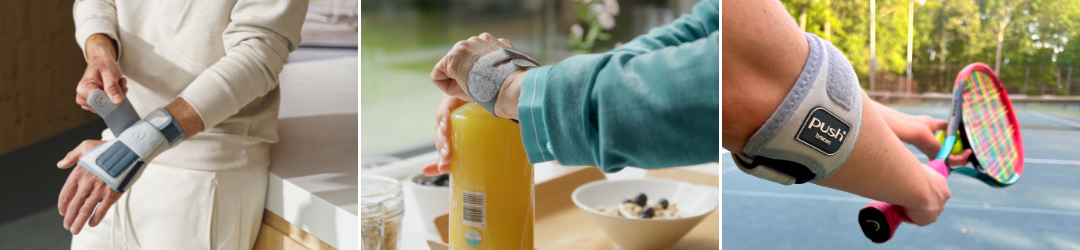
- Thumb CMC osteoarthritis: If pain is at the base of the thumb, use a low profile thumb CMC brace that stabilizes the CMC joint without locking the whole thumb. This helps reduce pain during pinching, gripping, and texting. The Push MetaGrip is a common option for CMC support because it targets the CMC joint while staying slim for daily wear.
- Skier’s thumb (UCL sprain at the thumb MCP joint): Use the Push Sports Thumb Brace to stabilize the thumb MCP joint and limit side to side thumb motion. Start with a firmer fit for early support, then adjust to a lighter level of support as pain and instability improve.
- Carpal tunnel: a neutral-wrist "cock-up" brace (volar stay) prevents wrist flexion, especially at night. Choose a low-profile design for daytime typing.
- Wrist sprain/overuse: a flexible wrap or light-stay brace for short-term support during tasks: step down to a compression sleeve as symptoms settle.
- De Quervain's (thumb-side tendons): a thumb spica that immobilizes the thumb CMC/MP joints while allowing finger motion. Look for moldable aluminum stays.
Fit tip: you should still be able to oppose thumb to index comfortably in a thumb spica, if not, it's too restrictive for daily tasks.
Elbow Pain (Tennis/Golfer's Elbow, UCL, Bursitis)
- Tennis elbow (lateral) / Golfer's elbow (medial): a counterforce strap placed 1–2 inches below the tender spot reduces tendon load. For persistent cases, add a sleeve for warmth.
- UCL irritation (throwers): an elbow brace can limit valgus stress during early return to throwing.
- Olecranon bursitis: use a soft compression sleeve to manage swelling: avoid direct hard pressure on the bursa until inflammation settles.
Spine and Shoulder Pain
Shoulder Pain (Impingement, Instability, Posture)
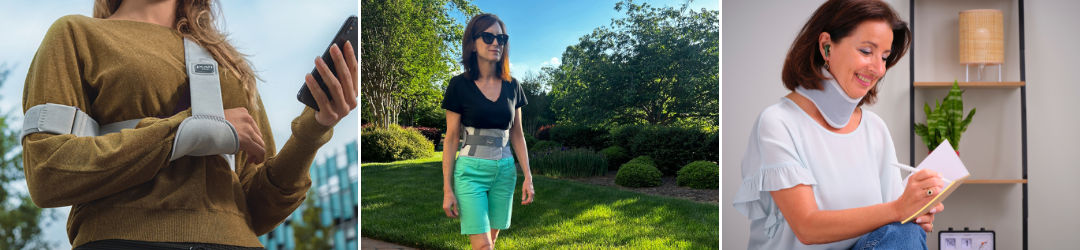
- Impingement/rotator cuff irritation: a shoulder compression sleeve with adjustable straps supports the joint and helps posture: avoid over-tightening that restricts blood flow.
- Instability or subluxation: use a shoulder stabilizer with cross-body straps that limit excessive abduction/external rotation during sport.
- Posture-related pain: a posture corrector or clavicle support cues retraction, but it's a coach, not a crutch. Aim for short wear periods while you build strength.
Lower Back Pain (Muscle Strain, SI Joint)
- Lumbar strain: a lumbosacral brace with dual pull straps provides abdominal compression, reduces micro-movements, and reminds you to hinge at hips. Choose breathable mesh for day wear.
- SI joint pain: an SI belt worn low over the pelvis can reduce shear and relieve buttock/groin pain, especially during walking or standing work.
Wear rule: use during activities that provoke pain (lifting, prolonged standing), taper as your core and hip strength improve.
Neck Pain (Strain, Whiplash)
- Acute strain/whiplash: a soft cervical collar for brief periods can reduce guarding and support rest. Use sparingly: prolonged immobilization weakens neck muscles.
- Posture and desk work: consider a lightweight, low-profile posture cueing device or gentle neck wrap for intermittent relief alongside ergonomics.
Lower Body Pain: Knee, Ankle, and Foot
Knee Pain (Patellofemoral, Ligament, Arthritis)
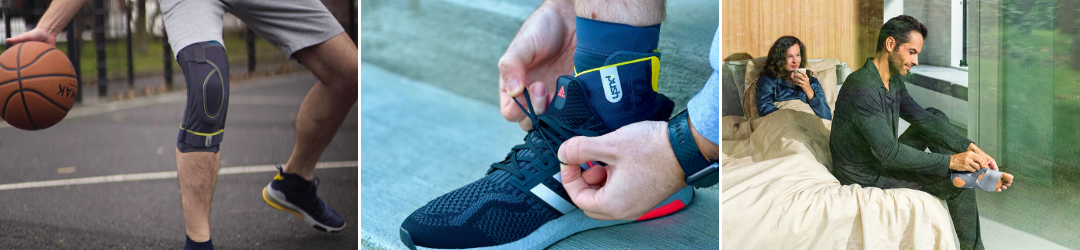
- Patellofemoral pain/runner's knee: choose a compressive knit or neoprene sleeve with a patella ring or buttress to guide tracking: add lateral straps if the kneecap drifts outward. Look for silicone grippers to prevent slip.
- Ligament support (MCL/LCL/ACL/PCL): a hinged knee brace with uprights limits side-to-side motion and provides confidence during cutting or uneven terrain. For moderate instability, a low-profile bilateral hinge is often enough. For significant laxity or sport return, consider a rigid frame.
- Knee osteoarthritis: unloader/valgus-varus braces shift pressure off the painful compartment. If pain is diffuse and mild, a supportive sleeve may suffice for warmth and proprioception.
Pro tip: if stairs and downhill walking hurt more, prioritize patella guidance. If pivoting and side loads are the issue, prioritize hinges.
Ankle Pain (Sprains, Instability, Tendonitis)
- Recent sprain or chronic "rolling": a figure-8 or lace-up ankle brace limits inversion/eversion and mimics athletic taping. For severe sprains, a semirigid stirrup with air/gel pads adds protection in early rehab.
- Tendonitis (peroneal, posterior tibial, Achilles): soft compression sleeves reduce swelling and improve awareness. For posterior tibial tendon pain and flat feet, look for straps that support the arch. For Achilles pain, consider a sleeve with a tendon offloading insert or heel lifts.
- High-ankle sprain: choose a brace that controls rotation (lace-up with external straps) or a short CAM boot briefly if weight bearing is painful.
Fit note: make sure the brace fits inside your usual sport shoe: low‑bulk lace‑ups are best for running and court sports.
Foot Pain (Plantar Fasciitis, Arch, Midfoot)
- Plantar fasciitis: A night splint (dorsiflexion or sock style) maintains a gentle stretch while you sleep. For daytime, use a supportive arch sleeve or plantar fascia strap that lifts the arch. If you need stronger, more targeted support for long walks, work shifts, or workouts, use a plantar fasciitis brace with an adjustable heel and arch strap.
- Arch support/overpronation: semi-rigid orthotic inserts or an arch band can reduce strain on the plantar fascia and posterior tibial tendon.
- Midfoot sprain or stress reaction: a stiff-soled shoe with a midfoot strap or a short CAM boot for acute cases: transition to a midfoot wrap as symptoms improve.
Extra help: combine bracing with calf/plantar fascia stretches and gradual loading for lasting relief.
Activity Matching: Daily Wear, Sports, and Recovery
Daily and Desk Work
- General recommendation: Choose low-profile, breathable designs that hide under clothing.
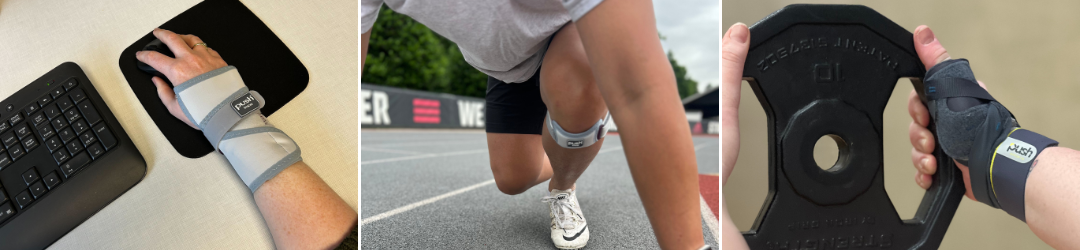
- For keyboard users: neutral wrist braces at night to prevent bending. During the day, a slim support or none if symptoms allow.
- Commuting and errands: light compression sleeves for knees/ankles reduce swelling without bulk.
Running, Field Sports, and Court Sports
- Running: knee sleeves with patella guidance, lace-up ankle braces that fit in trainers, thin calf sleeves for circulation.
- Field/court: hinged knee braces for cutting sports if instability is present, and figure-8 ankle braces for jumping/landing.
- Check sport rules, some leagues restrict rigid hardware.
Lifting, Cross-Training, and Post-Op/Acute Care
- Lifting: lumbar braces during heavy phases or early rehab. For squats, use knee sleeves for warmth if your joints feel stiff.
- Cross-training: pick adjustable braces you can loosen between circuits. Prioritize sweat friendly materials.
- Post-op/acute injury: follow your clinician's protocol. Immobilizers, CAM boots, or hinged braces may be prescribed, don't substitute softer gear until cleared.
When Bracing Isn’t Enough
Red Flags That Need Medical Evaluation
- Numbness, tingling, or weakness that doesn't improve
- Night pain that wakes you or significant pain at rest
- Visible deformity, locking, or recurrent giving-way
- Fever, redness, warmth with severe joint pain (possible infection)
- Unexplained swelling, sudden calf pain, or shortness of breath
- Recent trauma with inability to bear weight or lift through range
If any of these show up, seek medical care before relying on a brace.
Self-Care to Pair with Bracing
- Load management: reduce provoking activities briefly, then re-introduce gradually.
- Mobility: daily gentle range-of-motion and targeted stretches (calf/hip flexor/pecs depending on area).
- Strength: prioritize hips and quads for knee pain, peroneals/tibialis posterior for ankle/arch, rotator cuff and scapular muscles for shoulder, deep core for back.
- Recovery basics: sleep, hydration, and anti-inflammatory strategies as advised by your clinician.
- Skin care: check under the brace daily: keep skin clean and dry, and wash liners regularly.
Conclusion
When you choose the right brace based on pain location, and match fit, support level, and activity, you get faster relief and more confident movement. Start with your pain zone, rate your symptoms, and pick features that meet your goals. Then let smart training and recovery do the rest. If you're on the fence between two models, prioritize fit and comfort, you'll wear the one that feels right, and that's the brace that helps most.
Visit BraceLab to explore Push braces by pain zone, or contact us and we will match you to the right model based on your symptoms, fit, and activity.
Key Takeaways
- Start with where it hurts and use the interactive injury guide to choose the right brace based on pain location and your most limiting area.
- Rate pain, instability, swelling, and goals to select the correct support level—from light compression to hinged or rigid protection.
- Match features to conditions: patella buttress for runner’s knee, lace-up or figure-8 for ankle sprains, thumb spica for De Quervain’s, and unloader braces for knee OA.
- For thumb pain at the base of the thumb, also called the thumb CMC joint, choose a brace designed specifically for thumb CMC osteoarthritis. The Push MetaGrip is considered the gold standard in thumb CMC OA treatment because it stabilizes the CMC joint while allowing functional hand use.
- Measure precisely at the points brands specify, choose breathable low-profile materials for all-day comfort, and ease in with short wear sessions that build up.
- Align bracing with activity—slim supports for desk work, patella-guided sleeves and lace-up ankles for running, hinged knees for cutting sports—and check league rules.
- Seek medical care for red flags, and pair bracing with load management, mobility, and targeted strengthening for lasting relief and confident movement.
Frequently Asked Questions
How do I choose the right brace based on pain location?Start by identifying your main pain zone (knee/ankle/foot, wrist/thumb/elbow, shoulder/spine). Rate pain, instability, and swelling, then match goals to features: compression for pain, buttress/straps for tracking, hinges/rigid shells for instability, immobilizers for protection. Finally, factor in activity demands and comfort to choose the right brace you’ll actually wear.
How should I measure to get the correct brace size for knee, ankle, wrist, elbow, or back?Measure exactly where the brand specifies: knee (thigh/calf around set distances), ankle (narrowest ankle and midfoot), wrist/thumb (wrist circumference, palm width, thumb length for spicas), elbow (forearm/biceps), back (waist/hip at brace level). Measure later in the day if you swell. When between sizes, sleeves often size up; lace‑ups often size down.
What support level do I need—open‑patella sleeve, lace‑up, or rigid/hinged brace?Match support to symptoms. Level 1: soft sleeves/gel pads for aches and swelling. Level 2: straps, patella buttress, or figure‑8 for tracking and moderate support. Level 3: hinged or rigid frames for instability or post‑injury protection. Open‑patella helps kneecap tracking; lace‑up ankles mimic taping; rigid stirrups limit inversion/eversion most.
Can I run or lift while wearing a brace, and which types are best for sports?Yes—match the brace to the activity. Running: knee sleeves with patella guidance and low‑bulk lace‑up ankle braces that fit in shoes. Field/court sports: hinged knees if instability exists, figure‑8 ankle braces for jumping/landing. Lifting: breathable lumbar braces during heavy phases, and knee sleeves for warmth if joints feel stiff.
Will wearing a brace weaken my muscles or make me dependent on it?Used properly, bracing doesn’t have to cause weakness. Wear it during provoking activities, then taper as strength and control improve. Pair bracing with targeted rehab (hips/quads for knees, peroneals/tibialis posterior for ankle/arch, rotator cuff/scapular for shoulder, deep core for back) and progress load gradually to avoid dependence.
How do I know if my brace fits correctly, and when should I avoid self‑bracing?A good fit feels snug without numbness or sharp pressure; skin may look slightly pink after removal, not red or irritated. Adjust dual straps as swelling changes. Skip self‑bracing and seek care for red flags: persistent numbness/weakness, night pain, deformity, fever with severe joint pain, sudden calf pain, or inability to bear weight.
Helpful Links:
Simple Exercises to Reinforce Hand and Wrist Strength and Stability
The Role of Recovery: How Proper Rest and Support Lead to Long-Term Success
Disclaimer: While we strive to provide helpful and accurate information, BraceLab is not a medical provider and does not offer medical diagnoses or treatment. Always consult a qualified healthcare professional for medical advice, diagnosis, or treatment.
© BraceLab; 2026 all rights reserved