
MetaGrip vs Thumb Spica: Which Thumb Brace Works Best for CMC Arthritis?

MetaGrip vs Thumb Spica: Which Thumb Brace Works Best for CMC Arthritis?
Your thumb does more work than it gets credit for. When CMC arthritis flares, everyday tasks can start to hurt, like opening jars, gripping handles, or typing. A good thumb brace can dial down pain fast, but the best brace depends on how much support you need and how you use your hands. Here's a clear, side‑by‑side guide to MetaGrip vs thumb spica braces so you can pick the one that fits your life, work, workouts, and everything in between.
What CMC Arthritis Needs From a Brace
Stabilize the CMC, Not Immobilize the Hand
CMC arthritis usually stems from laxity and degeneration at the base of your thumb (the trapeziometacarpal joint). The right brace should stabilize that joint, specifically controlling the first metacarpal's tendency to slide and collapse, without freezing your whole hand. Targeted stabilization reduces shear and compressive forces at the CMC while letting your thumb tip and wrist move enough for daily function.
Maintain Pinch and Grip Function
You still need to type, drive, and hold a mug. A useful brace preserves key motions: palmar abduction (thumb away from palm), opposition (thumb to index/middle finger), and light pinch. If a brace blocks these entirely, pain may drop, but so does your ability to do… well, anything.
Comfort for Daytime and Night Use
You'll likely wear a brace for hours at a time, sometimes all day or overnight during flares. Breathable materials, skin‑friendly edges, minimal bulk, and quick on/off matter. If it's comfortable, you'll actually use it. If it's not, it lives in a drawer.
What Is a MetaGrip Brace?
How It Supports the CMC Joint
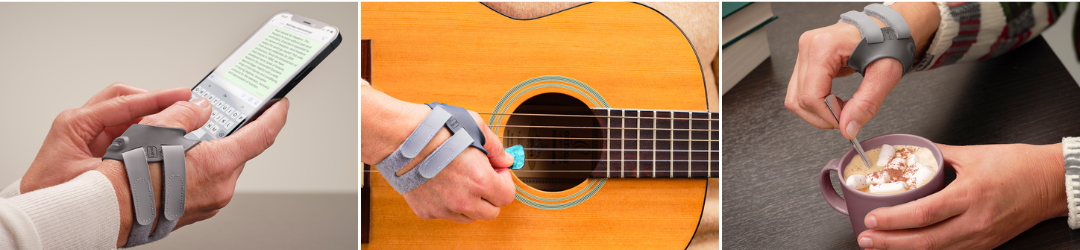
The Push MetaGrip is a low‑profile, semi-rigid thumb support that stabilizes the base of your thumb. It applies a gentle three‑point pressure system to position the first metacarpal in slight palmar abduction and prevent collapse toward the palm. Translation: it counters the painful "zig‑zag" deforming forces of CMC arthritis while allowing your IP and MP joints to move.

Best for Daily Tasks and Typing
Because it leaves your wrist and most thumb motion free, the MetaGrip shines for:
- Typing and computer work
- Cooking and light meal prep
- Opening jars and household containers
- Crafting and light tool work
You get pain relief without wearing a mini‑cast. That's why many people choose it as their daytime brace and first‑line option for mild‑to‑moderate CMC arthritis.
Fit, Sizing, and Adjustability
To ensure you get the most out of your MetaGrip, it is important to select the right side and size. A proper fit should feel snug but not pinchy at the web space. Most MetaGrip models use a simple strap closure plus a moldable insert to dial in fit. You close the straps snugly, then gently squeeze the metal insert so it contours to the base of your thumb. This creates a stable, custom feel without needing to keep tightening it throughout the day.
What Is a Thumb Spica Brace?
Variants: Soft vs Rigid Spica
A thumb spica spans from the wrist to the thumb, with a stay that supports the CMC and MCP (knuckle). Designs range from soft neoprene wraps to rigid thermoplastic or metal‑stay models. Soft spicas offer warmth, compression, and moderate support: rigid spicas limit motion far more.

When More Immobilization Helps
If you're in a painful flare, have significant instability, or your job/sport repeatedly aggravates the joint (think heavy tools, racket sports, gardening), extra immobilization can calm inflammation. A rigid spica can offload the CMC and MCP, reducing grinding at the joint when lighter braces aren't enough.
Bulk, Heat, and Hygiene Considerations
The trade‑offs: spicas are bulkier, warmer, and can trap sweat. They're also more obvious under sleeves and can slow you down with keyboards, fine motor tasks, or phone use. Cleaning varies by material, neoprene needs regular hand‑washing: thermoplastic shells wipe clean easily but can irritate edges if not padded well.
Head-to-Head Comparison
Pain Relief and Stability
- Push MetaGrip: Excellent targeted stability for the thumb CMC joint. sliding forces at the joint while still allowing functional movement. For many with mild‑to‑moderate OA, it's all you need day to day.
- Thumb Spica: Superior immobilization, especially rigid models. Best for acute flares, high‑demand tasks, or later‑stage OA where even small motions trigger pain.
if pain flares with any thumb base motion, spica wins. If pain stems from instability during tasks, MetaGrip often delivers enough support with far less hassle.
Dexterity and Activity Performance
- Push MetaGrip: Clear winner for typing, texting, cooking, driving, and crafts. It preserves pinch and opposition, so your hand still feels like your hand.
- Thumb Spica: Limits fine motor control. Soft spicas are more forgiving than rigid ones, but both slow precision tasks and make small grips awkward.
Comfort, Skin, and Wear Time
- Push MetaGrip: Low-profile and cooler. Fewer pressure points if sized right. Easy to wear for long stretches, including at work.
- Thumb Spica: Can get hot, itchy, or damp. Longer wear may lead to skin maceration at the web space or wrist crease if you don't air things out. Padding fixes help, but it's management you'll notice.
Sizing, Donning, and Adjustments
- Push MetaGrip: More sensitive to precise sizing. Once dialed in, it's quick on/off and stays put.
- Thumb Spica: More forgiving on size range. But, there's a learning curve for straps, and some models loosen through the day. Rigid custom spicas (from a hand therapist) fit best but require an appointment.
Durability, Cleaning, and Cost
- Push MetaGrip: Semi-rigid shell holds shape for months to years with normal use. Wipes clean: minimal odor issues. Usually mid-range in cost.
- Thumb Spica: Neoprene can stretch or odor over time: rigid shells last long but Velcro and lining wear first. Cleaning is easy but more frequent. Costs span budget to custom, soft off-the-shelf is cheapest: custom molded is priciest.
Overall verdict: for everyday function with CMC arthritis, the MetaGrip typically offers the best balance of pain relief and usability. Keep a thumb spica in your toolkit for flares, heavy tasks, or nights when you need extra calm.

How to Choose for Your Situation
Daytime Function vs Flare or Night Support
- Need to work, type, drive, or cook with minimal interruption? Choose the MetaGrip as your primary brace.
- Waking at night from throbbing pain or riding out a bad flare? Add a soft or rigid thumb spica for a week or two to settle symptoms. Some people alternate: MetaGrip by day, spica by night.
Mild-to-Moderate vs Severe Instability
- Mild–moderate instability: the MetaGrip first. If pain spikes with chores, supplement with a soft spica during high-demand tasks.
- Severe instability or visible deformity: Consider a rigid spica initially. Once pain calms, test the MetaGrip to restore function without over-immobilizing.
Work, Sports, and Hobbies Scenarios
- Desk work, healthcare, retail. Wear the MetaGrip for most of the day. Keep a soft spica available for longer shifts or flare days.
- Racquet sports, lifting, gardening, hand tools. Use the MetaGrip during practice or lighter sessions. Switch to a rigid spica for higher-load training or after activity if the joint feels irritated.
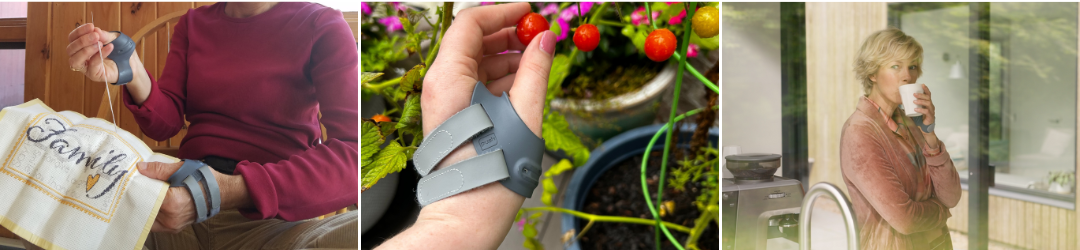
- Crafting, instruments, photography. The MetaGrip supports the CMC joint while keeping fine-motor control. If repetitive motions trigger pain, add a short soft spica break.

Fit, Wear, and Care Tips
Positioning the CMC in Palmar Abduction
Whichever brace you use, aim your thumb slightly away from the palm (palmar abduction) and avoid collapse into the palm. With a Push MetaGrip, the brace sits at the base of the thumb and supports the CMC joint during pinch and grip. With a spica, check that the stay supports the CMC without forcing your thumb straight out sideways, it should feel supported, not jammed.
Trial Period and Wear Schedule
Give yourself 5–7 days to fine‑tune fit. Wear during painful activities first, then extend. For flares, use the spica more consistently for 1–2 weeks, then taper to the MetaGrip as pain settles. If numbness, color change, or sharp pressure occurs, loosen or refit.
Skin Care, Hot/Cold, and Medication Pairing
- Do a quick skin check daily, especially at the web space and wrist creases.
- Rotate off for 15–30 minutes to air the skin if you're wearing long hours.
- Ice for 10 minutes after heavy use: gentle heat before tasks can ease stiffness.
- Over-the-counter NSAIDs or topical anti-inflammatories can pair well with bracing: follow your clinician's advice.
Alternatives and Professional Guidance
Hand therapy can amplify brace benefits. A therapist can custom‑mold a low‑profile CMC orthosis, teach taping for sports days, and prescribe exercises (isometric thumb abduction, first dorsal interosseous strengthening) to improve stability. If pain persists even though bracing, ask about corticosteroid injections or, in advanced cases, surgical options like ligament reconstruction or arthroplasty.

Conclusion
If you want the most function for CMC arthritis day to day, the Push MetaGrip is usually your best first pick. Keep a thumb spica in your corner for flares, nights, and heavy‑duty tasks. Fit it well, wear it when it matters, and pair it with a smart routine, brief rest, targeted exercises, and skin care. That's how you get more pain‑free moments back, one grip at a time.
Ready to regain control of your grip? Explore BraceLab’s CMC & Thumb Braces, or reach out to BraceLab and we’ll help you find the best fit for how you use your hands every day.
Key Takeaways
- In the MetaGrip vs thumb spica decision for CMC arthritis, start with the MetaGrip for daily tasks; use a spica when flares or heavy loads make any thumb-base motion painful.
- The MetaGrip delivers targeted CMC stabilization while preserving pinch, opposition, and typing, making it an ideal first-line brace for mild–moderate instability.
- Thumb spica braces (soft or rigid) provide superior immobilization for acute inflammation, severe instability, or high-demand work, but they cut dexterity and run hotter.
- Match wear to your routine: the MetaGrip by day for work and errands; soft or rigid spica at night or for 1–2 weeks during flares, then taper back.
- Ensure proper fit and slight palmar abduction; refit if the brace rotates, pinches, or causes numbness, and add padding to protect skin.
- Pair bracing with brief rest, heat before tasks, 10-minute icing after heavy use, and therapist-guided strengthening; consider injections or surgery only if pain persists.
FAQs: Push MetaGrip Thumb CMC Brace vs Thumb Spica for CMC Arthritis
The MetaGrip vs thumb spica: which thumb brace works best for CMC arthritis?For everyday CMC arthritis, the MetaGrip usually wins. It stabilizes the CMC joint without immobilizing your hand, preserving pinch and opposition. A thumb spica (especially rigid) is better during acute flares, heavy tasks, or severe instability because it limits motion more and calms inflammation when smaller movements trigger pain.
Is the MetaGrip or a thumb spica better for typing, driving, and daily tasks?The MetaGrip is best for function-heavy tasks. Its low-profile design controls CMC collapse while keeping your wrist and thumb joints mobile for typing, driving, cooking, and phone use. Thumb spicas—soft or rigid—tend to reduce dexterity and slow fine motor tasks, though they can be helpful temporarily during flares.
How should the MetaGrip brace fit for CMC arthritis support?The Push MetaGrip should sit just below the thumb base knuckle, hugging the thenar area, positioning the thumb in slight palmar abduction. It must feel snug but not pinchy at the web space, and shouldn’t rotate or ride up. If it does, refit, adjust tension, or ask a hand therapist to tune it.
Can I sleep with a thumb brace for CMC arthritis, and which type is best at night?Yes. Many people sleep in a brace during flares. A soft or rigid thumb spica usually works better at night because extra immobilization reduces painful grinding and lets the joint rest. Air your skin daily and adjust straps if you notice numbness, color changes, or pressure spots.
What exercises or treatments pair well with the MetaGrip or thumb spica?Combine bracing with hand therapy for best results. Helpful options include isometric thumb abduction and first dorsal interosseous strengthening to improve stability. During flares, brief rest, 10 minutes of ice post‑activity, gentle heat before tasks, and OTC NSAIDs or topical anti‑inflammatories (per clinician guidance) can enhance pain control and function.
Helpful Links:
Push MetaGrip Thumb CMC orthosis
Push MetaGrip educational video
Disclaimer: While we strive to provide helpful and accurate information, BraceLab is not a medical provider and does not offer medical diagnoses or treatment. Always consult a qualified healthcare professional for medical advice, diagnosis, or treatment.
© BraceLab; 2025 all rights reserved